

Anti chafing for swimmers starts with finding where repeated rubbing happens, then changing the fit, fabric contact, or preparation that contributes to it. Pool swimmers, open-water athletes, and people taking aquatic exercise classes can all notice irritation after repeated movement. A short check before and after a session can help you identify a pattern without assuming every sore or red patch is ordinary chafing.
Explore a training swimsuit for your next session
What causes chafing during swimming?
Chafing is irritation associated with repeated rubbing. Skin may rub against skin, or a spot may repeatedly contact a suit seam, elastic edge, strap, or piece of equipment. Moisture and continuous movement can make friction more noticeable. A suit that feels fine while standing still may shift during turns, kicks, or a long set.
Common places to check include the inner thighs, underarms, shoulders, neck, and skin near suit leg openings or straps. The location varies with body shape, suit construction, stroke, equipment, and session length. A sore patch by itself does not confirm chafing; rash, allergy, infection, and other skin conditions can look similar. If the cause is uncertain or symptoms are concerning, ask a qualified health professional rather than trying to diagnose the area from appearance alone.
Key takeaway: Track the location and timing. Irritation that repeatedly appears in one place after a particular session is a clue to inspect fit, seams, and contact points.
How can you find the friction point?
Start with what you can observe. After swimming, note where the skin feels tender and whether the same location has bothered you before. Then connect the spot to the equipment and movement used that day. Did a strap slide? Did a suit edge fold? Did you add a new accessory or swim longer than usual? A few notes can make the next adjustment more deliberate.
- Inspect the garment. Look for a seam or elastic edge that crosses the irritated area, a fold that stays in place, or fabric that has become rough or damaged.
- Check the fit in motion. While wearing the suit, raise your arms, bend, squat lightly, and imitate a few comfortable stroke movements. Notice whether the suit rides up, twists, pulls, or pinches.
- Look at accessories. Goggle straps, caps, and other gear can create rubbing points. Adjust placement gently; tightening an item until it is uncomfortable can create a different pressure problem.
- Compare the session. Remember whether the issue started during warm-up, after a particular drill, or only after a longer continuous swim.
- Change one factor. In the next similar session, adjust one item or preparation step, when safe and practical. Changing several things together makes it harder to tell what helped.
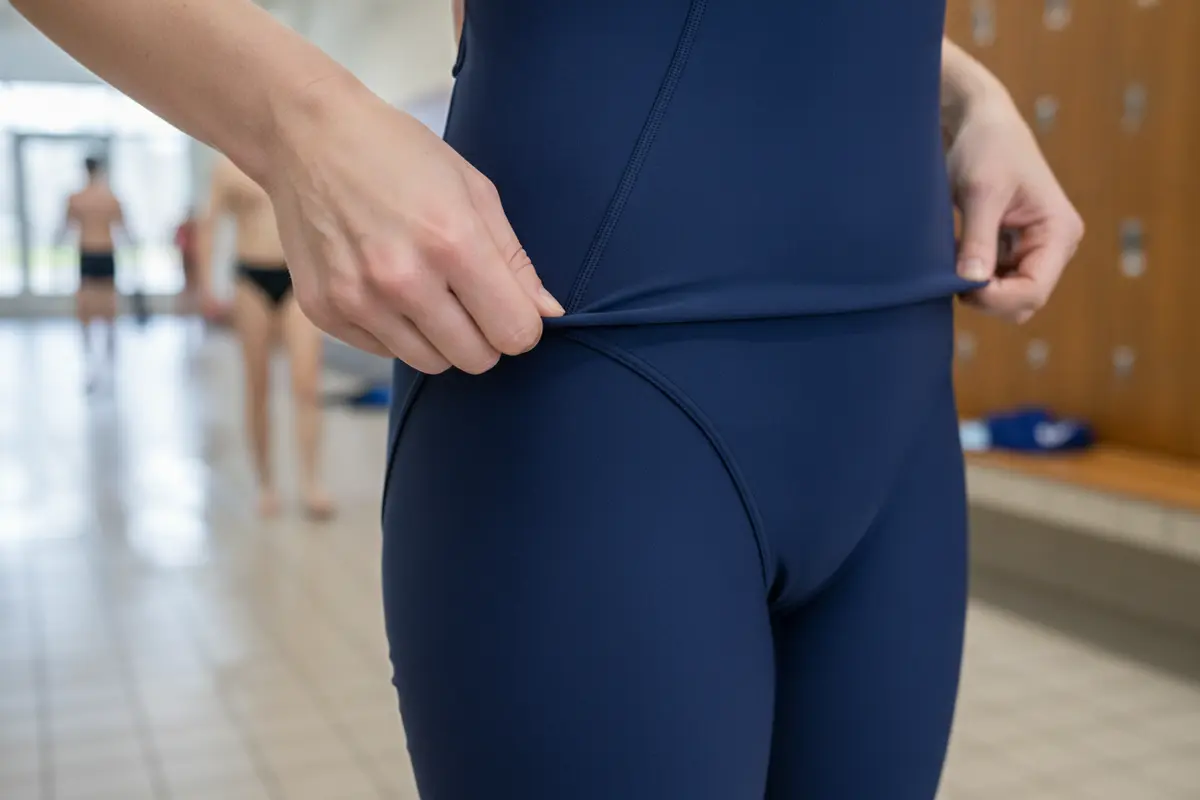
A simple record can be as short as: “Tuesday, inner thigh, suit shifted during kick set.” Next time, compare the same location and activity. If you use a different suit, record that too. The goal is not to monitor every detail of training; it is to spot a repeatable connection between a contact point and discomfort.
When comparing training swimwear, assess how it sits and moves rather than choosing by appearance alone. The Dolfin Capri swimsuit and TYR Guard Diamondfit swimsuit are examples of different product pages to review. Check the brand’s sizing information and garment details, then judge comfort through movement. A product page cannot determine fit for your body.
Which prevention approaches can you compare?
There is no single approach that works for every swimmer or every source of friction. If a garment shifts or a seam presses on the same spot, address that contact before relying on a skin product. A barrier product may reduce rubbing for some people when used according to its label, but it cannot correct poor fit or treat an unknown skin condition.
| Approach | What to check | May be useful when | Limit to keep in mind |
|---|---|---|---|
| Adjust or change swimwear | Fit in motion, seam placement, edges | The suit shifts, pinches, or rubs consistently | Fit preferences vary; follow brand sizing guidance |
| Reposition gear | Strap location and pressure | Rubbing follows an accessory edge | Do not overtighten to keep gear in place |
| Use a skin barrier | Ingredients, directions, and suitability | Skin is intact and rubbing remains after fit checks | It may wash away or irritate skin; check material compatibility |
| Shorten or pause activity | Whether soreness is worsening or skin is broken | Continuing movement aggravates the area | Persistent or concerning symptoms call for professional advice |
For example, if a red area follows a swimsuit seam after both a short and a long practice, first inspect how the seam rests during movement. If a new strap is the only recent change and discomfort traces its path, reposition that gear and compare a session. If no contact point is obvious, avoid layering on several new products at once; that can make it harder to identify a sensitivity or the original cause.
Some long-distance swimmers discuss lanolin or petroleum jelly as personal strategies. A Marathon Swimmers Forum discussion includes individual reports, not controlled evidence or a recommendation for every swimmer. Treat it as anecdotal experience. Check the label and compatibility before using any product, and stop if it causes irritation.
Key takeaway: Start by reducing the rubbing itself. Consider a barrier only as a cautious additional measure, and do not use one to cover up worsening pain or damaged skin.
How should you choose and use a skin barrier?
Skin-barrier products vary in ingredients, texture, and directions. Read the package before use and confirm that the product is meant for the body area and activity you have in mind. Water can affect how a product behaves, and residue may contact swimwear or equipment. Do not assume a product will stay in place for a whole session or work with every fabric.
- Read the directions and warnings. Follow the stated use, including restrictions about body areas and skin condition. Do not apply a product to broken skin unless its instructions or a health professional indicate that it is appropriate.
- Test cautiously. If the label allows, try a small area first and watch for an unwanted reaction before broader use. Stop if you notice burning, a rash, swelling, or new discomfort.
- Use only as directed. Apply to the relevant friction-prone area and avoid eyes or other areas named in the warnings. There is no universal amount or reapplication schedule that fits every product.
- Consider what it will touch. If residue could reach a swimsuit or equipment, consult the product and gear care information instead of assuming the materials are unaffected.
- Reassess afterward. Follow the product’s cleanup directions and check whether the skin feels better, unchanged, or worse. Stop using it if symptoms worsen.
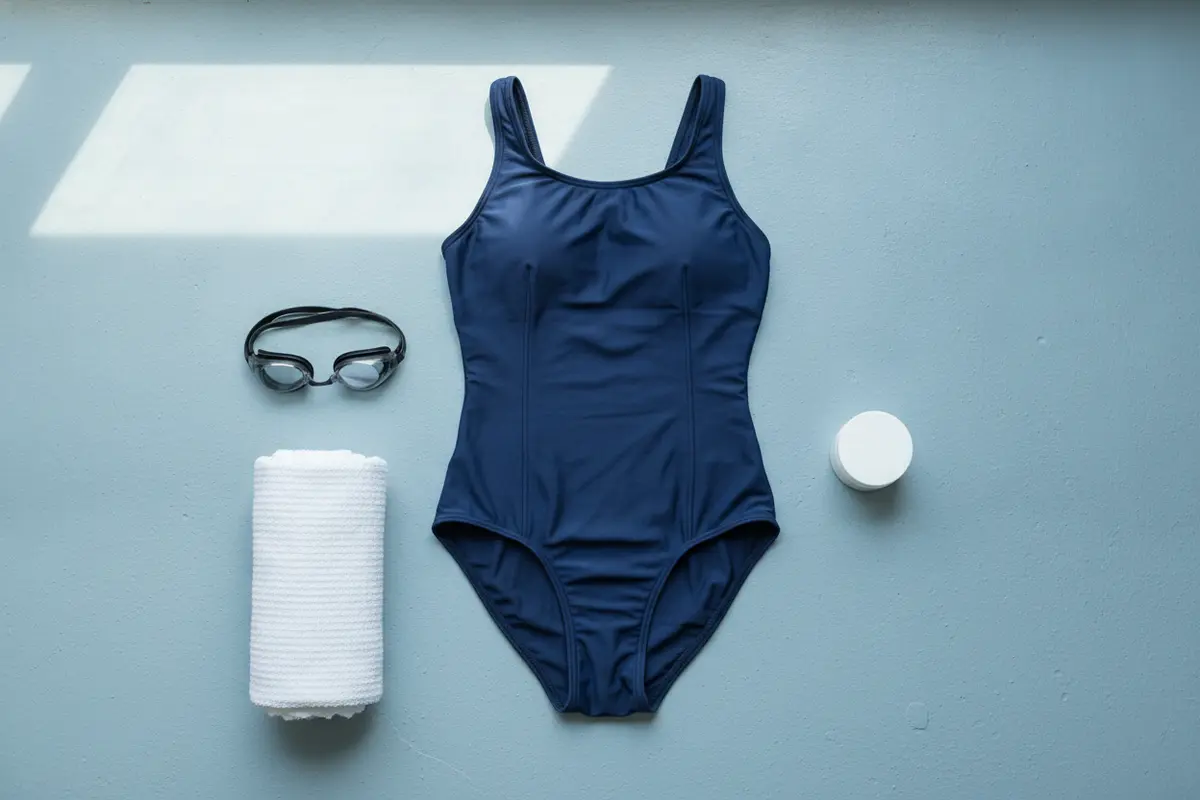
Keep any product away from young children unless an adult is supervising its use. For a child, use only products whose labeling is appropriate and ask a health professional if you are unsure. A preventive product is not a replacement for a comfortable suit or for medical advice when the skin is painful, broken, or persistently irritated.
What changes help in pool and open-water sessions?
For pool practice
Check your suit before entering the water, then notice whether it shifts during warm-up, turns, or a particular set. If the problem seems connected to one drill or accessory, compare a session without that item only when it is safe and appropriate to do so. Avoid changing a team or safety requirement without checking with the coach or responsible adult.
After practice, rinse and care for swimwear as its label directs. Look for a twisted edge or rough area that may need attention. Change out of wet gear when practical, and check the affected skin after it has been cleaned and dried. If the same spot is irritated again, compare your notes rather than assuming a longer warm-up or a different product will solve it.
For open-water and longer sessions
Before an open-water swim, check that your suit, wetsuit, and accessories sit smoothly. Try unfamiliar gear during a shorter, controlled outing before relying on it for a long swim. If you add a layer, inspect its edges and seams at likely contact points. Do not compromise safe fit, visibility, or other water-safety practices to address rubbing.
Longer time in motion can expose a fit issue that a quick try-on does not reveal. During preparation, check the areas that have rubbed before and confirm that equipment remains comfortable when you move. If pain becomes significant, stop and address it rather than continuing simply to complete a planned distance. For an event, avoid last-minute experiments with unfamiliar garments or skin products.
Organizing gear can make it easier to change after swimming and keep wet items separate. An Arena team mesh swim bag is one option to review for carrying practice equipment. For workouts involving equipment, check how a pull buoy rests against the body and whether it changes movement or contact. A Dolfin mesh equipment bag offers another way to organize gear between sessions.
How can you compare swimsuit fit and gear contact?
A useful fit check compares the garment at rest and in motion. The suit should sit where you expect without a persistent pinch or edge folding over a sensitive spot. Then move as you would during practice. For a one-piece, reach overhead and rotate your shoulders. For a two-piece or briefs, bend and take a few controlled kicks. These checks do not guarantee that a suit will remain comfortable throughout every workout, but they may reveal obvious shifting before you swim.
Look for repeated contact rather than judging by a single glance. A seam can be flat while standing and press differently once the body bends. Similarly, a strap can feel comfortable before it is wet, then shift during activity. If a swimsuit is new, begin with a session that lets you pay attention to comfort and adjust if needed, rather than making its first use a long or important event.
- If it pinches in one place: Check whether the seam, edge, or garment tension lines up with that spot. Use brand-specific sizing information instead of assuming that every brand’s size chart is interchangeable.
- If it rides or twists: Recheck how it sits before and after movement. Repeated shifting may be a reason to compare another size or cut.
- If a strap rubs: Adjust its position and tension without making it uncomfortably tight. Check the skin again after the session.
- If the source remains unclear: Simplify the setup for a comparable session, when safe, and keep a brief note of what you wore and did.
Swimmers who use several pieces of gear can assess one contact point at a time. For instance, if rubbing begins after adding a kickboard, determine whether the board itself touches the area or whether the change in body position makes a suit seam more noticeable. A team kickboard is designed for swim practice, but comfort still depends on how an individual holds and uses it. If goggles are part of the issue, inspect the strap and fit; the Arena VERSUS MIRROR goggles product page provides details for comparison, not a substitute for fitting them to your face.
Key takeaway: A repeatable movement check can uncover shifting edges and gear contact before a full session. Compare brand sizing and intended use, then reassess comfort during real activity.
How can you build a routine that helps prevent repeat irritation?
Keep the routine simple enough to repeat. The purpose is to notice patterns and respond early, not to add a long checklist to every practice. Use the same few checks before and after swimming, then make one change if a friction point returns.
- Before swimming: Inspect suit seams and edges, place straps comfortably, and check any areas that have rubbed before. Use a skin product only as directed.
- During the session: Notice a strap that slips, a garment that shifts, or discomfort that builds. If rubbing becomes painful, stop and adjust rather than pushing through.
- After swimming: Change out of wet gear when practical, follow care labels for garments and equipment, and check the skin.
- Before the next comparable session: Review what changed and whether the same problem returned. Adjust one variable at a time.
Here is a worked example. A swimmer notices irritation at the inner thigh after a longer practice. They record the suit and session, inspect its leg opening, and find that it folds when they kick. At the next comparable session, they check the fit in motion before starting and use a different suit they already know fits comfortably. If the same irritation continues, they stop treating the initial observation as a complete explanation and consider other contact points or professional guidance.
For another example, a strap-shaped sore spot appears after a new pair of goggles is introduced. Rather than tightening the strap, the swimmer checks how it sits, repositions it comfortably, and compares how the skin feels afterward. If irritation continues or the product causes a reaction, they stop using it and seek appropriate advice. These examples are practical ways to observe cause and effect, not guarantees that a particular change will prevent symptoms.
When choosing training apparel or accessories, assess the specific product, fit, and activity. You can compare a TYR Draco Diamondfit swimsuit or inspect an Arena swimming earplug as part of your broader gear check. Swim2000 has served swimmers since 1994, with gear for training and aquatic activities. Product details and fit are individual, so check the information for each item.
Shop swim gear for your next practice
When should you stop and seek advice?
Stop using a product if it causes burning, swelling, a rash, or new discomfort. Seek advice from a qualified health professional if the skin is broken, very painful, increasingly red, warm, swollen, draining, or not improving. Get prompt care for severe symptoms or signs of infection. A guide cannot diagnose skin irritation, and a professional can help determine whether friction or another condition is involved.
Children should not be expected to ignore persistent soreness as a normal part of swimming. A parent or caregiver can help check suit fit, straps, and skin condition, and arrange professional advice if symptoms persist or worsen. Do not apply a product to a child without checking its labeling and supervising use.
Frequently asked questions about anti chafing for swimmers
Can swimmers use petroleum jelly to prevent chafing?
Some swimmers report using it, but personal reports do not show that it will work for everyone or suit every skin type, garment, or activity. Check product directions and material compatibility, and stop if irritation develops. Address fit and contact points as well.
Should I apply a barrier before every swim?
Not necessarily. First check whether fit, seams, or gear placement are causing repeated rubbing. If you choose a barrier product, follow its directions, test cautiously where appropriate, and reassess how your skin responds.
Does chafing mean my swimsuit is the wrong size?
Not always. A seam, suit edge, strap, movement pattern, or skin-to-skin contact may be involved. Check how the garment sits while moving and consult the brand’s sizing information if it repeatedly shifts or rubs.
When is skin irritation more than ordinary chafing?
Seek professional advice for broken skin, severe or worsening pain, increasing redness, warmth, swelling, drainage, or symptoms that do not improve. A clinician can assess causes that cannot be identified from a guide.
Notice where and when irritation occurs, make one practical adjustment at a time, and seek medical advice when symptoms are persistent or concerning.