


Choosing artistic swimming equipment starts with the session, not a long shopping list. Practice needs can differ from performance-day needs, and a coach or event organizer may set specific requirements. This guide separates everyday essentials from optional aids so swimmers and families can build a practical kit and check team instructions before buying.
Explore swim goggles for pool practice
What equipment does an artistic swimmer need for practice?
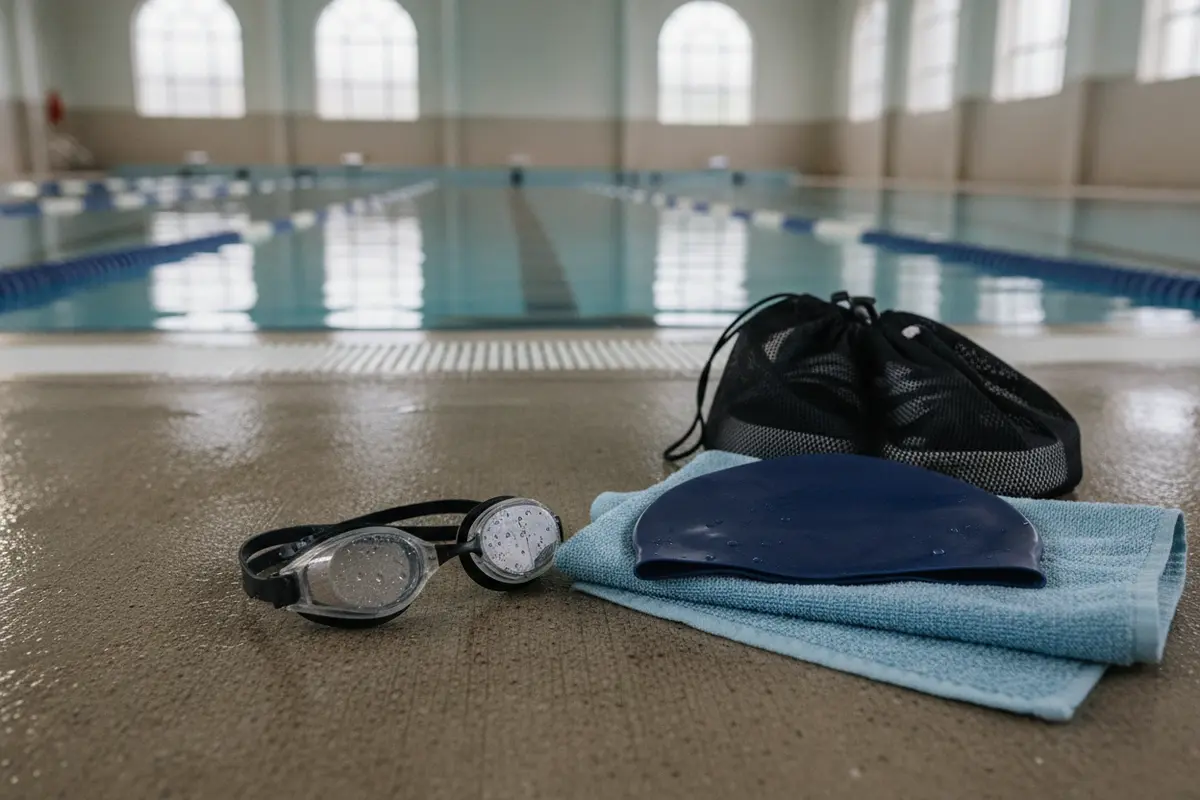
Begin with the items that let a swimmer take part comfortably and follow the coach’s plan. A basic pool bag commonly includes a practice swimsuit, goggles if the swimmer uses them, a swim cap if requested, a towel, and a water bottle kept in the designated deck area. Teams can set their own suit or cap requirements, so ask before choosing clothing for a particular group or routine.
Artistic swimming combines movement in water with choreography to music, as described in British Swimming’s overview of the sport. That combination makes preparation more specific than packing for an ordinary lap-swimming session: swimmers need to know what the day covers, what the coach supplies, and what each athlete is expected to bring. Needs may differ by age group, team, facility, and event.
Key takeaway: Pack personal basics first, then add equipment only when a coach or event checklist calls for it. A team-specific list is a better guide than a generic shopping list.
Start with a swimsuit that suits practice
Choose a suit intended for repeated pool use and movement, and follow team guidance on cut, color, and coverage. A practice suit and a performance or routine suit may serve different purposes. Do not assume one suit meets every team’s costume, choreography, or event requirements. Check the fit while the swimmer moves through arm raises, extensions, and turns, and replace a suit when it no longer stays securely in place.
For a young swimmer, a parent can help check the fit and confirm the athlete can put on and remove the suit independently or with appropriate assistance. If a team specifies a particular style, ask whether it is needed for every practice or only for a performance. That small clarification can prevent an unnecessary purchase. When comparing suits, use the product’s own sizing information rather than transferring a size from another brand or garment. If the listing or fit remains unclear, ask the retailer or coach before ordering.
Practice clothing should allow the swimmer to move through the session without needing constant adjustment. Fit is individual, so avoid choosing solely by appearance or by another swimmer’s recommendation. A team may also use a particular color or style to make group instruction easier; confirm that detail rather than guessing. Swim2000 specializes in competitive swimwear and gear, and its product information can help shoppers compare available options, but the team’s instructions determine what is suitable for a specific routine.
Choose goggles, caps, and nose clips by need
Goggles can be useful during drills and conditioning, especially when a swimmer needs clear underwater vision. Comfort and a secure seal matter more than decorative features: test the fit in the pool, adjust the strap without overtightening, and keep a spare pair only if it is useful for that swimmer. Some swimmers may use goggles for one part of practice and remove them for another. Follow the instructor’s plan instead of assuming goggles are needed for every exercise.
A cap may help keep hair managed and can be part of a team’s practice uniform. A nose clip is commonly used by artistic swimmers for particular underwater work, but whether one is needed, permitted, or supplied should be confirmed with the coach. Fit and comfort are personal; do not assume one model suits everyone. Check the event rules and team policy before using an accessory in a routine.
Swim2000 lists Arena Cobra Ultra Swipe goggles. A product listing does not establish that a particular model fits every swimmer or is required for artistic swimming. Review the product details, check fit, and ask the coach what is appropriate for the session. If a swimmer has never used goggles or a nose clip during the planned work, discuss how and when to try the item during a supervised practice rather than introducing it on event day.
Which items are essential, and which are optional?
The word “essential” depends on who is setting the requirement. For regular practice, required items are usually the suit and anything the team directs each swimmer to bring. Goggles, caps, nose clips, and conditioning aids may be useful, but not every swimmer needs every item at every session. Competition checklists can add costume, hair, or event-specific directions.
The table is a starting point, not a substitute for a team or meet checklist. Use the final column to avoid buying or packing equipment that is unnecessary for a swimmer’s level or that day’s session. If the coach’s list conflicts with general advice, ask for clarification and follow the team’s direction.
| Item | Typical role | How to decide |
|---|---|---|
| Practice swimsuit | Allows movement during water practice | Bring the team-approved style; check fit and any color or coverage guidance. |
| Goggles | May support clear vision during drills and conditioning | Choose for comfortable fit and ask when the coach wants them used. |
| Swim cap | Helps manage hair and may identify team members | Follow team policy; bring a spare only if it is useful to the swimmer. |
| Nose clip | Can help with particular underwater elements | Ask about need, fit, permitted use, and whether one is supplied. |
| Towel and water bottle | Personal items for before and after pool time | Pack each session; follow facility rules about bottles on deck. |
| Training aids | Support a specific drill or conditioning block | Bring only when the coach assigns the aid or confirms it is appropriate. |
| Performance costume and accessories | Used for a routine or event, subject to team directions | Confirm exact requirements and timing with the coach or organizer. |
Key takeaway: A swimsuit and personal pool essentials form the starting kit; accessories and training aids are conditional. Written instructions from the coach or organizer take priority over general advice.
Make a session-specific checklist
A short checklist can help a new swimmer distinguish “bring every time” from “bring when assigned.” The everyday column might include a suit, towel, and any personal items the swimmer routinely uses. A second column can hold conditional items such as fins or a kickboard, with a note to pack them only when the coach says they are part of the session. A separate event list keeps costume details from becoming confused with everyday kit.
For example, before a normal technique practice, a family could check the coach’s message, pack the suit and goggles, then leave the fins at home unless requested. Before a conditioning block, the coach may name a specific aid and explain how it will be used. Before a performance, the family should verify the costume and accessories against the event instructions, rather than assuming the regular practice list is complete. This simple sorting habit saves deck space and makes it easier to notice what is missing.
Label personal equipment where appropriate, especially when several swimmers use similar bags, towels, or caps. Keep a small list in the bag or on a phone so a swimmer can check items independently. Review the list when the team changes sessions or the athlete moves to a different group; equipment that was useful earlier may not be needed for every later practice.
How can swimmers choose training aids without overpacking?
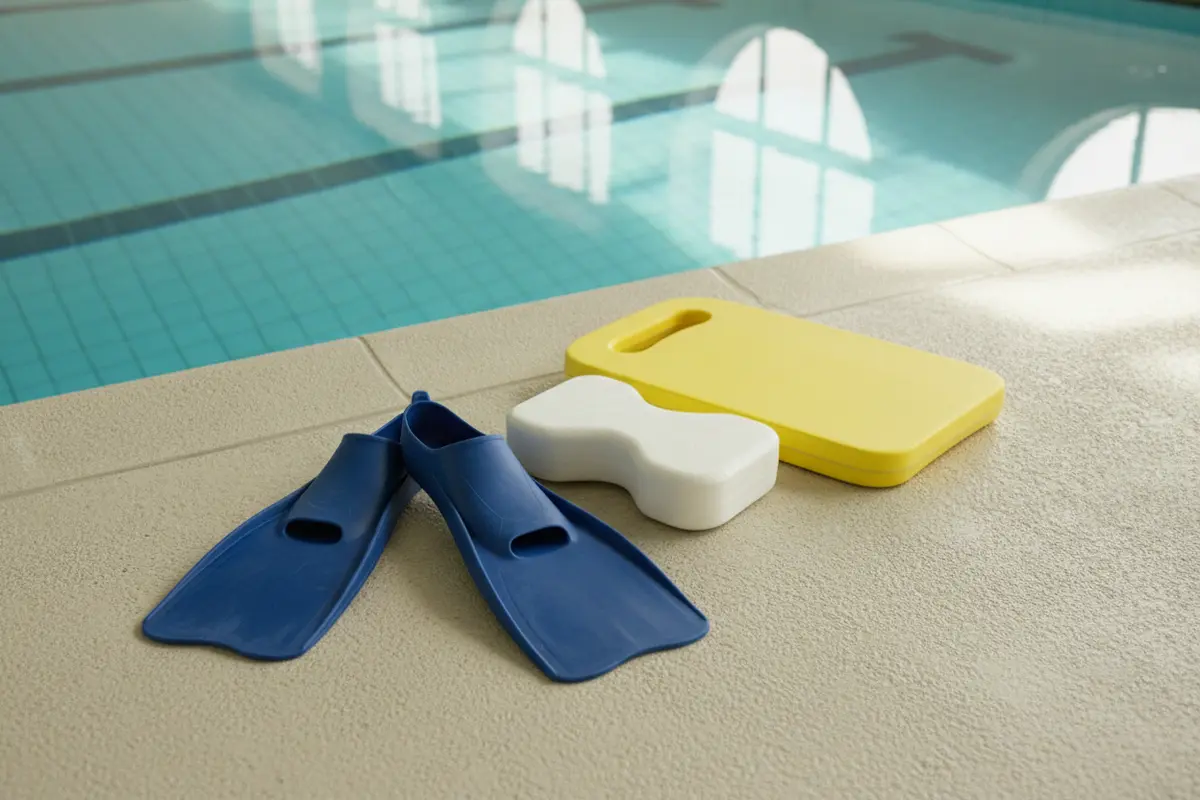
Artistic swimming sessions may include conditioning and technique drills, but the coach should determine which equipment supports the day’s plan. A kickboard, fins, or pull buoy is not an automatic requirement for every artistic swimmer. If an instructor recommends one, ask what skill or drill it supports, how often it will be used, and whether the facility has shared equipment available. That gives a family a reason to buy, borrow, or wait.
Short-blade training fins are sold as swim-training gear; that does not mean every swimmer should use them or that they are suitable for every drill. Swim2000 lists TYR Stryker silicone fins and Aqua Sphere Alpha fins. Compare product information with the coach’s instruction, including sizing, intended use, and whether fins are allowed in the pool or on a crowded deck. A fin that feels comfortable in a fitting may still need to be tested under supervision before it becomes part of a regular routine.
If the coach assigns a kick-focused drill, a kickboard may be one possible aid. The Aqua Sphere kickboard listing describes one item to review, but a swimmer should use a board only as directed. For upper-body drill work, some programs use pull buoys; see the TYR Pull Float pull buoy listing and confirm whether it fits the specific exercise. These are examples of available equipment, not a prescribed artistic-swimming kit. A team may have a preferred type, or the coach may decide that no aid is needed.
Before buying a training aid, compare its expected use with its practical demands. Will it fit the swimmer, be easy to identify, and get used often enough to justify bringing it? Is the pool deck likely to have room to store it safely? Can the item be shared or borrowed first? Questions like these help distinguish a purposeful purchase from equipment that stays at home after the first week.
- Did the coach request this exact type of item, or is it only one possible alternative?
- Does the size and intended use match the swimmer and the planned drill?
- Can the aid be stored and identified easily among team equipment?
- Will the swimmer use it often enough to justify packing it for practice?
- Does the facility or coach have a rule about using it?
A study of young artistic swimmers examined sport-specific technical elements, strength measures, and swimming performance, highlighting that preparation can involve several kinds of physical and technical work. Read the study’s scope in published research on factors related to artistic swimming; it is not a product list or a recommendation to purchase particular aids. A separate study examined how hybrid-figure elements relate to total scores in artistic swimming competitions; its findings concern performance analysis, not a gear prescription. See the research on choreography and performance in artistic swimming. Use the coach’s assessment to decide which drills and equipment belong in an individual plan.
Key takeaway: Treat training aids as coach-directed tools, not a standard shopping list. Ask what each item is intended to do, check fit and facility rules, and add only what supports the actual session.
Compare the purpose before the product
When two types of aid might serve similar practice needs, ask the coach which one matches the drill instead of buying both “just in case.” A kickboard and fins, for instance, are different pieces of equipment and should not be treated as interchangeable; the intended exercise determines what is appropriate. A pull buoy may be assigned for a particular body-position or upper-body task, but that does not make it useful for every swimmer or block.
Make the decision in this order: identify the session goal, confirm the equipment type, check the swimmer’s fit, and then compare available product details. If the coach says an aid is optional, try a shared version if available before purchasing. If it is required for a recurring drill, note its name and size guidance in the checklist so the family can shop accurately. Product names and catalog availability can change, so review the current listing rather than relying on an old link or another swimmer’s gear.
What changes for performance and competition day?
Competition preparation is more specific than a regular practice checklist. Confirm the event schedule, team instructions, and applicable rules before packing. The coach or team manager is the right source for costume details, hair preparation, accessories, and whether a swimmer should bring practice gear for warm-up. Requirements may depend on the routine, event format, and organizer. British Swimming describes the sport’s choreographed movement to music, but local team and event directions determine what each swimmer should bring.
Keep performance items separate from everyday equipment. Use a clean, clearly labeled bag or compartment for costume pieces and accessories, and check the items against the team list before leaving home. A second check after the event can help prevent personal gear from being left in a changing area. Avoid last-minute costume or accessory changes without team approval. If a costume needs repair or an accessory is missing, contact the team before making a substitute decision.
Build a timed packing routine around the event schedule. First, lay out items that are explicitly named on the team checklist. Next, add personal pool essentials, such as a towel and any goggles the coach says to bring. Then check practical items that could otherwise be overlooked: a labeled bag, a spare cap if the swimmer uses one, and dry clothing for after the session. The exact list should come from the team, not this example. Put costume pieces where they will stay clean and easy to find, rather than burying them beneath wet practice gear.
Give the swimmer a chance to use any new personal item during practice before relying on it at an event. Familiarity matters: the athlete should know how the item fits, where it is stored, and whether it is part of the routine. If the item is unfamiliar or causes discomfort, ask the coach how to proceed. Do not introduce an unapproved accessory on competition day simply because it appears in a general equipment guide.
For technical swimwear, fit and care are brand- and product-specific. Follow the garment’s label, rinse it after use when directed, and let it dry as instructed. Do not assume a practice suit and performance suit have identical care requirements. If buying a new suit, verify sizing against the particular brand and product information rather than relying only on a size from another garment.
Key takeaway: Competition packing should follow the event’s written checklist. Keep routine equipment separate from performance items, and confirm costume, accessories, and warm-up needs with the team well before arrival.
How should you pack and care for artistic swimming equipment?
A consistent routine makes it easier to arrive prepared and keeps wet gear from mixing with dry items. Before practice, check the session note and place the suit, goggles, cap, and any assigned equipment in the bag. After practice, separate wet items, rinse and dry gear according to its care label, and return shared equipment to the correct place.
A mesh equipment bag can help keep gear together while allowing airflow around damp items, although it does not replace proper drying. Swim2000 lists a TYR Mesh Equipment Bag. A towel is another useful personal item; examples include the TYR Sport Towel and Arena Belize Towel. Check the current product details to compare dimensions and materials rather than assuming every towel or bag will suit the same routine.
Use simple separate zones in the bag if that works for the swimmer: one place for dry clothing, another for pool items, and a water-resistant compartment or separate sack for wet gear. Do not store damp items sealed away for an extended period. At home, unpack the bag, follow each item’s care instructions, and let gear dry fully before packing it again. Follow garment labels rather than applying one washing routine to every suit, cap, or accessory.
A practical before-and-after checklist can be short:
- Before: Check the coach’s message, pack personal essentials, and add only the requested training aids.
- At the pool: Keep personal items together and follow deck and facility instructions.
- After: Separate wet gear, rinse or wash items as their labels direct, and allow everything to dry fully before storing.
- Before the next session: Replace missing or damaged items and confirm any change to the routine or equipment list.
Labeling a cap, towel, and bag can make team gear easier to identify. For younger swimmers, a parent can help create a simple checklist the athlete can follow independently as their routine develops. Review it together periodically: remove items that are no longer used, add aids the coach has newly assigned, and check that personal gear still fits and works as expected.
When deciding whether a bag or towel is worth adding, consider how the swimmer actually carries gear to the pool. A smaller kit may be easier for a young athlete to manage; a swimmer who brings several assigned aids may need more room. Compare the product dimensions with the equipment list and avoid packing loose items that can fall out or become mixed with another swimmer’s belongings. Swim2000 product pages may show available options, while current shipping terms and the order details should be checked at checkout. Eligible orders may qualify for free standard shipping under the stated terms for the continental United States.
See a mesh bag for organizing swim gear
Frequently asked questions about artistic swimming equipment
Do artistic swimmers need special goggles?
Not necessarily. Goggles can be useful for some practice drills, but the best choice depends on fit, comfort, and the coach’s instructions. Ask whether goggles are needed for a particular session and test the seal in the pool before relying on them.
Are fins required for artistic swimming practice?
Fins are not a universal requirement. A coach may assign them for a specific drill, but use and sizing should be confirmed before purchase. Follow facility rules and do not substitute fins for instruction.
Should a beginner buy a nose clip before joining a team?
Ask the coach first. Team expectations and swimmer comfort vary, and a coach can explain whether a nose clip is needed, which type is appropriate, and when to use it.
What should go in a competition bag?
Start with the event or team checklist. It may include the approved costume and accessories as well as personal pool essentials, but exact requirements differ. Keep performance items together and confirm any last-minute instructions with the team.
Can one equipment list work for every practice?
A basic personal checklist can cover items a swimmer uses regularly, but session-specific aids and performance items may change. Check the coach’s note before each practice and update the list when the team changes its plan.
Build a kit around the swimmer’s actual routine
The most useful artistic swimming equipment list is the one that matches a swimmer’s practice plan and team requirements. Start with personal essentials, confirm performance-day details, and add training aids only when a coach recommends them. Swim2000 has specialized in competitive swimwear and gear since 1994; compare current product details, ask questions when fit or use is unclear, and check applicable order terms. That approach keeps the bag manageable and helps swimmers arrive ready for the work planned in the pool.
Before buying anything new, match each item to a clear purpose: a coach’s instruction, a personal comfort need, or a specific event checklist. Then check fit, current product details, and care instructions. A thoughtful kit supports the swimmer’s routine without making every accessory seem essential.


