


Selecting the wrong swim gear can quickly stall your progress in the water. Shop our full selection of kickboards at Swim2000 to find the right training board for your next workout.
To learn how to choose a kickboard, you must match the board to your body size, skill level, and training goals. Beginners need a large, highly buoyant rectangular board to stay stable and keep their hips high in the water. Competitive athletes and triathletes should choose smaller, contoured, or alignment-focused kickboards that reduce shoulder strain and mimic their natural body position.
Selecting the right size, shape, and foam density ensures proper support without hurting your alignment. As a trusted swim shop since 1994, we recommend assessing your specific workout goals to find the perfect style for your routine.
Before you buy your next piece of training gear, it helps to know how different shapes and sizes affect your swim workouts. Finding the right fit starts with understanding the main types of kickboards and how each design targets specific skills.
How To Choose A Kickboard: Understanding the Main Types of Kickboards
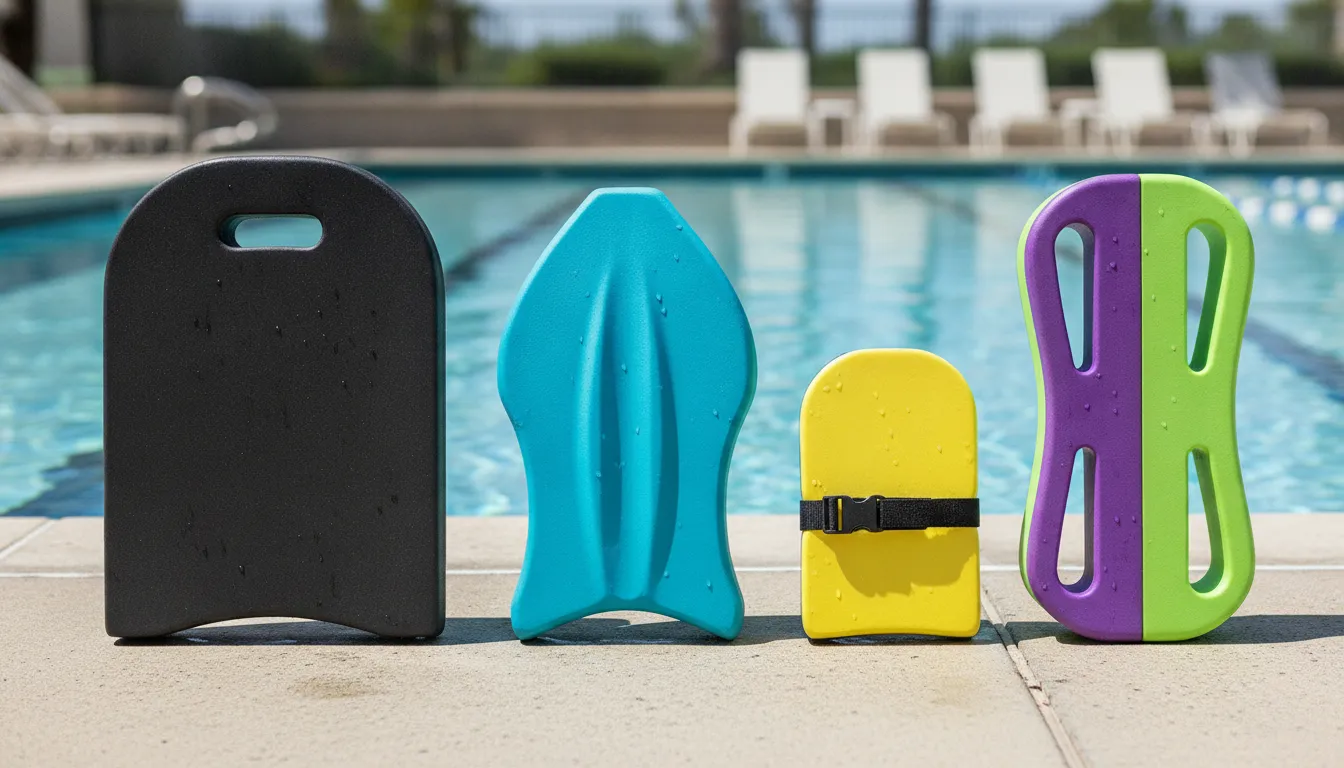
When you learn how to choose a kickboard, you must start with the shape. The shape of a board changes how you float and move in the water. Swim gear has evolved a lot over the years to help different types of athletes. Today, there are four main types of kickboards that you will find at the pool. Each design serves a distinct training purpose and suits different skill levels.
| Board Type | Best For | Buoyancy | Key Feature |
|---|---|---|---|
| Traditional Tombstone | Beginners, water aerobics | High | Large surface, very stable |
| Contoured/Arrowhead | Competitive swimmers | Moderate | Sleek shape, less drag |
| Alignment | Triathletes, open water | Low | Hand strap, body position |
| Combo (Kickboard + Pull Buoy) | Fitness, travel | Moderate | Dual function |
Traditional Tombstone Kickboards
The traditional tombstone board is the classic rectangular shape with a rounded top. These boards are usually thick, highly buoyant, and rigid. They provide the most flotation and stability, which makes them perfect for beginners, water aerobics, and long leg endurance sets. Because they are large, they create more water resistance and drag. If you want a simple and reliable tool to isolate your legs, a traditional model like the Speedo Team Kickboard is a great starting point.
Contoured and Arrowhead Boards
Contoured or arrowhead kickboards feature a sleek, V-shape style. They have ergonomic curves and cutouts for your hands, which reduces shoulder strain. These boards are smaller and less buoyant than traditional models. The streamlined profile helps you cut through the water with less drag. This makes them ideal for competitive swimmers who want to focus on speed and realistic body roll during kick sets. The Arena professional kickboard is a contoured design built for elite athletes who need a streamlined shape and molded handles to maintain a good grip at fast speeds.
Alignment Kickboards
Alignment boards are specialized tools designed to improve your body position. They are much smaller than standard boards and often feature a hand strap that lets you hold the board with one hand or keep your hands flat on top. An alignment board sits just below the surface of the water, which helps keep your head, hips, and feet in a straight line. This design is highly recommended by swim coaches for triathletes and open water swimmers because it forces you to use your core muscles to stay flat rather than relying on board buoyancy.
Combo Kickboard and Pull Buoy Boards
Combo boards serve a dual function in your swim bag. They have a unique curved shape that fits between your thighs as a pull buoy or stays in your hands as a kickboard. While they save space, they are smaller and float less than standard boards. They are best for fitness swimmers and triathletes who want to switch quickly between kick and pull sets. The Speedo Pull Kick Board is a popular dual-function option for swimmers who travel light.
Does Kickboard Size and Thickness Matter?
Kickboard size and thickness play key roles in how a board behaves in the water. These two factors dictate how much weight a board can support and how easily it moves through the pool. When learning how to choose a kickboard, finding the right match for your body and skill level is vital for a good workout.
Yes, size and thickness matter significantly. A larger board provides more lift but creates more drag. Thicker boards offer steady support but can lift your shoulders too high, causing your hips to sink. The right balance depends on your body size, strength, and training goals.
How Buoyancy and Drag Work Together
The main job of a kickboard is to float. This buoyancy keeps your upper body high in the water so you can focus on your legs. A larger or thicker board holds more air and foam, which gives you more lift. However, a bigger board also creates more drag as you push it through the water. This drag can slow you down and put extra strain on your shoulders during long sets. A wide board has a large frontal area, which catches more water and resists forward motion. High-level swimmers often want less drag, so they choose smaller, thinner boards. Beginners usually prefer more lift to help them stay flat and stable.
Finding the Right Size for Kids and Adults
Adult kickboards are usually about 19 inches long and 11 inches wide. These dimensions provide enough surface area to support an adult torso. Children need smaller junior boards, which are often about 14 inches long and 9 inches wide. If a child uses a board that is too large, it forces their arms too far apart. Which ruins their natural body line and makes it hard to steer. Swim2000 offers a range of kickboards for all ages, including junior-specific models designed for young swimmers. A board that fits well lets a young swimmer hold the sides with a relaxed grip, helping them learn the proper head and hip positions.
Why Board Thickness Affects Your Swim Line
Most standard training boards are between 1 and 1.5 inches thick. Thicker boards do not bend under pressure and offer steady support. They are great for simple kick drills or casual water exercise because they keep you high in the water. But a board that is too thick can lift your shoulders too far out of the water. This high position forces your hips to sink, which ruins your body line and makes you kick harder just to stay flat. Thinner boards, around 1 inch thick or less, have less lift but let you lie in a more natural, flat swim position. They allow your shoulders to sit lower, closer to where they would be during normal swim strokes. Competitive athletes prefer these thinner designs to keep their hips high without straining their lower back.
Choosing a Kickboard for Your Training Goals
Your swim workouts can be much more effective when you match your gear to your personal training plans. Swimmers have different needs based on their skills and fitness targets. Swim2000 has been a trusted swim shop since 1994, helping swimmers find high-quality gear for every goal. When considering how to choose a kickboard, matching the design to your focus is the best first step. Here is a quick breakdown of who needs which board:
The board you need depends entirely on your training goals. Beginners need a stable, high-buoyancy board for confidence. Competitive swimmers need a sleek, low-drag board for speed work. Triathletes need an alignment board for body position. Pick the board that matches your primary workout style.
- Beginners and water fitness: Traditional flat boards with high buoyancy for stability and safety.
- Competitive swimmers: Contoured or arrowhead boards that cut through the water easily.
- Triathletes and endurance athletes: Alignment boards that maintain a natural body line.
- Casual fitness swimmers: Combo boards that serve as both kickboard and pull buoy.
Beginner Swim Training and Water Fitness
If you are new to the water or participate in water aerobics, your main goal is staying stable and safe. Traditional flat boards offer the most buoyancy to keep your chest and shoulders high. A great example of this style is the classic Speedo training kickboard, made from textured EVA foam that is easy to grip and keeps you stable while you practice your leg kick.
Competitive Swimmers and Speed Sets
Swimmers who train for high speed and drill work need boards that cut through the water easily. Standard boards can feel bulky and create too much drag when you try to kick fast. A contoured or arrowhead board is the best tool for these tough workout sets.
Triathletes and Endurance Athletes
Triathletes and long-distance swimmers must keep their bodies flat and high in the water to save energy. Traditional kickboards can raise your head too high, which drops your hips and creates drag. An alignment board solves this issue by letting you keep your head in a natural down position. The FINIS alignment kickboard is designed specifically for this purpose, with high-density EVA foam that maintains its shape and keeps you in a clean, flat position.
Casual Fitness and Combo Gear
If you swim for general fitness, you might want simple gear that does more than one job. A kickboard-pull buoy combo is a smart choice for casual workouts. This two-in-one tool works as a standard kickboard for your legs. But you can also place it between your thighs to float your hips while you focus on your arm pull.
Kickboards for Kids: Selecting the Right Fit
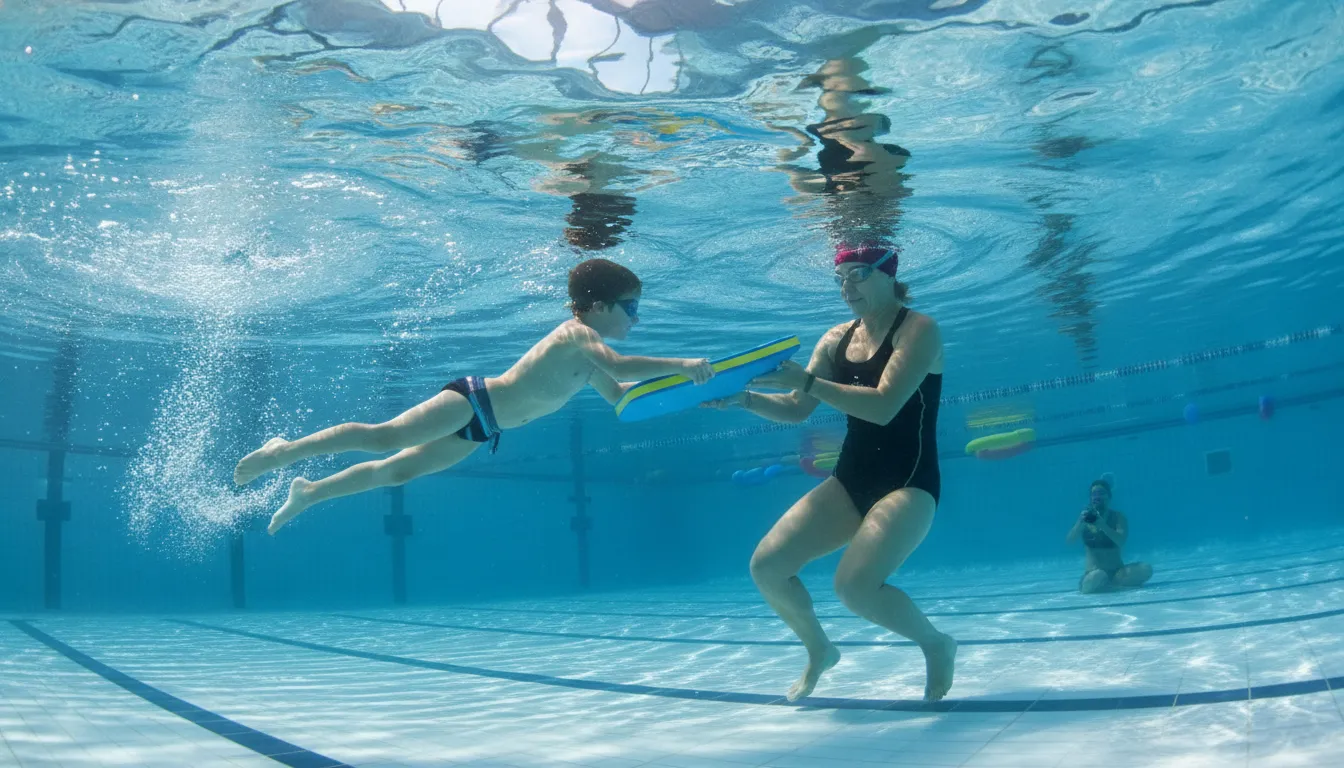
Selecting the right youth kickboard requires matching the board size and material to your child's age and physical frame. A board that is too large or highly buoyant will push a child's chest up too high in the water. This awkward position causes their hips and legs to sink, which ruins their body alignment and makes kicking much harder. When you learn how to choose a kickboard, finding a scaled-down board that allows a flat, natural position is the main goal for junior swimmers.
Ages Two to Five: Toddlers and Preschoolers
Young children ages two to five are just starting to build water comfort and basic leg movements. For this age group, you must select the smallest and softest kickboards available. Look for boards made of soft EVA foam, which has a gentle texture that will not scrape or irritate young skin. These miniature boards should be thin and easy for tiny hands to grasp. Proper swim gear size matters for safety and learning in youth water programs. A board that fits well lets a young swimmer hold the sides with a relaxed grip and helps them learn proper head and hip positions.
Ages Six to Eight: School-Age Swimmers
Children in the six to eight age bracket need slightly larger kickboards to match their growing frames, but the boards must remain lightweight. At this stage, kids are developing stronger leg kicks and starting longer swim sets. A mid-sized junior board provides the right amount of flotation without being bulky. These boards help kids keep their shoulders relaxed and their chin near the surface of the water, which prevents neck strain. Swim2000 has been a trusted supplier of junior swim gear since 1994, helping families select training tools that build proper athletic habits early.
Ages Nine to Thirteen: Pre-Teens and Teens
By age nine, many young swimmers can graduate to small adult kickboards or advanced junior training models. Pre-teens and teens are ready to focus on high-performance kick sets and aerobic conditioning. If your child is on a swim team or participates in competitive swim programs, look for streamlined or contoured arrowhead designs. These shapes reduce water resistance and mimic the body position they will use during real races. You can find these specialized youth styles in the training equipment collection at Swim2000.
Foam Density and Buoyancy: What to Look For
When you learn how to choose a kickboard, the material of the board is a key detail. Most modern swim boards use either ethylene-vinyl acetate (EVA) foam or polyethylene (PE) foam. The density of these foams affects how the board floats, how long it lasts, and how much it weighs. Finding the right density helps you get the most out of your swim workouts.
EVA foam is the premium choice for serious swimmers. It is denser, more durable, and resists water absorption. PE foam is softer and cheaper but absorbs water over time, becoming heavy and prone to breaking. For long-term use, choose high-density EVA.
Comparing EVA and Polyethylene Foams
EVA foam is a firm, premium material with a tight cell structure that keeps water out and holds its shape over years of use. This high-density foam provides a stiff, stable platform in the pool. In contrast, PE foam is softer and more flexible. While PE boards feel gentle to the touch and cost less. They have a lower density and tend to absorb water over time, which makes them heavy and prone to breaking.
The choice between these foams impacts your training. Competitive swimmers and triathletes prefer rigid high-density boards because they do not flex during fast kick sets. If you want a board that lasts, EVA is the superior option.
How Density Affects Flotation and Support
Higher foam density means more lift in the water. A dense board can support heavier swimmers without sinking or bending. It keeps your upper body high, which aligns your hips and legs for a better kick. Softer, low-density boards sink slightly under heavy pressure, which adds extra drag that can strain your shoulders and lower back during long training sessions.
Swimmers with a higher body weight or those who train at high intensities need the robust support of a dense board. The Nike Kickboard Training Aid uses durable foam construction for reliable support during intense workouts. Casual swimmers can use medium-density boards, which offer a lighter weight and a softer grip for simple lap swimming.
Weight and Durability in the Pool
The weight of your board is a trade-off. High-density EVA boards are slightly heavier to carry in your gear bag, but they do not absorb pool water. Low-density boards start out very light but grow heavy as they soak up water. This waterlogging causes the foam to crumble and mold. A dense board resists chlorine damage and stays clean, making it a better long-term value for regular pool use.
How to Use Your Kickboard for Better Technique
Using a kickboard is a great way to build leg strength and improve your kick. But you must hold and use the board the right way to get the best results. Proper use helps you avoid neck and shoulder strain while keeping your body high in the water.
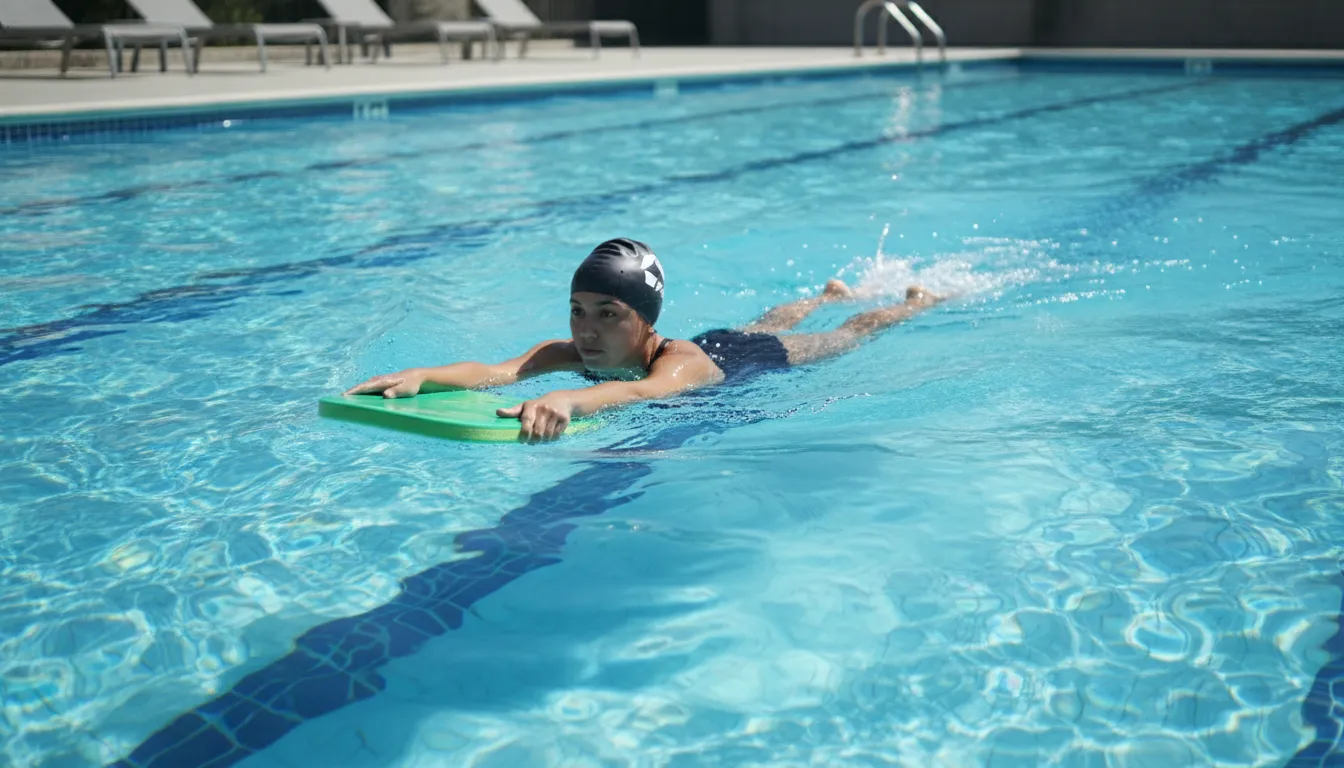
- Use the correct hand position. The most common way is to hold the top edge with both hands. Your hands should rest flat on the upper corners of the board, with your fingers wrapping over the front edge. This position gives you the most stability and is great for general swim workouts. You can also grip the sides of the board, which keeps your arms parallel and can help reduce shoulder fatigue during long kick sets.
- Choose an advanced grip for harder workouts. Place your hands at the bottom edge of the board. This keeps the board out in front and forces you to use your core to stay balanced. No matter which grip you choose, do not squeeze the foam too tight, as tensing your hands will make your shoulders stiff.
- Maintain proper body alignment. Keep your elbows on top of the board to support your upper body weight. Your head should point down toward the bottom of the pool with a neutral neck and spine. Do not look straight ahead, as raising your head makes your hips sink. Make sure your kick starts from your hips rather than bending your knees.
- Master your breathing. When you need to breathe, lift your head forward just enough to clear the water, take a quick breath, and then put your face back down. Do not keep your head lifted the entire time, as this arches your back and puts stress on your lower spine. If you struggle to breathe this way, pair your board with a snorkel to keep your head down.
- Avoid common mistakes. Many swimmers pull themselves forward with the board instead of letting their legs do the work. Keep your upper body still. Do not tense your shoulders and neck. Avoid arching your back, which happens when you lift your head too high. This hip-driven kick is a core technique taught by competitive swim programs to build efficient movement in the pool.
Frequently Asked Questions
How do I choose the right kickboard size?
To choose the right size, look at your body weight and shoulder width. A standard adult kickboard is about 12 inches by 19 inches. It should support your upper body without forcing your hands too far apart or pushing your shoulders up too high. If the board is too small, your head and hips will sink, which ruins your swim body position. Children and smaller swimmers should use a junior-sized board to keep their hands in line with their shoulders.
What is a kickboard-pull buoy combo?
A combo board is a single piece of swim gear designed to work as both a kickboard and a pull buoy. It has a special contoured shape with a thin middle and flared ends that you can grip with your hands or place between your thighs. While it saves space in your swim bag, it provides less buoyancy than a separate, dedicated board. This makes it a great choice for experienced swimmers who want to travel light rather than beginners who need high flotation.
Why use a kickboard for swim workouts?
Using a kickboard helps you isolate your leg muscles to build lower body strength and kick endurance. It also allows you to focus on your body alignment and ankle flexibility without worrying about arm movements or breathing patterns. By lifting your upper body, the board takes the stress off your arms. This lets you spot and fix technique errors in your flutter, breaststroke, or dolphin kick. Check out the full Swim2000 guide on kickboards for more in-depth training tips.
Are there kickboards specifically for children?
Yes, children should use junior-sized kickboards. These boards are shorter, narrower, and thinner than adult boards. They are designed for smaller frames to keep a young swimmer in a flat, natural position without extra drag. Using an adult board for a child creates a poor body position that is hard to correct later. Browse the kickboard selection at Swim2000 to find age-appropriate boards for every young swimmer in your family.
What is the difference between EVA and PE foam kickboards?
EVA foam is denser, more durable, and resists water absorption, making it the premium choice for serious swimmers who train regularly. PE foam is softer, cheaper, and more flexible, but it absorbs water over time and becomes heavy. For swimmers who use their board multiple times per week, EVA foam offers much better value and performance. For occasional or casual use, a PE board may be sufficient.
Ready To Find Your Perfect Kickboard?
Choosing the right kickboard comes down to your body type, training goals, and experience level. Beginners benefit from the stability of a large traditional board. Competitive swimmers gain speed with a contoured shape. Triathletes improve body position with an alignment board. And kids need junior-sized boards matched to their age and size.
Browse the full kickboard collection at Swim2000 to compare top brands like Speedo, FINIS, Arena, and TYR. With expert advice and free shipping on qualifying orders, finding the right kickboard has never been easier. Get the board that fits your swim goals and start kicking with confidence today.


