


Foggy goggles can ruin a swim set in seconds. You push off the wall, find your rhythm, and within two laps your vision turns milky, forcing you to stop mid-length to clear your lenses. It disrupts your pace, wastes training time, and in open water it is a genuine safety concern. The good news? You do not have to live with it. By understanding the simple science of goggle fog and adopting a few straightforward habits, you can enjoy crystal-clear vision from your warm-up to your last lap. Shop Swim2000's full selection of high-performance swim goggles designed for competitive and recreational swimmers.
How To Prevent Swim Goggles From Fogging: Why Do Swim Goggles Fog Up? The Science of Condensation
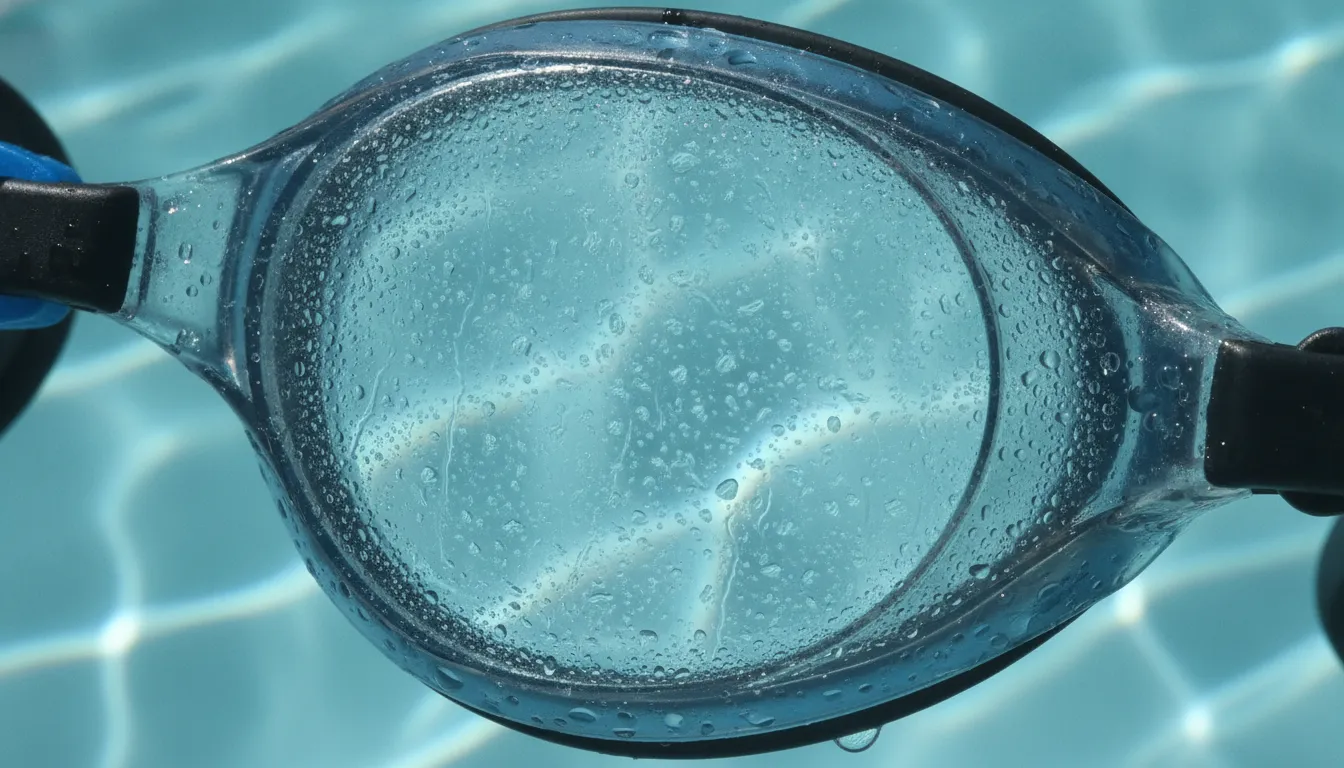
Goggle fog is caused by condensation. Your body heat warms the air trapped inside the gasket while your skin releases moisture through sweat and natural evaporation. The goggle lens, meanwhile, is cooled by the pool or open water. This temperature difference forces water vapor inside the goggles to condense into thousands of tiny droplets on the lens surface. Because water has high surface tension, these droplets bead up rather than spreading flat. Each bead scatters light in every direction, creating that familiar milky fog that blocks your vision.
It is the exact same phenomenon as a bathroom mirror steaming up after a hot shower. The bigger the temperature gap between your skin and the water, the faster and more aggressively fog will form. Warm indoor pools and cold open-water environments both trigger condensation. Which is why swimmers in every discipline from casual lap swimmers to elite competitors face the same frustrating problem during their workouts.
Factory Anti-Fog Coatings: Why They Fail
Most quality swim goggles ship with a factory-applied anti-fog coating made from hydrophilic (water-loving) polymers. Instead of repelling water, these materials attract it, spreading condensation into an ultra-thin transparent film that light passes through without scattering. When it works, this coating keeps your view perfectly clear.
But factory coatings are fragile. A single touch of the inside of the lens with your finger, a towel, or a t-shirt can scratch or degrade the coating permanently. Oils from your skin bond to the hydrophilic layer and create spots where water will bead up again. Even without touching the lens, the coating naturally degrades after weeks to months of regular use, especially in chlorinated or salt water. Once it goes, fog returns fast.
Key takeaway: if your goggles are fogging and they are relatively new, you may have accidentally damaged the factory coating. If they are older, the coating has simply worn out and needs replacement via a reapplication method listed below.
In short: Goggle fog occurs when warm, moist air inside the lens condenses on the cooler lens surface. Factory anti-fog coatings work by spreading condensation into a clear film, but they degrade over time and are easily damaged by touching the lens. The solutions below restore or replace that protective layer.
6 Proven Ways to Prevent Swim Goggles from Fogging
Whether your factory coating is gone or you simply want extra protection, these six methods deliver reliable results. Choose the one that fits your routine and budget.
1. Use a Dedicated Anti-Fog Spray
Commercial anti-fog sprays are the most reliable and long-lasting solution. Products like Speedo Anti-Fog Spray contain concentrated surfactants that deposit a fresh hydrophilic layer onto the lens. For best results, spray a small mist onto clean, dry lenses, let it sit for a few minutes, then rinse gently with cool water before swimming. Avoid touching the inside of the lens after application. A single treatment typically lasts several swim sessions.
2. The Spit Method (Human Saliva)
It is not glamorous, but it works. Competitive swimmers and triathletes have used this trick for decades. Spit onto the inside of each dry lens, use your fingertip to spread it evenly across the surface. Then give the goggles a brief rinse in pool water before putting them on. Human saliva contains natural enzymes and proteins that act as surfactants, reducing surface tension and preventing droplet formation. This is a free, portable solution that works in a pinch.
3. The Baby Shampoo Hack
A drop of diluted baby shampoo on each lens provides a pleasant-smelling alternative to saliva. Buff it gently with your finger until it coats the entire inner surface, then rinse thoroughly in clean water until no bubbles remain. Baby shampoo contains mild surfactants that leave behind an invisible anti-fog film. Because it is formulated to be tear-free, any trace residue that enters your eyes will not sting or irritate during your swim.
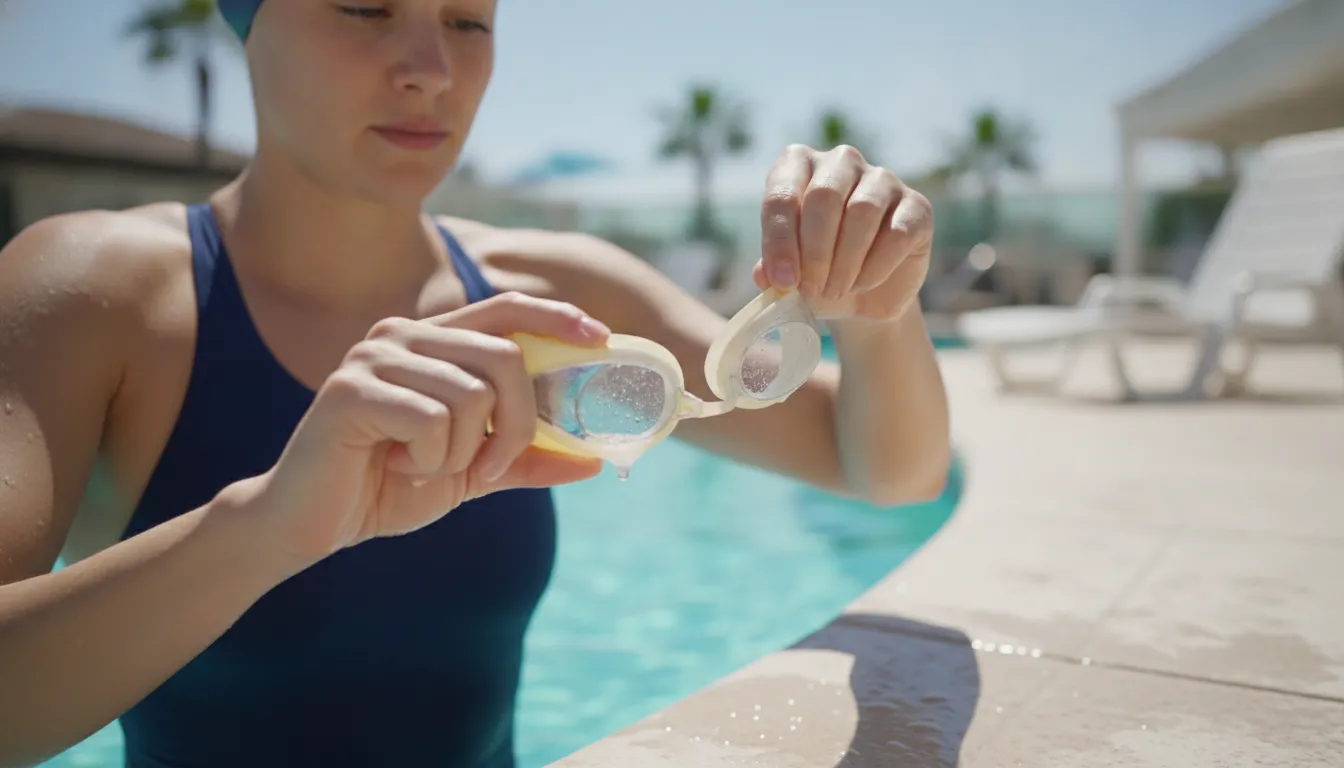
In short: Anti-fog spray, spit, and baby shampoo all work by depositing surfactants that lower surface tension and prevent condensation droplets from forming. Spray is the most durable; spit is the most portable; baby shampoo is the most pleasant to use.
4. Wet Your Face and Goggles Before Swimming
Sometimes a simple temperature adjustment is all you need. Before putting your goggles on, splash cool pool water onto your face and dip the goggles in the water. This reduces the temperature differential between the inside of the goggles and the outside lens surface, which delays the onset of condensation. It is not a long-term fix, but it helps bridge the first few minutes of a workout while your body adjusts to the water.
5. Ensure a Proper, Secure Fit
If your goggles fog despite treatment, the problem may be a poor seal. A loose or ill-fitting frame allows humid air or water to leak into the gasket continuously, overwhelming any anti-fog barrier. Adjust the strap and nose bridge until the goggles create an airtight seal. Test the fit by pressing the goggles to your eye sockets without the strap: they should stay in place for one to two seconds from suction alone. If they slip off immediately, try a different frame size or style. Browse Swim2000's full goggle collection for options from Speedo, Arena, TYR, and Nike to find a frame shape that suits your face.
6. Avoid Heat and Store Correctly
How you store your goggles between swims directly affects how long the anti-fog protection lasts. Never leave goggles in a hot car, in direct sunlight, or at the bottom of a damp swim bag. Heat degrades both the plastic lens and the chemical anti-fog coating. Instead, rinse your goggles with fresh water after every swim, let them air dry in a shaded area, and store them in a protective case. A simple hard-shell case prevents scratches from keys, kickboards, and zippers that can damage the lens surface.
| Method | Duration | Cost | Best For |
|---|---|---|---|
| Anti-fog spray | Several sessions | $5-$15 per bottle | Daily training, long-term solution |
| Spit method | One session | Free | Quick fix, no-gear backup |
| Baby shampoo | One session | $3-$5 per bottle | Sensitive eyes, pleasant scent |
| Wet face/goggles | Minutes | Free | Pre-swim warm-up, mild fog |
| Proper fit | Ongoing | $15-$40 for new goggles | Chronic fog due to poor seal |
| Proper storage | Ongoing | $5-$15 for case | Extending coating lifespan |
How to Make Your Anti-Fog Last Longer
Preventing fog is as much about daily maintenance as it is about quick hacks. Follow these care rules to extend the life of both your factory coating and your reapplied treatments:
- Never touch the inside of the lenses. This is the most important rule. Finger oils and abrasives ruin any anti-fog coating, whether factory-applied or from a spray. Even if you see a spot, leave it alone or rinse it gently.
- Rinse with fresh, cold water after every swim. Chlorine, salt water, and pool chemicals are corrosive and will degrade anti-fog coatings over time. A quick rinse under the tap after each session removes residue.
- Let them air dry. Pat lenses with a soft microfiber cloth on the outside only. Do not use a hairdryer, do not wipe the inside, and do not leave them in direct sunlight. Place them in a well-ventilated area to dry naturally.
- Use a protective case. Tossing unprotected goggles into a swim bag exposes them to scratches, dents, and chemical spills. A hard or soft case adds years of life to your gear.
- Replace when needed. Even with perfect care, anti-fog coatings eventually wear out. When reapplication methods stop working effectively, it is time for a new pair of goggles. At Swim2000, you will find replacements from leading brands at competitive prices with free shipping on orders over $49.
In short: Proper goggle care is simple: never touch the lens interior, rinse after each swim, air dry in a case, and replace when the coating is exhausted. These habits make every anti-fog method work longer and better.
What About Anti-Fog Coating Deterioration?
Many swimmers ask whether they should buy new goggles or try to revive old ones. The answer depends on the state of the lens. If the coating has only partially worn away, an anti-fog spray or baby shampoo treatment can restore clear vision effectively. However, if the coating is completely gone across the entire lens surface or the lens itself has developed micro-scratches, no reapplication method will produce reliable results. In that case, purchasing new goggles is the more cost-effective path. Shop Swim2000 for quality swim goggles from trusted brands that include durable factory anti-fog coatings.
Frequently Asked Questions About Swim Goggle Fog
Does spit actually prevent swim goggles from fogging?
Yes. Human saliva contains natural enzymes and proteins that act as surfactants, lowering the surface tension of water and preventing condensation from forming visible droplets. It is the most widely used emergency anti-fog method among competitive swimmers.
How long does anti-fog spray last on swim goggles?
Depending on usage frequency and pool conditions, a single application of anti-fog spray typically lasts two to five swim sessions. Reapply when you notice the first signs of condensation returning, and always apply to clean, dry lenses for maximum adherence.
Can you restore factory anti-fog coating on swim goggles?
You cannot restore the original factory coating itself, but you can replicate its effect with anti-fog sprays, wipes, or gels. These products deposit a fresh hydrophilic layer that mimics the factory treatment. If the original coating is only partially worn, an anti-fog spray can fill in the gaps and restore clear vision.
Why do my new goggles fog up immediately?
If brand-new goggles fog immediately, the most likely cause is that the factory coating was touched or rubbed during handling or packaging. Finger oils and abrasion can destroy the hydrophilic layer before you ever hit the water. Try applying a surfactant method like baby shampoo or anti-fog spray before your next swim.
Does baby shampoo damage swim goggles?
No. Diluted baby shampoo is safe for all polycarbonate goggle lenses and will not damage the frame or gasket. It is formulated to be mild and tear-free, making it one of the safest and most affordable anti-fog alternatives available. Just rinse thoroughly before swimming to remove excess suds.
Clear Vision Starts with the Right Gear and Care
Foggy goggles do not have to be part of your swim routine. Whether you choose anti-fog spray, the classic spit method, baby shampoo, or simply dial in your goggle fit, each of these approaches addresses the underlying physics of condensation. Combine them with proper daily care: rinse after every swim, never touch the inside of the lens, and store in a protective case.
That combination will keep your vision clear, your training on track, and your gear performing at its best for months longer.
At Swim2000, we have been helping swimmers find the right gear since 1994. From competitive goggles and anti-fog treatments to full training kits, we carry everything you need for clear, comfortable swimming. Enjoy free shipping on US orders over $49, 45-day returns, and free exchanges. Shop Swim2000's goggle collection today and keep your view crystal clear.


