

Finding swim goggles for wide faces is less about picking the biggest-looking lens and more about locating a pair that seals comfortably across your own eye area. Lens width, gasket shape, bridge fit, and strap adjustment all affect how the goggles sit. A few simple checks can help you compare options before your next practice.
Compare swim goggles for your next practice
What does “wide fit” mean for swim goggles?
A wide face does not automatically call for the widest frame you can find. The relevant question is whether a goggle’s eye cups sit over your eye sockets, make an even seal, and stay comfortable without the strap being pulled excessively tight. Face width, the distance between the eyes, nose shape, and the contour around the eye all influence fit. Two swimmers who describe their faces the same way may prefer different goggles.
Think of fit as the relationship between the eye cups and your face, not a single size label. A larger lens can provide more coverage, but it may also sit too close to the nose or cheekbones. A compact, low-profile shape can feel secure for one swimmer and create pressure points for another. Compare the shape and contact area rather than treating “wide” as a guarantee of comfort.
In brief: Look for balanced contact around both eyes, a bridge that sits naturally, and a seal that does not depend on over-tightening the strap. Use those checks to compare shapes, even when product listings do not use the same sizing terms.
How can you tell whether lens shape suits your face?
Lens shape determines where the goggle sits and how much of the area around each eye it covers. When comparing goggles, notice the width of each lens, the space between the lenses, and the outline of the gasket. A broad, curved lens may spread contact over a larger area, while a narrower or more compact cup may sit closer to the eye. Neither shape is automatically the right one for every wide face.
Try a gentle fit check before adjusting the strap. Place the goggles over your eyes and press lightly so the gaskets meet your skin. Some goggles will hold briefly from suction alone, but that quick check is only a starting point: it does not prove that they will stay sealed through a full swim. Look for an even feel around the eye cups rather than one edge digging in or a gap you can feel.
For comparison, browse different shapes such as TYR Special Ops 3.0 goggles, TYR TRACER-X racing goggles, and Blueseventy NR2 goggles. These are examples to inspect, not a promise that a particular model fits every face. Product construction, lens shape, and fit can vary by model, so check the specific listing and try the goggles when possible.
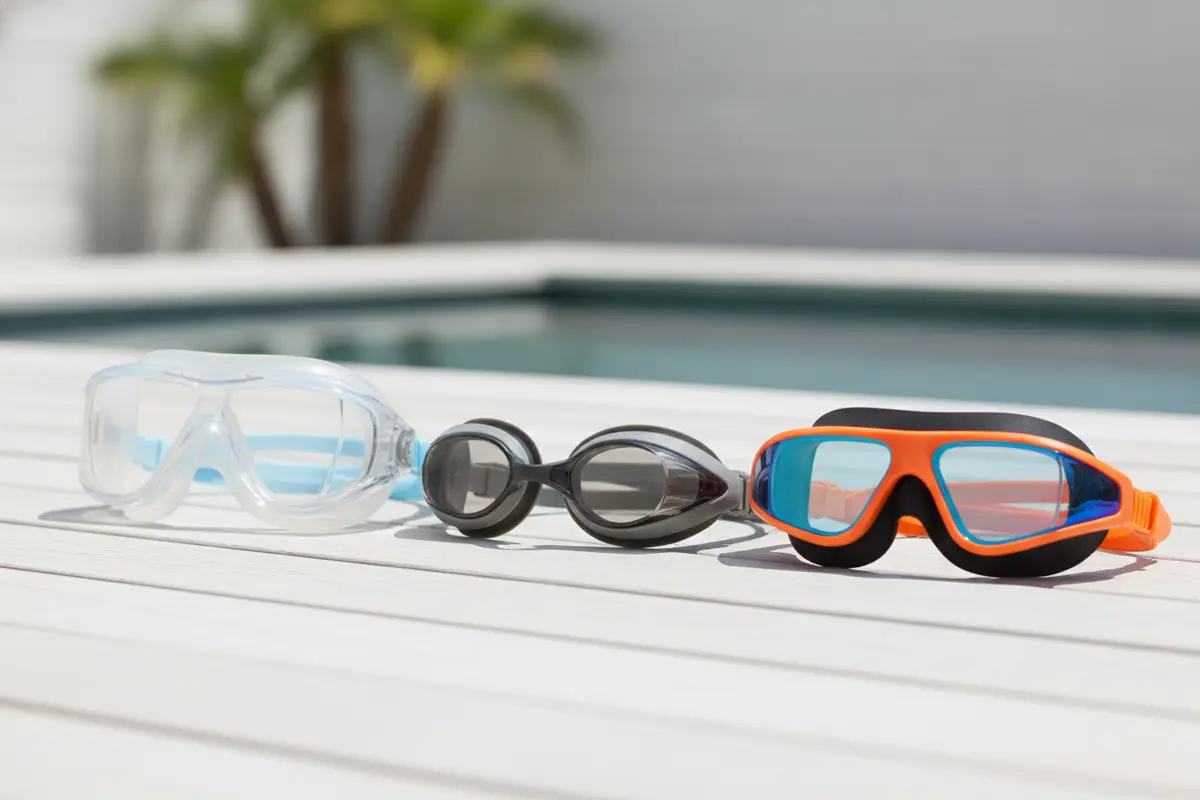
In brief: Compare lens width and gasket outline, then check where each cup meets your face. Even coverage and a comfortable position matter more than a large-looking lens by itself.
Where should the gasket sit?
The gasket is the soft edge that contacts the skin around the lens. It should rest on the area surrounding your eye without pressing sharply into the brow, temple, or upper cheek. If the inner edge lands on the bridge of your nose or the outer edge reaches an uncomfortable point near your temple, try another shape or bridge setting instead of tightening the strap to force a seal.
Check each eye separately. Some swimmers have a small difference in the way each side of the face sits, so a comfortable seal on one side does not guarantee the other side is equally settled. Move the cups slightly and repeat the gentle check. If there is a distinct pressure point, persistent gap, or need to pull the strap very tight, treat that as a sign to compare another option.
During a pool test, notice whether the seal stays even as you look forward, turn your head, and push off gently. A small amount of leakage can come from movement or an adjustment issue, but repeated leaking in the same spot may mean the gasket shape is not matching your face. Take the goggles off and reset them rather than enduring a painful fit.
Which bridge options can make a difference?
The bridge connects the two eye cups and determines how far apart they sit. A bridge that is too narrow may pull the cups inward and create pressure near the nose; one that is too wide may leave the goggles sitting awkwardly or make the seal harder to balance. If a model includes interchangeable bridge pieces, test the available options one at a time and keep the strap loose while you assess the position.
Do not assume that changing the bridge will solve every fit problem. If the cups themselves are too narrow, too deep, or shaped differently from your eye area, the bridge can only adjust their spacing. A model with a fixed bridge may still fit well if its spacing suits you. Check the product details to see what adjustment features are actually included; do not infer them from a photo or from another model in the same brand.
How should the strap feel on a wide face?
The strap should keep the goggles in place without doing the work of creating an uncomfortable seal. Start with it loose enough to position the cups, set the bridge if the model allows it, then tighten the strap gradually. A snug fit is different from a painful one. If the frame shifts or leaks unless the strap is pulled hard, revisit the cup placement or try another shape.
Check that the strap lies flat and is not twisted. Many swimmers position it around the back of the head in a way that helps keep the cups stable, but there is no one strap position that corrects a mismatch between the goggle and face. Adjust both sides evenly and test with a few gentle head movements. Avoid leaving deep marks or continuing through soreness just to keep the goggles in place.
A swim cap can change how the strap sits against your head. Try your usual cap and goggles together, placing the strap comfortably rather than trapping it in a position that pulls the eye cups out of place. A simple silicone option such as the Arena SIRENE swim cap is an example of a separate piece of swim gear to consider when checking your normal pool setup; the cap does not determine whether the goggle gasket fits your face.
What should you compare when shopping?
Product descriptions do not always use a common standard for face width, so build a short comparison around observable details. Read model-specific information, check the lens and gasket photos, and look for details about bridge adjustment and strap construction. If a listing does not answer a question that matters to you, do not assume the feature is present.
| What to compare | What to look for | What a mismatch may feel like |
|---|---|---|
| Lens and cup shape | Coverage that sits over your eye area without crowding nearby features | Pressure at the temple, brow, cheek, or nose |
| Gasket contact | Even contact around the eye cup, without a sharp edge or obvious gap | Repeated leaking in one area or a painful contact point |
| Bridge | Spacing that lets both cups sit naturally; check whether the bridge is adjustable | Cups pulled inward, sitting too far apart, or resting unevenly |
| Strap adjustment | A stable position with moderate, even tension | Goggles shift unless the strap is overtightened |
| Use and lens details | Details that suit your pool setting and intended practice | Visibility or comfort that does not suit the conditions |
Use this checklist to compare product pages such as TYR Special Ops 2.0 goggles and TYR Special Ops 3.0 goggles. Compare the specific product information rather than assuming models with similar names share the same fit, lens, or adjustment features.
How can you narrow down choices before ordering?
Start by writing down what is not working with your current pair. Is the pressure at the outer corners, the bridge, or below the eyes? Do the goggles leak in one spot, or do they slide only when you push off? A specific symptom gives you a more useful comparison than a broad label like “too small.” Keep your notes focused on fit, because the same pair can feel different when it is positioned differently.
Next, check the product details for the features that address your concern. If the cups crowd your nose, compare bridge spacing. If pressure is concentrated at the temples, consider a different lens outline or gasket footprint. If the seal fails even when the strap is set comfortably, prioritize the cup shape rather than looking for a tighter strap. If the listing does not show the relevant details, ask for clarification or shortlist a model whose construction is easier to assess.
Compare two or three possibilities instead of judging one pair in isolation. Consider your main use, how long you typically wear goggles in a session, and whether you need a particular lens treatment for your pool environment. Treat descriptions such as “racing” or “training” as intended-use cues, not proof of a particular face fit. A model marketed for competition can still feel wrong on your face; a model with a larger-looking frame is not automatically more comfortable.
Finally, keep expectations practical. The goal is a stable seal and comfortable contact for your activity, not a frame that leaves no sensation at all or a promise that a specific goggle will fit every swimmer with a wide face. If a product description is unclear on a detail, confirm the details before making your choice.
How do you test goggles before a full practice?
Give a new pair a short, low-pressure test before relying on it for a long workout or race. First, position the cups gently and check for obvious pressure or gaps. Next, adjust the bridge if available and settle the strap without pulling it tight. Then enter the water and test with a few easy lengths or short intervals, paying attention to leakage, movement, and comfort.
- Start dry. Check the cup position, bridge, and strap before getting in the water.
- Move gently. Turn your head and look around to see whether the goggles shift.
- Test in the pool. Swim a short, easy distance and notice where any water enters.
- Make one adjustment at a time. Reposition the cups or adjust the strap, then test again.
- Stop if there is pain. Persistent discomfort is a reason to remove the goggles and compare another fit.
Change only one thing at a time. If you alter the bridge, strap, and cup position at once, it becomes harder to identify which adjustment helped. If a model remains uncomfortable after careful positioning, a different gasket or frame shape may be a better next comparison than more strap tension.
How can you compare bridge styles and cup spacing?
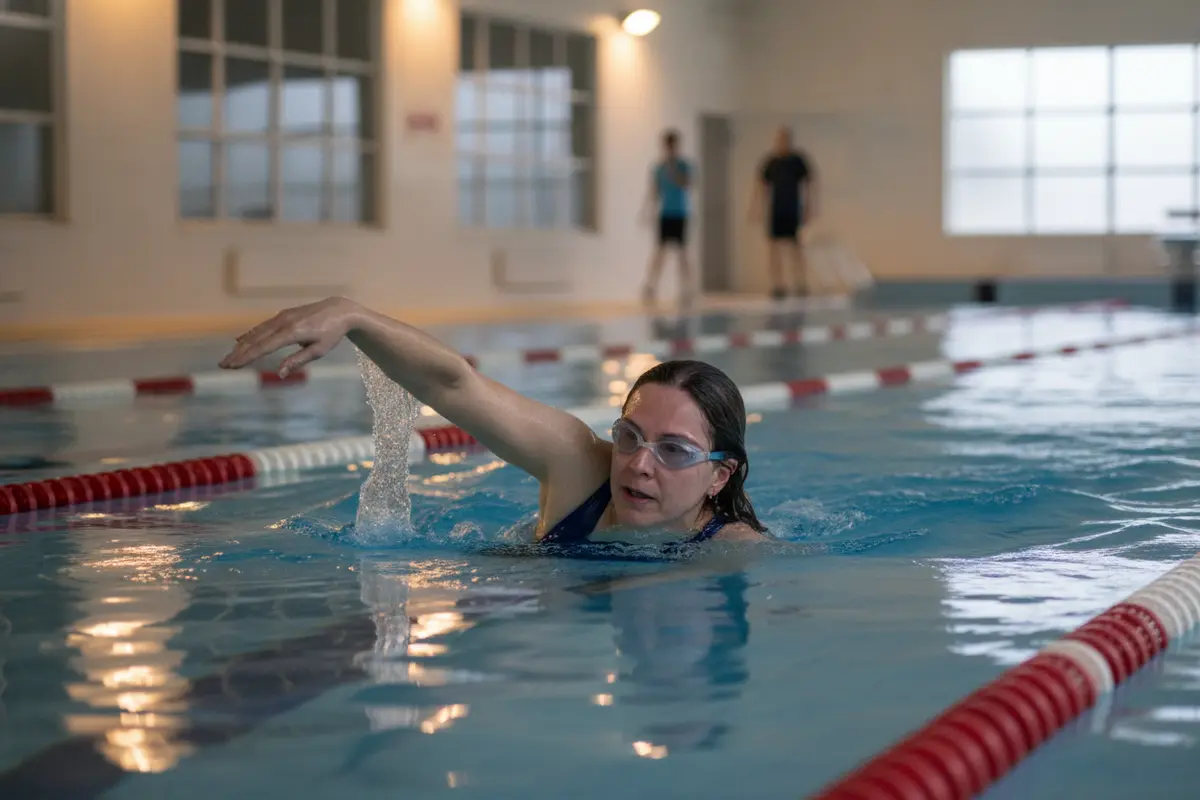
Bridge construction is one part of the fit, but cup spacing and eye position need to work together. With an adjustable bridge, a small change can move the cups closer together or farther apart. Make adjustments gradually and keep the goggles level: if one cup sits higher or twists, reset the position before deciding whether the bridge is right. A fixed bridge offers fewer adjustments, but that does not make it a poor fit if the spacing naturally matches your face.
When product photos are available, inspect the bridge area and the inner edges of both cups. A photograph cannot tell you exactly how the gasket will sit on your face, but it can help you shortlist shapes that look worth trying. Read the product details for the actual bridge or fit features. Do not assume that a bridge is interchangeable, adjustable, or included in multiple sizes unless the listing says so.
If you are shopping for a child or buying for another swimmer, do not use age or a broad face description as the only sizing guide. Ask the swimmer to check the seal and pressure themselves when possible. Comfort is personal, and a pair that seems roomy in your hand may feel different once positioned on a particular face.
What changes for practice, racing, or open water?
For regular pool practice, comfort over repeated sessions may matter more than having the smallest possible profile. For racing, a swimmer may prefer a different feel, but a snug or low-profile design is not automatically a better fit for a wider face. If you compete, consider the event and your own comfort, and verify any equipment questions with the relevant governing body. USA Swimming is a starting point for U.S. swimmers seeking the organization’s current information; check the rules that apply to your meet rather than relying on a product description.
Open-water swimming adds changing light and surroundings to the fit question. Consider the lens and visibility details stated for the exact model and the conditions in which you will swim. Do not assume that a mirrored, tinted, or clear lens will suit every setting just because the frame fits. Secure fit remains essential, but it does not replace appropriate open-water preparation or safety practices.
How should you care for a pair that fits?
Follow the care directions supplied with the goggles. As a general routine, rinse them with clean water after use, avoid rubbing the inside of the lenses, and let them air-dry away from heat. The inside surface may have a treatment that can be damaged by touching or wiping it. Store the goggles so the lenses do not rub against hard or sharp objects; a dedicated swim bag can help keep pool gear together, such as the Arena Pool/Gym bag.
Keep the strap and gasket clean, and check them occasionally for visible wear. If the seal changes after a long period of use, inspect the position and condition before concluding that your face has changed or that more tension is needed. Proper care helps preserve comfort and clarity, but it cannot make a poorly matched goggle shape fit.
Explore another goggle shape and compare the fit details
Frequently asked questions about swim goggles for wide faces
Do wide faces always need large goggles?
No. A larger lens may provide more coverage for some swimmers, but lens shape, gasket placement, and bridge spacing also matter. Look for a comfortable, even seal rather than choosing by lens size alone.
Should swim goggles leave marks around the eyes?
A brief impression may happen, but painful pressure, deep marks, or lingering soreness suggest that the fit or strap tension needs attention. Remove the goggles and reassess the cup position; do not rely on overtightening to hold a seal.
Can I make narrow goggles fit by loosening the strap?
Loosening the strap may reduce pressure, but it will not change the shape or spacing of the cups. If the gasket still presses sharply or leaves a gap, compare another frame or bridge configuration.
How can I tell if goggles are leaking because of fit?
Notice whether water repeatedly enters at the same point after you have positioned the cups and adjusted the strap. Repeated leakage in one area can indicate that the gasket is not matching your face, though movement or placement can also contribute. Make one adjustment, test again, and switch shapes if the problem continues.
Should I choose the same goggles as another swimmer with a wide face?
Not necessarily. Face shape and eye spacing vary, even among swimmers who use the same description for their fit. Use another swimmer’s pair as a model to compare, not as proof that it will fit you the same way.
To choose confidently, compare the cup shape, gasket contact, bridge spacing, and strap behavior, then test the pair gently before a demanding session. The best fit is the one that stays comfortably positioned on your face without relying on excessive tension.