


Choosing swim shoes starts with the surface and movement you expect. A pair that feels comfortable on a beach may be too loose for lap training. While a close-fitting training shoe may not provide the underfoot coverage you want on hot sand or a rough pool deck.
Browse women's water shoes for aquatic activities
Swim shoes should match the surface and movement you expect. Look for a secure fit and flexible construction in the water, dependable grip for wet transitions, and drainage that keeps the shoe from becoming heavy. Thicker soles generally add support and traction, while lighter aqua-sock styles favor flexibility.
The right choice starts with understanding what this footwear is designed to do, and when protection or traction matters more than a minimal feel.
What Are Swim Shoes Designed to Do?
Swim shoes are footwear made for movement in and around water. Their main jobs are to give your feet more contact with wet surfaces, create a barrier between your skin and rough ground, and remain comfortable when wet. The right pair should match the surface and activity, since a shoe for a rocky shoreline has different priorities from a lightweight option for poolside use.
Swim shoes provide grip, foot protection, and water-friendly comfort without being required for every swim. Look for the balance of sole coverage, fit security, drainage, and flexibility that suits your setting.
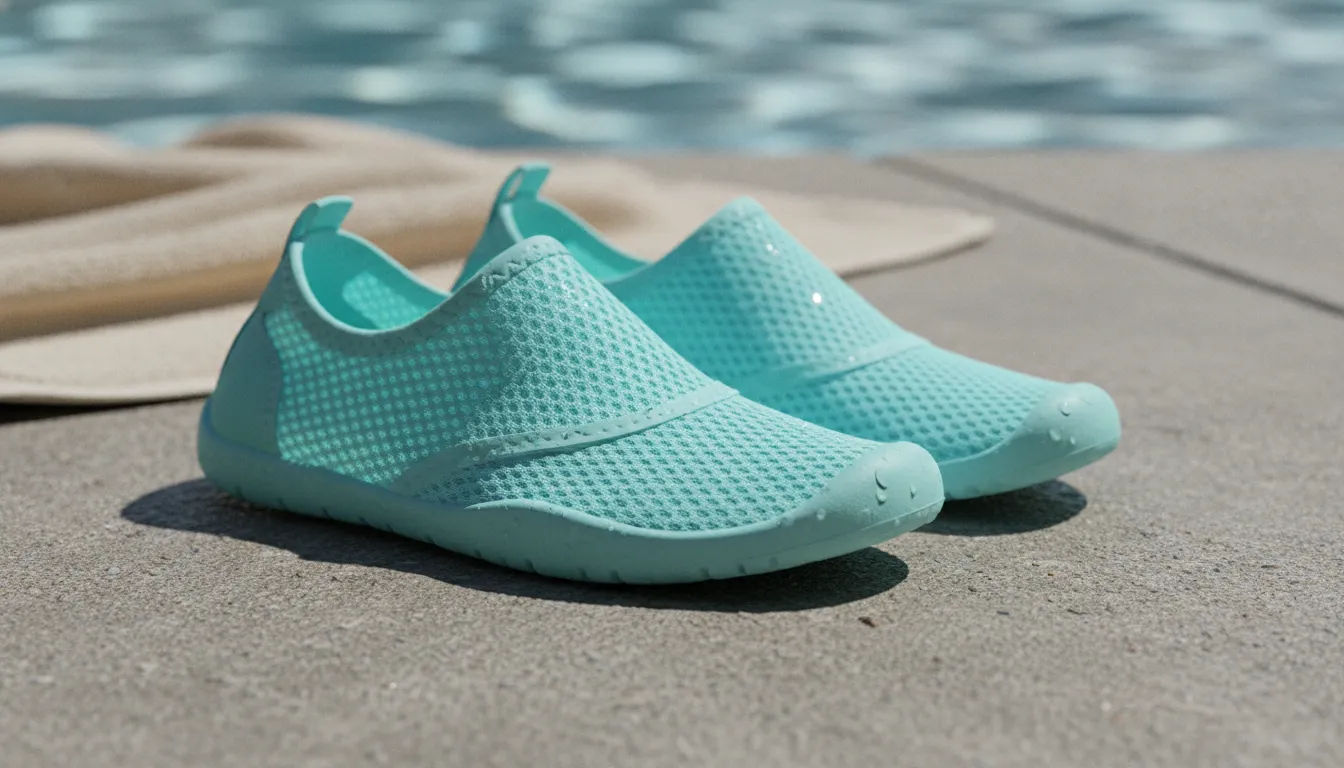
Grip on wet surfaces
Wet pool decks, boat ramps, rocks, and other uneven areas can feel unstable under bare feet. A textured or non-slip sole can help you maintain contact as you walk, turn, or move between the water and the shore. That does not make any surface risk-free, so step carefully and follow posted pool or beach guidance. For a simple poolside option, pool deck sandals may be more practical than a fully enclosed shoe.
Protection from rough or hot ground
Swim shoes can cover the sole and, depending on the design, part of the upper foot. That coverage helps separate your skin from small stones, shells, rough pool edges, and hot sand. Protection varies by model. A thin, flexible aqua sock may feel natural but offers less structure than a shoe with a more substantial sole. If you plan to walk over uneven ground, check the construction and coverage rather than assuming every water shoe provides the same protection.
Drainage and comfort in the water
Water-friendly shoes are designed to let water move through openings or quick-drying materials instead of holding a heavy pocket of water around your feet. Drainage can make walking more comfortable and help limit rubbing when the shoe fits correctly. A secure fit matters too: the heel should stay in place without pinching, while the toes should have enough room to move naturally.
Swim shoes are most useful for water aerobics, pool-deck transitions, beaches, rocky shorelines, and other settings where grip or protection matters. In a clean, smooth pool used for lap swimming, many swimmers prefer bare feet or specialized training equipment. Choose footwear when it solves a specific comfort or surface problem, not because every swim requires it.
Which Swim Shoes Fit Lap Swimming Best?
For lap swimming, start by deciding whether you need footwear for active swim training or for the walk to and from the pool. A close-fitting training bootie should feel secure through repeated wall push-offs and turns without squeezing the toes. A general water shoe may make more sense when you also need coverage on a wet deck, rough shoreline, or other surfaces outside the lane.
Use this table to match footwear with your training needs.
Compare the options below.
| Footwear type. | Fit and feel. | Best use. |
|---|---|---|
| Swim-training booties. | Close and secure around the foot, with enough room for natural toe comfort | Dedicated training sessions when foot protection is the main need |
| General water shoes. | Snug at the heel and midfoot, with a sole and upper suited to wet surfaces | Pool-to-deck use, beach access, and broader aquatic activities |
| Aqua socks. | Lightweight and flexible, with a close second-skin feel | Minimal coverage when flexibility matters more than a substantial sole |
Check heel security before entering the pool
Try both shoes on and walk a few steps. The heel should stay in place instead of lifting with each stride, while the midfoot should feel held without painful pressure. Leave adequate room for the toes to move. A shoe that feels tight when dry is unlikely to become more comfortable once wet, and a loose heel can create rubbing or distraction.
Also bend the foot and check flexibility through the forefoot. Lap swimmers typically need a pair that does not feel bulky or restrictive in the lane. Look at the sole thickness in relation to your purpose: a more substantial sole can make sense for deck or shoreline contact. Lighter training protection may be preferable when you want less material around the foot. Do not assume that every pair of swim training foot protection is interchangeable with general-purpose swim shoes. Finis FootBooties are listed for swim-training foot protection, while products such as women's water shoes are positioned for broader aquatic use.
Finally, confirm the style-specific size chart before ordering. Swim shoes can vary in fit, so use your measurements and intended activity rather than choosing only by your usual street-shoe size.
How Should Swim Shoes Work for Water Aerobics?
Water-aerobics shoes should feel secure during repeated steps, lateral movements, kicks, and transitions between the pool and deck. Look for a close fit that holds the heel and midfoot without painful pressure. Your toes should have enough room to move naturally, but the shoe should not slide when you lift a foot or change direction.
Water-based exercise can be easier on the joints for some people, and the CDC notes that people may exercise longer in water without increased joint or muscle pain. Shoes do not create those benefits, but the right design can help you focus on the class instead of adjusting loose footwear. Read the CDC's water-exercise guidance for the broader health and safety context.
Choose flexibility for movement
A water-aerobics shoe needs to bend with the foot. A flexible upper and sole can make it easier to point the toes, step through resistance, and move through choreography. Excess material or a stiff construction may feel restrictive, especially during exercises that require ankle movement. At the same time, the shoe should not collapse or twist so easily that your foot shifts inside it.
Drainage also matters. Water that can flow through the shoe is less likely to make it feel heavy during class. Quick-drying or mesh materials can support comfort between sessions, but material labels alone do not guarantee a particular level of ventilation or drying speed. Check the individual product description and choose the construction that matches how often you will use it.
Check traction during pool-deck transitions
The pool deck is a different surface from the pool floor. Wet feet, splashes, and condensation can contribute to slippery conditions. A shoe with an outsole intended for wet surfaces may offer useful contact as you enter, exit, or move beside the pool. No footwear eliminates the need to walk carefully. Follow the facility's rules, use handrails where available, and avoid quick turns on wet areas.
For a general aquatic shoe, compare the fit and intended use before choosing a style. A water shoe such as the women's Tidal Cruiser is positioned for aquatic use, while the quick-drying Surfknit Pro offers another material-focused example. The best pair is the one that stays comfortably in place, bends with your movements, and feels predictable on the surfaces where your class actually takes place.
Choosing Swim Shoes for Pool Decks and Beach Use
The best pair depends on the surface you expect to cross and how much protection your feet need. Pool decks are usually wet and smooth, while beaches may add hot sand, shells, gravel, or uneven entry points. Closed swim shoes generally provide more coverage and a more secure fit. Sandals offer ventilation and quick entry, but leave more of the foot exposed.
| Feature | Closed swim shoes | Pool deck sandals |
|---|---|---|
| Traction | Look for a sole designed to maintain contact with wet or uneven ground. This can be useful when walking from the beach into the water or across a damp deck. | Useful for short poolside walks, provided the sole feels stable and the sandal stays on your foot. |
| Drainage and drying | Mesh or other flow-through construction can help water escape and make the shoe more practical after swimming. The mesh water shoes listed by Swim2000 are a relevant example. | Open construction allows ventilation and makes sandals easy to remove, but sand and small debris can still collect under the foot. |
| Toe and underfoot protection | More coverage can help shield toes and the sole from rough sand, shells, and stones. Protection still varies by design, so inspect the toe coverage and sole before using a pair on rocky shorelines. | Leaves the toes and much of the upper foot exposed. Choose sandals for maintained pool areas or easy beach access rather than assuming they cover every hazard. |
| Hot sand | A closed upper and sole can create a barrier between your feet and heated sand. A quick-drying option such as quick-drying swim shoes may be practical for repeated transitions between water and shore. | Provides some protection under the foot while keeping the upper open. Sandals may be comfortable for brief walks, but exposed toes remain vulnerable to hot surfaces and debris. |
For a pool deck, start with the surface and walking distance. Oregon aquatic-facility guidance notes that splashes, condensation, and wet feet can make surfaces slippery, and it calls for slip-resistant textured finishes on pool decks. Footwear cannot replace careful walking or a properly maintained deck, but a stable sole can be part of a sensible poolside setup. A pool deck sandal may suit a quick trip between the locker room and the water. A closed shoe is better when you also need protection during entry or on rough ground.
For beach use, choose closed women's water shoes or men's water shoes when the route includes hot sand, shells, rocks, or an uneven shoreline. Check that the heel stays in place and that the shoe is snug without squeezing your toes. Rinse sand and salt away with fresh water after use, then let the footwear air-dry fully in a ventilated area. These simple steps help preserve the fit and keep the next water outing more comfortable.
Fit, Drainage, and Materials: What Should You Check?
- Start with the style's size chart. Water-shoe sizing can vary by style, so compare your measurements with the chart for the specific pair rather than assuming your usual shoe size will fit. Try the shoes on with the type of swimwear or socks you expect to wear, if any. Your toes should have room to move without sliding forward, while the upper should hold the foot securely.
- Check the heel and midfoot before judging comfort. A snug fit should keep the shoe in place without painful pressure. Walk a few steps and flex your feet. Watch for heel lift, side-to-side movement, pinching, or a seam that rubs. A shoe that feels acceptable when dry may move differently when wet, so fit security matters for pool-deck transitions, beach walking, and light activity in the water. For children, check the fit each season rather than relying on an old size.
- Match sole coverage to the surface. Think about where you will use the shoes. A flexible, lightweight design may suit a smooth pool environment. More underfoot coverage can be useful when your routine includes rough ground, hot sand, or uneven entry points. Swim shoes are not interchangeable with hiking footwear, and no product should be assumed to protect against every sharp or rocky surface. For lap-focused training, compare general aquatic shoes with purpose-specific swim training foot protection.
- Look for a practical drainage path. Water should be able to move away from the foot instead of pooling inside the shoe. Openings, mesh, and other flow-through construction can help, but inspect the actual product description for the feature rather than assuming every pair drains the same way. Swim2000's mesh water shoes are one example to review when lightweight construction and wet-surface use are priorities.
- Choose materials for drying and repeated use. Quick-drying materials can make wet wear more comfortable and may help reduce rubbing. The quick-drying swim shoes listing is a useful example for shoppers comparing material descriptions. Do not select based on the word "quick-drying" alone. Consider how often the pair will be soaked, whether it will be packed between sessions, and whether the upper bends comfortably with your movement.
- Rinse and dry the pair after every outing. Flush out sand, dirt, and other debris with fresh water. If deeper cleaning is needed, follow the product's care directions and use mild soap and water only when appropriate. Let the shoes air-dry fully in a well-ventilated area. Avoid direct sunlight and strong heat unless the manufacturer specifically permits it, since excess heat can damage materials. Before the next use, check the sole, seams, and heel for wear, then confirm that the fit still feels secure.
How Do You Choose the Right Pair for Your Activity?
The best pair depends on where you will wear it and what your feet need from the surface. For lap swimming, prioritize a close, secure fit and low bulk. For water aerobics or pool-deck transitions, look for dependable footing and comfortable movement. Beach and open-water use call for more coverage, drainage, and protection from uneven ground.
Quick guide: choose training-specific foot protection for lap-pool drills. Use flexible aquatic footwear for water aerobics. Choose open sandals for simple poolside walking and enclosed shoes for sand, rocks, or rough surfaces.
Lap pool
Most lap swimmers do not need general-purpose water shoes for every session. If your goal is swim training with added foot protection, compare a purpose-built option such as swim training foot protection rather than choosing a shoe designed mainly for walking on a beach or deck. The fit should stay secure during movement without creating painful pressure or restricting the activity.
Water aerobics
Water aerobics involves repeated movement, changes in direction, and transitions near the pool. Select a pair that feels secure at the heel and midfoot, allows comfortable flexing, and does not become distracting as you work out. Water-based exercise can offer physical and mental health benefits, but footwear should support your movement without suggesting that it will improve performance.
Pool deck
For walking between the locker room and the water, an open sandal may be simpler to put on and remove than a fully enclosed shoe. Pool surfaces can be slippery when wet, so consider the sole and how confidently you can walk in the pair. An option such as pool deck sandals fits this use case. Do not assume any footwear eliminates the need to walk carefully.
Beach and open water
Choose more enclosed swim shoes when you expect hot sand, rough ground, or rocky areas. A snug fit helps prevent the shoe from shifting, while flow-through construction can keep it from retaining unnecessary water. For a quick-drying example, review quick-drying swim shoes; for a mesh-focused option, compare mesh water shoes. In natural water, check local advisories and conditions before entering.
Kids
For children, start with a secure fit that does not slip at the heel and leave enough room for comfortable toe movement. Check the individual size chart rather than assuming the same size across styles. Kids' water shoes provide a starting point for comparing aquatic footwear for family outings.
Compare Swim2000 quick-dry water shoe options
Frequently Asked Questions
Can you swim in swim shoes?
Yes. Swim shoes can be used in pools, lakes, and oceans when you want foot coverage, a secure fit, or protection from rough surfaces. Choose a pair that stays in place and allows water to drain instead of holding excess weight around your feet.
Are swim shoes necessary for lap swimming?
Not always. Many lap swimmers prefer a streamlined, close-fitting training shoe or no footwear at all, depending on pool rules and personal comfort. For dedicated foot protection during swim training, choose a flexible style that does not slip at the heel or feel restrictive.
How are water shoes different from aqua socks?
Water shoes generally have a thicker sole for added traction and underfoot support, while aqua socks are lighter and more flexible. Choose aqua socks for a close-to-foot feel and water shoes when the surface, transition area, or activity calls for more coverage.
How should swim shoes fit?
They should feel snug without pinching your toes or restricting movement. Check the style-specific size chart, then confirm that the heel stays secure when you walk and that the upper does not bunch or rub when wet.
What is the best way to clean swim shoes?
Rinse away sand, chlorine, and other debris after use. When needed, hand wash with mild soap, then let the shoes air dry in a ventilated area away from direct heat. Drying them fully helps limit lingering moisture and odor.
Ready to Choose Swim Shoes for Your Routine?
The right pair can make transitions between water, pool deck, and beach surfaces feel more comfortable while matching the fit, drainage, and traction priorities discussed above.
Browse Swim2000 swim shoes and aquatic footwear to compare options for lap swimming, training, deck use, and beach days, then get started with the style that best fits your activity.


