


A swim spa offers the workout benefits of a lap pool and the relaxing warmth of a hot tub in a single compact unit. These counter-current pools let you swim in place against an adjustable water flow, all within a fraction of the space required by a traditional pool. Whether you are a competitive swimmer, a triathlete, or someone seeking low-impact aquatic therapy, counter-current pools deliver year-round fitness right in your backyard.
Browse the full collection of swim spas at Swim2000 to compare models, dimensions, and features for your home.
This comprehensive swim spa buyer's guide helps you choose the right counter-current pool by examining dimensions, propulsion systems, installation requirements, and ongoing maintenance. It walks you through critical decisions like single versus dual-temperature models, site preparation steps, electrical needs, and essential workout accessories. Whether you want intense athletic training or gentle hydrotherapy, this guide ensures you select a durable, energy-efficient model for years of convenient backyard use.
The path begins with a clear understanding of how these unique systems function and what sets them apart from standard pools and hot tubs.
Swim Spa Buyer's Guide: What Is a Swim Spa and How Does It Work?
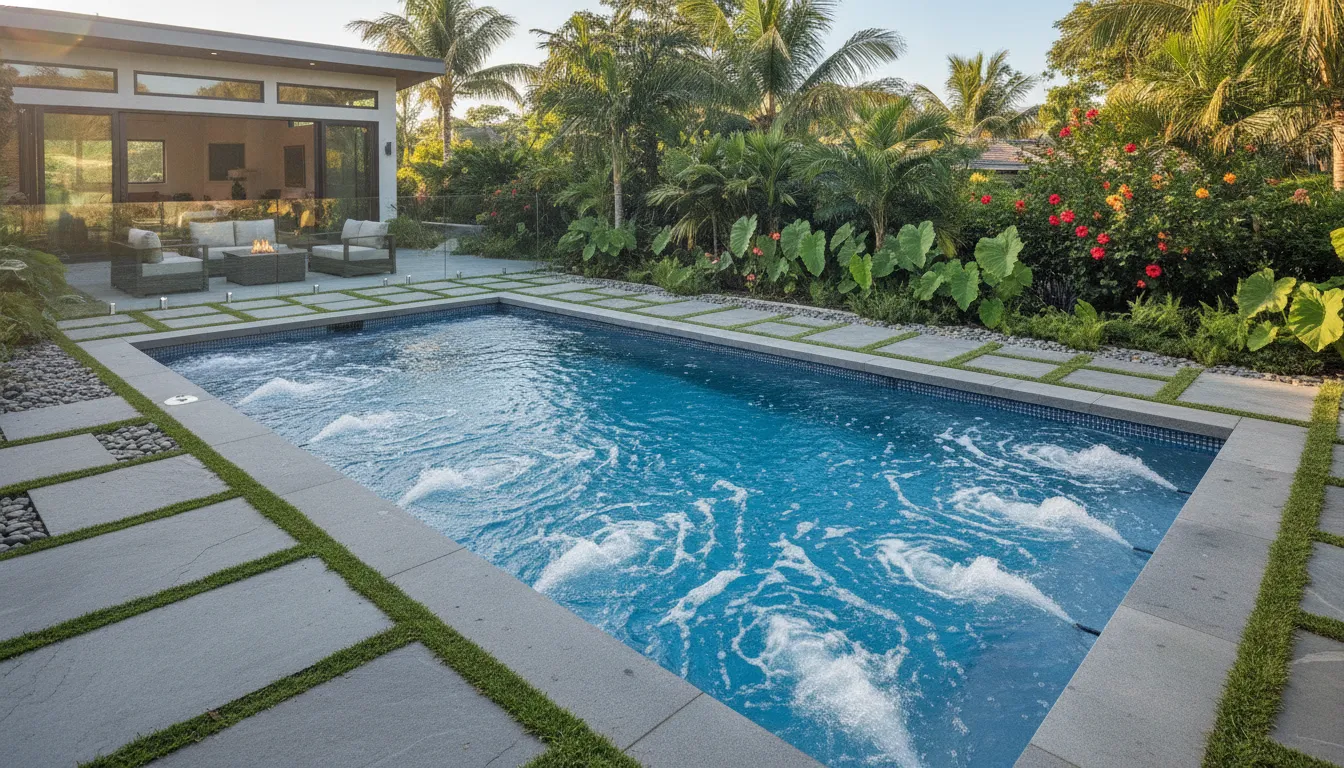
A swim spa is a counter-current pool that uses a propulsion system to create a steady water current. Unlike a standard backyard pool where you swim from end to end, these compact units let you swim in place against an adjustable flow. They combine the workout benefits of a lap pool with the hydrotherapy jets of a hot tub in one efficient shell.
The swim-in-place concept
Think of a swim spa as a treadmill for water. The propulsion system pushes water from the rear of the unit to the front, creating a smooth, consistent stream. You swim forward at the same speed the current moves backward, which means you never need to stop and turn around. Many homeowners choose a swim spa buyer's guide to research these units because they fit in small yards where a full-length pool would not work.
Water current propulsion systems
The core of any swim spa is its current-generating mechanism. Manufacturers use two primary approaches:
- Propeller systems: Large underwater propellers move a broad volume of water, producing a wide, deep current with minimal surface turbulence. These systems most closely mimic open-water swimming.
- High-volume jet systems: Multiple nozzles push water at high pressure through an adjustable opening. Jet systems create a focused stream that experienced swimmers can dial up for sprint intervals.
Both types include variable-speed controls so swimmers of any skill level can set the right pace.
What Health Benefits Can You Expect From a Swim Spa?
A swim spa delivers more than a place to practice your stroke. It is a versatile health and fitness tool. By combining warm water with an adjustable current, these units offer unique advantages for cardiovascular conditioning, joint recovery, and chronic pain management.
Here is the key takeaway: Regular swim spa workouts improve cardiovascular endurance, reduce joint stress, and support long-term health conditions through warm-water hydrotherapy. The CDC recognizes water-based exercise as a safe, effective activity for people with chronic illnesses and arthritis.
Low-impact cardio and heart health
Swimming in place provides an excellent cardiovascular workout. The steady water current lets you swim, jog, or walk without pausing. This continuous effort strengthens your heart and lungs while building muscular endurance. Because water supports up to 90 percent of your body weight, your joints experience minimal impact compared to running or strength training on land.
Effective swim spa workouts include:
- Water jogging against the current for steady-state cardio
- Interval swimming at varying flow speeds for high-intensity training
- Resistance band work for upper and lower body conditioning
- Water stretching and balance exercises for flexibility
Warm-water hydrotherapy for joint pain
Exercising in warm water, also called hydrotherapy, is especially beneficial for people with joint conditions. The warmth increases blood flow to sore muscles, while buoyancy reduces pressure on the spine and weight-bearing joints. According to the Centers for Disease Control and Prevention, people with rheumatoid arthritis show greater improvements in physical function after warm-water exercise compared to other forms of physical activity.
Support for chronic health conditions
Many individuals use swim spas to manage ongoing health issues. The combination of heat, buoyancy, and resistance creates a safe exercise environment for those who cannot tolerate land-based workouts. Research published on PubMed demonstrates that aquatic exercise reduces pain and improves quality of life for people with musculoskeletal conditions.
Key Features to Look for in a Swim Spa
When you evaluate models, these five critical features determine how well a swim spa will meet your needs. Pay attention to propulsion type, dimensions, shell construction, temperature zones, and energy efficiency.
The deciding factors: Look for a wide, propeller-driven current if you want a natural swim feel. Choose dual-temperature zoning if you plan to alternate between cold-water workouts and hot-water soaking. Opt for an acrylic shell with high-density foam insulation for durability and low operating costs.
Propulsion systems and water flow
The quality of the water current directly affects your workout experience. Basic models use standard hot tub jets, which produce a narrow, turbulent stream. Premium swim spas feature large-diameter propellers or paddle wheels that generate a smooth, broad current similar to swimming in open water. An adjustable flow controller lets you match the current speed to your ability and training goals.
Size and depth options
Swim spas range from 12 to 21 feet in length. Taller swimmers and those who want to use swim strokes like the butterfly need a longer unit. Depth typically ranges from 48 to 60 inches. Deeper models allow for a natural body position during freestyle and more room for water aerobics and aquatic therapy.
Shell materials and heating zones
High-quality acrylic shells resist scratches, UV damage, and chemical degradation far better than budget-friendly rotomolded plastic. Energy-efficient insulation reduces heating costs and keeps the water warm even in cold weather.
Dual-temperature zone models are a popular feature for homeowners who want both fitness and relaxation. These systems use a physical divider to keep the swim area at a cool 82 to 85 degrees Fahrenheit for intense exercise. While the spa zone stays at up to 104 degrees for post-workout hydrotherapy.
| Feature | Single-Zone Swim Spas | Dual-Zone Swim Spas |
|---|---|---|
| Temperature Controls | One control for the entire spa | Separate controls for swim and spa areas |
| Swim Area Temperature | Single temperature throughout | 82-85 degrees F for cool workouts |
| Spa Zone Temperature | Cannot be heated separately | Up to 104 degrees F for warm soaking |
| Typical Length | 12 to 16 feet | 17 to 21 feet |
| Best For | Dedicated swimmers focused on training | Homeowners who want both fitness and relaxation |
How to Choose the Right Size and Installation Location
Proper planning prevents costly mistakes. Before purchasing, evaluate your available space, access routes, foundation requirements, and electrical capacity.
Site preparation steps
Follow these five steps to prepare your property for a swim spa delivery and installation:
- Measure your space. Confirm the area is at least two feet longer and wider than the swim spa on all sides. This clearance is essential for service access to pumps and plumbing.
- Verify delivery access. Measure gate widths, fence openings, and corner clearances. Many swim spas require a crane for placement over the house or through a narrow yard.
- Pour a reinforced concrete pad. A filled swim spa weighs several tons. The foundation must be a minimum of four inches of reinforced concrete on compacted gravel. Never place a swim spa on grass, dirt, or pavers alone.
- Install a dedicated electrical circuit. Most swim spas require a 50-amp or 60-amp GFCI-protected circuit. Hire a licensed electrician to run the conduit before delivery.
- Plan for water access. Position a garden hose connection near the installation site. You will need to fill the spa on delivery day and top it off periodically.
Swim Spa Maintenance and Year-Round Care Tips
Routine maintenance keeps your swim spa operating efficiently and extends its lifespan. The tasks are straightforward: balance water chemistry weekly, clean filters monthly, and inspect mechanical components quarterly.
Maintenance at a glance: Test pH and sanitizer levels twice per week, keep pH between 7.2 and 7.8. Rinse filters monthly with a garden hose, and inspect pumps and heaters for unusual noise or vibration. Proper care ensures clean water and reliable performance across all seasons.
Water chemistry basics
Balanced water chemistry protects both your skin and the spa equipment. Test pH, alkalinity, and sanitizer levels two to three times per week. The ideal pH range is 7.2 to 7.8. If the pH drifts outside this range, sanitizers lose effectiveness, which can lead to cloudy water and potential skin irritation.
Filter care and system checks
Cartridge filters trap body oils, hair, and debris. Rinse them with a hose every four weeks and replace them annually. While checking filters, listen for unusual pump noise or vibration. Early detection of mechanical issues prevents expensive repairs.
Cold-weather operation
Modern swim spas are designed for year-round use. High-density foam insulation and automatic freeze protection keep the water from freezing even in subzero temperatures. Most owners keep their units running through winter because warm-water workouts feel especially good in cold weather. If you plan to shut the unit down for winter, drain all water from the plumbing lines to prevent freeze damage.
Must-Have Training Gear to Pair With Your Swim Spa
The right accessories enhance every workout. Plan to add these items to your swim spa setup.
Swim belts and tether systems
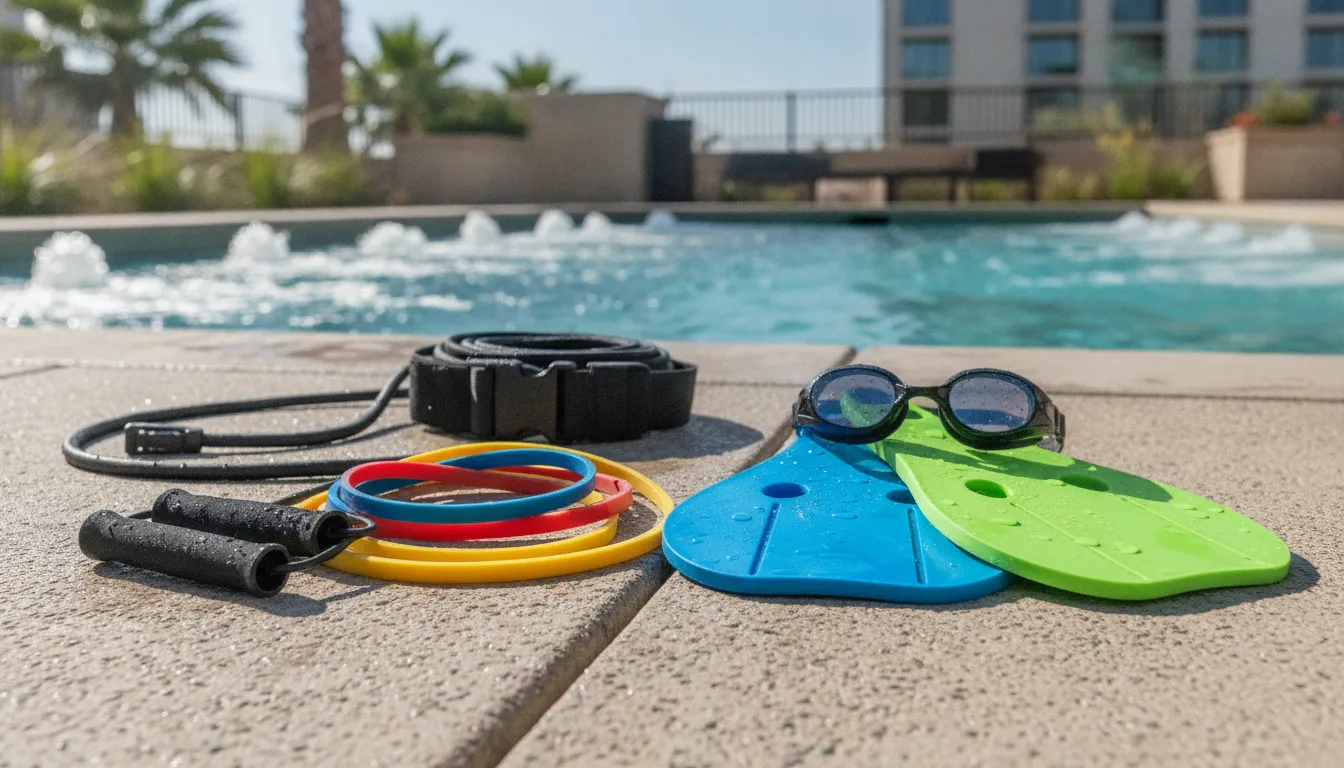
A swim belt keeps you centered in the water current so you can focus on stroke mechanics instead of drifting. Adjustable belts with bungee tethers attach to the side of the spa and allow natural forward movement. Shop resistance training belts for swim-in-place workouts that offer multiple tension levels for progressive resistance training.
Swim paddles and fins
Hand paddles increase surface area, forcing your shoulders, back, and arms to work harder during each pull. Short-blade swim fins promote proper body positioning and strengthen your kick without overloading your hip flexors. Both tools are available in the swim training gear collection at Swim2000.
Goggles and swim caps
High-quality goggles are essential for swim spa workouts because the current can splash water into your eyes. Look for low-profile goggles with anti-fog coating and UV protection. Swim caps reduce hair drag and keep hair out of the filter system. Choose silicone caps for durability and a secure fit. Browse the selection of swim goggles and swim caps at Swim2000 for options designed for pool and counter-current training.
Frequently Asked Questions
Can you use a swim spa in the winter?
Yes, modern swim spas include insulation and automatic freeze protection that allow year-round operation. The CDC recommends warm-water exercise as a safe, effective activity for maintaining fitness during colder months.
How does a swim spa generate its current?
Swim spas use either a high-output propeller system or a series of pressure jets to push water from the rear to the front of the unit. This creates a steady, adjustable current that lets you swim in place without touching the end of the spa.
Are swim spas good for joint pain?
Yes. According to the CDC, warm-water exercise improves joint function and reduces arthritis pain. The buoyancy of water supports body weight, which eliminates impact stress on knees, hips, and the lower back.
What size swim spa do I need for lap swimming?
For effective lap swimming, choose a unit at least 14 feet long with a propeller-driven current. Taller swimmers or those who practice butterfly stroke should consider 16 to 18 foot models for adequate room.
How much does a swim spa cost to operate monthly?
Operating costs depend on local electricity rates, unit size, insulation quality, and usage patterns. Well-insulated swim spas with dual-pump systems typically add 30 to 60 dollars per month to your electric bill. Energy-efficient models with full-foam insulation and automatic covers cost less to run.
Ready to find your perfect swim spa? Browse the complete swim spa collection at Swim2000 to compare models, check specifications, and begin your backyard fitness upgrade today.
Ready to Get the Most From Your Swim Spa?
A swim spa is an investment in your health, fitness, and daily well-being. Every week you wait is a week you spend without low-impact aquatic exercise that strengthens your heart and soothes your joints. If you set up your training space today, you can start your new swim program immediately.
Ready to begin your research? Shop Swim2000's swim spa collection to compare sizes, features, and pricing. With the right swim spa and training gear, you can reach your fitness goals faster and enjoy therapeutic warm-water recovery right at home.


