


Choosing swim audio starts with a practical question: will the device keep working at the depth and pace of your sessions? Can you control it once you are in the water? The answer depends on more than a waterproof label. Fit, button access, playback method, battery life, and post-swim care all affect whether a device suits pool laps, open-water training, or occasional recreational use.
Explore Swim2000's swim electronics collection before choosing your setup.
The best waterproof headphones for swimming match a verified submersion rating with a secure fit and an underwater playback system that does not rely on a live Bluetooth connection. Compare the rating, storage or streaming limits, controls, runtime, and care instructions before choosing a model.
Some products switch between Bluetooth on land and stored MP3 playback underwater, while others are built around different listening and retention designs. Start by understanding what IPX7, IPX8, and IP68 actually indicate, then apply that information to your pool routine and preferred features.
Which waterproof rating is enough for swimming?
For regular swimming, look for a product explicitly rated for submersion, not one marketed only as sweatproof or rain-resistant. TechRadar uses IPX7 or higher as the baseline for its swimming headphone picks, while IPX8 and IP68 products may offer a different level of manufacturer-tested protection. The rating is useful evidence, but it is not a guarantee that every pair will suit every pool, depth, or open-water session.
What do IPX7, IPX8, and IP68 mean?
In an IP code, the number after the X describes protection from water. Higher ratings generally indicate that the product was tested for more demanding exposure, but the exact test conditions and the manufacturer's stated limits still matter. Do not treat IPX7, IPX8, and IP68 as interchangeable labels. Read the product page for details about submersion, depth, duration, and whether the claim applies to the complete device.
IPX7 or above is a practical starting point for waterproof headphones for swimming. TechRadar reports that its swimming recommendations meet that threshold because they are designed to handle submersion rather than only occasional splashes. That does not mean an IPX7 product and an IPX8 product have identical limits, so compare the individual specifications before buying.
Why the manufacturer's claim matters
For example, Shokz lists the OpenSwim Pro as IP68 and states that it is designed to hold steady down to two meters, or 6.5 feet. That is a specific product claim, not a universal definition of IP68. A different device with the same rating may publish different use conditions, and a retailer summary may leave out important details. Use the manufacturer's instructions as the final reference for intended use, charging, cleaning, and warranty coverage.
TechRadar lists the H2O Audio Tri 2 Pro as IPX8. This makes it worth comparing with IP68 models, but the label alone does not tell you which device fits your routine better. Consider whether you swim in a pool or open water, how long your sessions last, and whether you need stored audio or other features. Choose the rating that covers your actual use, then follow the care guidance instead of assuming a waterproof label makes the headphones indestructible.
How should swimming headphones fit and stay secure?
Summary: The best fit depends on whether you want an open-ear design that leaves the ear canal clear or an in-ear design that relies on a stable seal and retention. Whichever style you choose, prioritize a secure position, controls you can operate by feel, and enough awareness for your pool environment.
Bone-conduction and other open-ear designs sit around the ear rather than filling the ear canal. TechRadar notes that bone conduction lets the ears remain free. A useful distinction for swimmers who dislike the plugged sensation of earbuds or want to remain more aware of surrounding sounds. The frame should rest securely without pressing painfully against the sides of the head. Before a full session, turn your head, push off the wall, and swim several strokes at your normal pace. If the device shifts when you breathe or streamline, adjust its position before relying on it for a longer workout.
In-ear models use a different retention strategy. The ear tip must sit comfortably and remain stable when water pressure, head rotation, and repeated turns put the fit under stress. A tip that feels secure on deck can loosen once you start swimming. Test the fit with easy laps first, and avoid forcing a tip that creates pressure or discomfort. Our guide to secure swimming ear fit offers related guidance for evaluating comfort and retention around the ear.
Controls matter more in the water than they do during a casual walk. Small buttons can be hard to identify through wet fingers, while a control layout that feels obvious on land may take practice when you are swimming. TechRadar specifically notes that the H2O Audio Tri 2 Pro controls can be difficult to operate quickly. Look for controls that you can locate by touch, then practice starting, pausing, changing tracks, and adjusting volume before entering the pool. Keep the device within reach without interrupting your stroke or losing awareness of other swimmers.
Consider how the headphones fit with your cap, goggles, and other equipment. A cap can help hold an open-ear frame in place, but it can also create pressure if the frame sits in the wrong position. Goggles straps should not pull the headphones sideways. For a product built around open-ear bone-conduction technology, compare the placement and controls carefully rather than assuming every frame will feel the same. You can review the FINIS Bluetooth underwater headphones as one product-led option when comparing fit and pool controls.
Bluetooth or built-in storage: what works underwater?
Bluetooth is convenient before and after a swim, but it is not the default solution once you are in the water. The manufacturer says water disrupts Bluetooth signals, so the Shokz OpenSwim Pro limits underwater listening to its built-in MP3 mode. On land, it supports Bluetooth V5.4, allowing a practical split between everyday listening and stored audio for swim sessions. Shokz explains the Bluetooth and MP3 modes here.
Summary: For dependable audio during laps, choose a device with local storage and load compatible files before heading to the pool. Bluetooth can remain useful on deck, during warm-up, or after training, but do not plan a swim around uninterrupted phone streaming.
| Option | How it works | Best fit | What to check |
|---|---|---|---|
| Bluetooth on land | The headphones connect to a phone or another Bluetooth source outside the water. OpenSwim Pro lists Bluetooth V5.4 for land use. | Deckside listening, walking to the pool, and post-swim use. | Switch to stored audio before submerging. Bluetooth should not be treated as a reliable underwater streaming connection. See the manufacturer's mode description. |
| Built-in MP3 storage | Audio files live on the headphones, so playback does not depend on a phone or an active Bluetooth connection. TechRadar describes this as the advantage of built-in storage for swimming. | Lap swimming, lessons, and open-water sessions where a phone is not in the water. | Capacity and supported formats. OpenSwim Pro lists 32GB and more than 8,000 songs, while the H2O Audio Tri 2 Pro is reported with 8GB. Review the cited storage comparison. |
| File transfer | Load compatible music before the workout. OpenSwim Pro instructions describe connecting to a computer with its magnetic charging cable, then dragging audio files into the device drive. | Swimmers who want predictable playback without carrying a phone. | Confirm the file types your device accepts. TechRadar lists MP3, WMA, and M4A support for the H2O Audio Tri 2 Pro. Check the reported format list. |
| Poolside transmission | A transmitter-based system sends audio from a source positioned near the pool. This is a different setup from ordinary phone-to-headphone Bluetooth. | Structured pool training where the transmitter can stay in a known, supported position. | Verify the system's transmitter requirements, range, and pool compatibility. Do not assume a transmitter makes every Bluetooth headphone stream underwater. |
Storage also makes planning easier. The H2O Audio Tri 2 Pro is reported with 8GB and support for MP3, WMA, and M4A files. The OpenSwim Pro's listed 32GB capacity provides more room for a larger library. Before buying, compare the device's transfer process and supported formats with the files you already use. For a storage-first setup, consider a FINIS underwater MP3 player alongside other swim electronics.
What battery life do waterproof headphones for swimming need?
Battery planning matters because a swim session rarely ends at the pool wall. You may use the headphones for a warm-up, main set, cooldown, or a second workout later in the day. Choose runtime based on your longest realistic session, then leave room for charging delays, cold storage, and the possibility that advertised figures vary by playback mode and use.
Key takeaway: For waterproof headphones used in the pool, compare the runtime for the mode you will actually use underwater, not only the longer Bluetooth figure. Shokz lists the OpenSwim Pro at up to nine hours in Bluetooth mode and six hours in MP3 mode. Its advertised underwater runtime is therefore the six-hour figure because underwater playback uses MP3 mode.
Plan around underwater playback
Streaming and phone-connected listening are not interchangeable with underwater playback. The OpenSwim Pro uses Bluetooth V5.4 on land and built-in MP3 mode underwater, since water disrupts Bluetooth signals. That means your pool routine may involve loading audio before you leave, selecting a playlist, and checking the battery before entering the water.
For most swimmers, six hours of stated MP3 runtime covers several ordinary sessions. However, do not treat that number as a promise that every pair of waterproof headphones will last that long. Runtime depends on the product, playback mode, volume, temperature, battery age, and how often you use the controls. If you swim multiple times between charges, select a model with enough margin to avoid recharging after every visit.
Charging and physical controls
A quick-charge feature can help when your schedule changes. Shokz advertises three hours of listening after a 10-minute charge for the OpenSwim Pro. That can be useful before an unexpected workout, but it is still worth charging fully on a regular schedule rather than relying on short top-ups.
Physical controls also deserve attention. Buttons should be easy to identify and operate with wet fingers, while still resisting accidental presses under a cap or during a turn. Before a session, set the volume and playlist, then test pause, skip, and power functions at poolside. If you are comparing options, review the controls alongside fit and storage in FINIS Bluetooth underwater headphones rather than judging battery capacity alone.
FINIS underwater audio products to compare
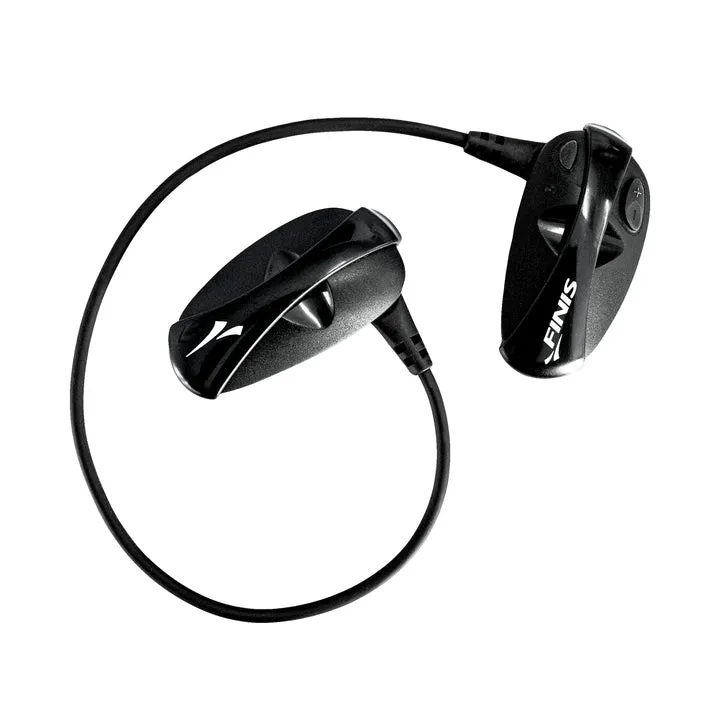
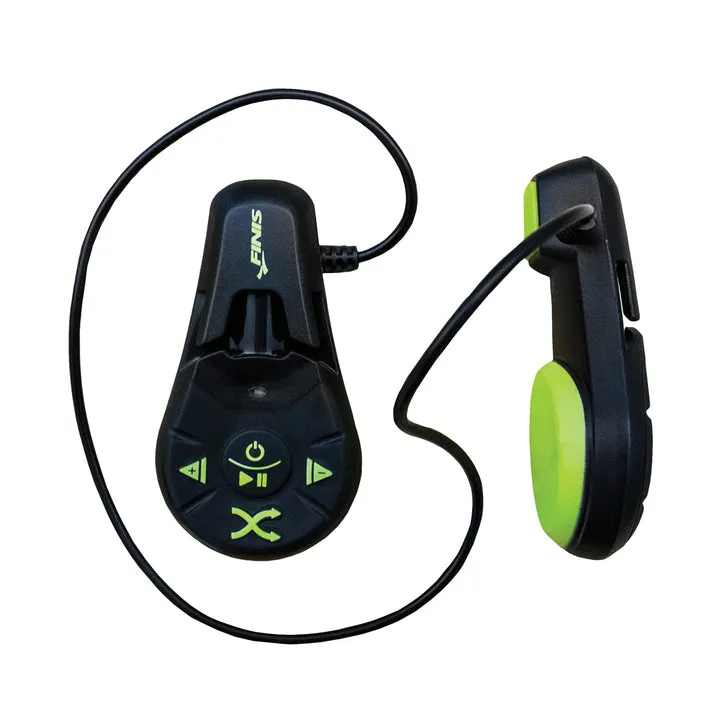
Swim2000's FINIS lineup gives swimmers two different ways to organize audio around time in the water. The FINIS Bluetooth underwater headphones page is the better starting point when you want a headphone-style product to evaluate for fit, controls, and everyday pool use. The FINIS Duo underwater MP3 player page is the more focused destination when your priority is stored audio for swimming rather than a general Bluetooth listening setup. Review the product details and current compatibility information before choosing.
| Product page | Best for comparing | Questions to ask before buying |
|---|---|---|
| FINIS Bluetooth underwater headphones | Headphone fit, controls, and how the device fits into regular pool sessions. | Will the design stay comfortable during your stroke and turns? Are the controls easy for you to use while moving? Does the product's connectivity match how you listen on land and in the water? |
| FINIS underwater MP3 player | Stored audio playback for swimmers who want to prepare content before getting in the pool. | Which audio files does your library use? How will you transfer content to the player? Do you prefer selecting a prepared playlist instead of relying on a phone connection? |
Summary: Choose between these FINIS products by starting with your listening method. Compare the Bluetooth headphone page for fit and control considerations, or review the Duo MP3 player when prepared, stored audio is central to your swim routine. The product pages are the source of truth for current specifications, compatibility, and availability.
How to choose between the two FINIS pages
First, define where you expect to listen. Bluetooth is convenient for compatible devices on land, but water can disrupt Bluetooth signals, so underwater listening commonly depends on built-in or transferred audio. That distinction matters when comparing FINIS Bluetooth underwater headphones with a dedicated MP3 player.
Next, consider your preparation habits. If you already maintain playlists or audio files for repeat workouts, a stored-audio workflow may fit your routine. If you want to compare a broader set of listening accessories, browse the swim electronics collection after reviewing the FINIS product pages. Keep the decision practical: choose the product whose controls, fit, and playback method you can use consistently, without assuming that a feature automatically improves swimming performance.
Explore Swim2000's swim electronics collection before you choose your underwater audio setup.
What changes between pool, open-water, and everyday use?
Pool swimming usually calls for a device rated for repeated submersion, while open-water swimming adds salt removal and storage considerations. Everyday use brings Bluetooth convenience back into the picture, but the right routine still depends on how often the headphones get wet.
In a pool, focus on the product's stated waterproof rating and intended depth rather than assuming every pair of waterproof headphones for swimming is interchangeable. For example, Shokz lists the OpenSwim Pro with an IP68 rating and a two-meter, or 6.5-foot, depth claim. That provides a useful reference for pool sessions, but it remains a manufacturer specification for that model, not a universal rule for every IP-rated device. Check the product details before using headphones for diving, deep-water training, or other activities outside the stated limits.
Open-water sessions introduce salt and other residue that are not part of a typical indoor pool routine. Shokz recommends soaking the OpenSwim Pro in fresh water for about 30 minutes after open-water use to remove salt. Follow the care instructions supplied with your specific model. For any waterproof audio device, a practical post-swim routine is to rinse it with fresh water when appropriate. Wipe away surface moisture, and let it dry fully before charging or storing it. Avoid sealing damp headphones in a gear bag, where moisture can remain around ports, contacts, or controls.
Everyday use is different because the headphones may move between the deck, locker room, commute, and workout. Shokz describes the OpenSwim Pro microphone as protected by an IP68 waterproof design, which may suit wet conditions. That does not remove the need for normal drying and storage. Keep the device in a clean, dry place and avoid leaving it in prolonged heat, direct sun, or a closed bag while damp.
If your routine includes both pool sessions and time on land, compare playback modes, charging, and care requirements before choosing. Swim2000's FINIS Bluetooth underwater headphones are one product page to review alongside those considerations.
Explore Swim2000 swim electronics and FINIS underwater audio products before choosing your setup.
Frequently Asked Questions
What headphones can I wear in the pool?
Choose a model specifically designed for submersion, not ordinary wireless earbuds marketed only for sweat or rain. IPX7 or higher is a useful starting point for swimming products, but review the manufacturer's depth and use limitations before bringing any device into the water. For example, Shokz lists the OpenSwim Pro as IP68 and rated down to two meters (6.5 feet): manufacturer specifications.
Can you use Bluetooth headphones while swimming?
Bluetooth is useful on land, but water disrupts the signal underwater. Swimming headphones therefore commonly use built-in storage and MP3 playback for pool sessions. The OpenSwim Pro supports Bluetooth V5.4 on land and switches to MP3 mode underwater, according to Shokz. Check which audio formats the device accepts and plan to transfer files before your workout.
How do waterproof headphones for swimming stay secure during laps?
Fit depends on the design. Bone-conduction models sit outside the ears, while in-ear models rely on properly sized tips and retention. Look for a stable frame or band that stays comfortable when you turn your head, push off the wall, and wear a swim cap. Controls should also be easy to identify by touch, since wet fingers and pool noise can make quick adjustments difficult.
How long does the battery last on swimming headphones?
Match the stated runtime to your longest sessions, then leave room for charging between uses. Battery life can vary by playback mode. Shokz lists nine hours in Bluetooth mode and six hours in MP3 mode for the OpenSwim Pro, with a claimed three hours of listening after a 10-minute charge: published battery details. Charge fully before a meet or long open-water session rather than relying on a quick top-up.
Ready to Compare Swim Electronics?
Choosing between built-in storage, bone conduction, fit options, and pool-ready controls is easier when you can review products side by side. Explore Swim2000's collection to compare underwater audio products for your training routine, open-water sessions, or family swim needs. Explore the swim electronics collection and get started with a product that matches how and where you swim.


