


Shop Swim2000's swim training gear with free shipping.
When your hips and legs sit low in the water, every length demands more effort to maintain a streamlined position. Buoyancy shorts address that issue by adding lift around the lower body, giving swimmers a useful way to isolate stroke mechanics and body position during selected training sets.
Zone 3 buoyancy shorts are neoprene training shorts designed to lift the hips and legs. Helping simulate the body position of a wetsuit while preserving a more natural kick and hip rotation than a pull buoy. Zone3 models use Yamamoto neoprene, with construction and panel thickness varying by design. They should fit snugly enough to keep water from entering around the waist and legs.
They are not intended to replace regular swimwear or make unsupported performance promises. Used strategically, they can help competitive and open-water swimmers focus on technique, efficiency, and body alignment. First, it helps to understand how the material creates buoyancy and changes your position in the water.
Shop Swim2000's buoyancy shorts to add controlled lift to your next training set.
How Zone 3 Buoyancy Shorts Work in Swim Training
Buoyancy shorts are neoprene swim shorts designed to support your body position in the water. Unlike standard jammers, they add lift around the hips and legs, helping simulate the elevated position created by a full wetsuit. That can make them useful for pool training, triathlon preparation, and open-water swimmers who want to practice with a wetsuit-like feel without covering the entire upper body.
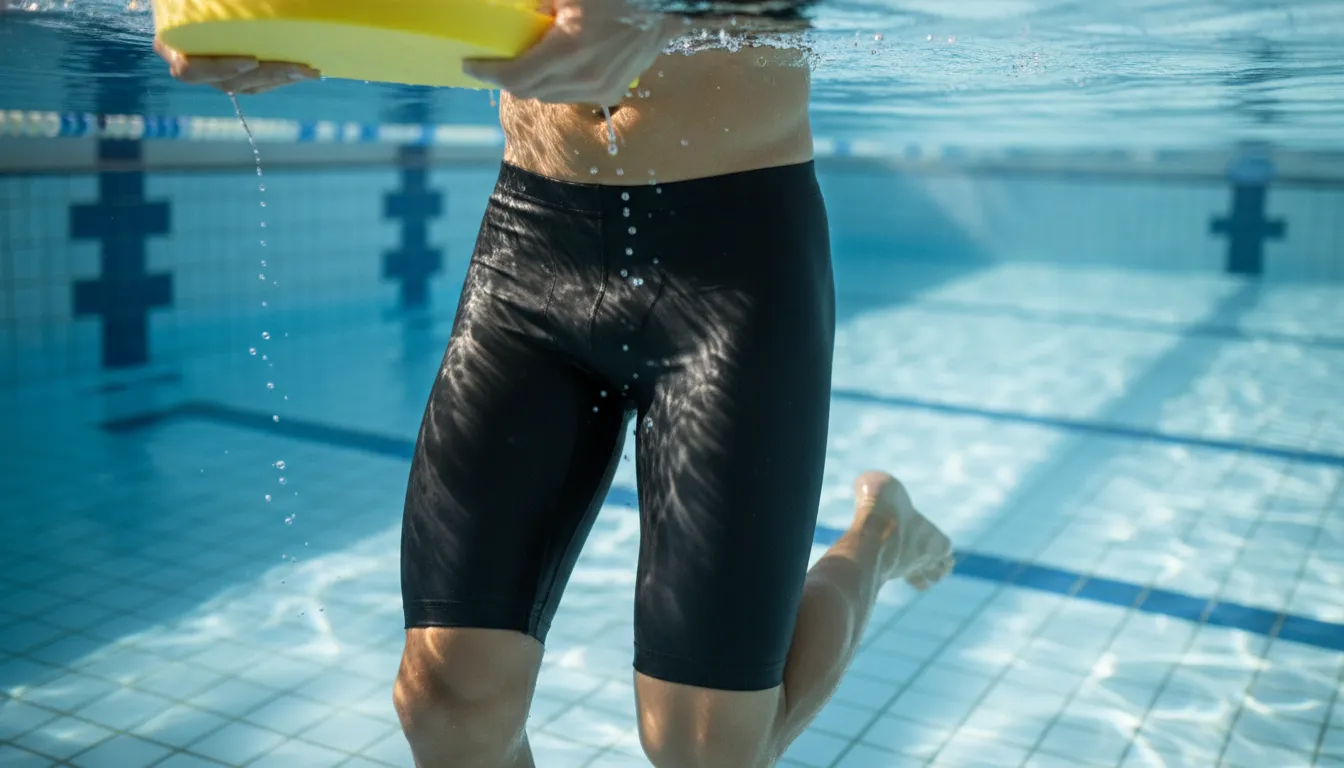
Buoyancy shorts usually have a close-fitting jammer cut and use neoprene panels that provide controlled flotation. The thickness commonly falls in the 2-4mm range, while construction varies by model and by the part of the body being supported. Zone3 Originals, for example, use a 3mm Yamamoto Smoothskin center panel and 5mm side panels, according to Zone3's product explanation. Yamamoto neoprene is used for its buoyancy and durability, as described by Zone3.
How the neoprene changes body position
Many swimmers lose alignment when the hips and legs sit lower than the chest. The resulting angle increases the amount of body presented to the water, so the legs can create extra resistance even when the stroke itself is technically sound. Buoyancy shorts counter that tendency by lifting the hips and upper legs toward the surface. The goal is not to hold the swimmer rigidly in place, but to make a more horizontal, wetsuit-style position easier to maintain.
This matters because water is roughly 800 times denser than air. Small changes in frontal area and alignment can therefore affect how much resistance a swimmer encounters. In its explanation of triathlon buoyancy shorts, 2XU describes how raising the hips and thighs can reduce frontal drag. A more streamlined position may also let you focus on arm mechanics, breathing, or a high-elbow recovery instead of constantly correcting sinking legs.
What they do not replace
These shorts support body position, but they do not replace sound technique or core control. The added lift can change your swimming mechanics, so use them as one part of a balanced training plan rather than wearing them for every length. Include unassisted swimming as well, allowing your body to practice holding alignment without extra flotation.
Fit also affects how the shorts work. They should feel snug enough to keep water from entering at the waist and leg openings. A loose fit can allow water to collect inside the suit, adding drag and reducing the intended buoyancy. Follow the manufacturer's size chart and prioritize a secure, comfortable seal over choosing a larger size for ease of dressing.
Buoyancy Shorts vs. a Pull Buoy for Swim Training
Both buoyancy shorts and pull buoys can help you examine body position and upper-body technique, but they create different training conditions. A pull buoy sits between the thighs or ankles and supports the lower body by taking the legs out of the stroke. Neoprene buoyancy shorts add lift around the hips and legs while leaving the legs available to kick. That difference matters when you want drill feedback without completely changing your normal rotation.
The right tool depends on what you are trying to isolate. Use a pull buoy when you want to remove kicking from a set and concentrate on the arms. Choose buoyancy shorts when you want a more elevated, wetsuit-like position while still practicing a connected stroke. The comparison below outlines the practical tradeoffs.
| Training factor | Buoyancy shorts | Pull buoy |
|---|---|---|
| Buoyancy mechanism | Neoprene panels add lift to the hips and thighs, helping raise the lower body toward a wetsuit-style position. | Foam flotation between the legs supports the hips and keeps the legs from sinking while the swimmer holds the buoy in place. |
| Leg and kick freedom | The legs remain free, so you can keep a natural kick, adjust kick intensity, or practice without kicking when the set calls for it. | The legs are held together around the buoy. That reduces or removes normal leg drive and prevents you from practicing your complete stroke pattern. |
| Hip rotation | Because the legs are not locked together, the hips can rotate more naturally with the shoulders and trunk. | Holding the buoy between the legs can restrict natural rotation. 2XU describes this limitation as reducing the swimmer's normal rotation and leg drive. |
| Wetsuit simulation | Designed to provide lift through the hips and legs, making them useful for practicing a higher, more streamlined body position without wearing a full wetsuit. | Provides flotation for a pull set, but its placement and fixed-leg position do not reproduce the same lower-body feel as buoyant neoprene shorts. |
| Who they suit | Triathletes, open-water swimmers, and pool swimmers who want to study body position, maintain stroke connection, or rehearse wetsuit-style support. | Swimmers who want a simple, portable way to isolate the arms, reduce kick contribution, or add pull-focused work to a structured pool set. |
Research and coaching guidance support treating these tools as different forms of feedback rather than interchangeable equipment. 2XU notes that a pull buoy can remove natural rotation and leg drive. While buoyancy shorts allow the swimmer to retain a natural kick and hip rotation as they work on body position. Zone3 likewise presents buoyancy shorts as a way to improve triathlon swim technique by creating lift through the lower body. Read Swim2000's pull buoy training guide when your goal is a dedicated pull set, or browse the pull buoys collection for traditional pull-training options.
For a swimmer preparing for open water or a triathlon. Buoyancy shorts may offer a closer approximation of wetsuit-supported posture while preserving more of the movement you need to evaluate. For an arm-focused drill, the pull buoy remains more direct. Rotate both tools through your training plan. And pay attention to whether the equipment helps you study the intended skill without creating compensations that disappear when you swim normally.
Sources: 2XU's explanation of triathlon buoyancy shorts and Zone3's buoyancy-short technique guide.
Who Should Wear Buoyancy Shorts in Training?
Buoyancy shorts can help swimmers isolate technique without asking the legs to maintain a perfectly level position in every length. They are especially useful when you want to examine what the upper body is doing. Rehearse an open-water body line, or keep a technical session productive when fatigue changes your stroke. Shop Swim2000's swim training gear for equipment that matches your stroke goals and training environment.
Competitive swimmers working on mechanics
Competitive swimmers often use buoyancy shorts during drill sets when the goal is to pay closer attention to the arms. With the hips and legs supported, you can focus on a high-elbow recovery. A clean hand entry, or a stable catch without spending the entire set correcting a sinking lower body. The shorts should support the drill, not replace the swimmer's normal position. Remove them for part of the session so you can transfer the same arm mechanics and body awareness back to regular swimwear.
Research on buoyancy aids found that they can change swimming kinematics, increase velocity, and reduce energy expenditure during testing. Those findings help explain why the equipment feels different. But they do not mean a swimmer should wear it for every repeat or treat assisted times as race predictions. Use the contrast between supported and unsupported swimming to identify technical changes, then verify those changes without the aid. Read the research on buoyancy aids and swimming mechanics.
Triathletes preparing for open-water conditions
Triathletes can use buoyancy shorts to rehearse the elevated hip and leg position associated with a wetsuit swim. Particularly during pool sessions or in seasons when open-water practice is limited. They can be useful for sighting practice, steady aerobic swimming, and learning how a more buoyant lower body affects breathing and rotation. The training objective is familiarization, not simply adding assistance to every workout. If you race in a wetsuit, include some sessions without the shorts so you can respond to changes in suit thickness, water temperature, and race-day conditions.
Models are available from Blueseventy, XTERRA, De Soto, Zone 3, TYR, and Orca, giving triathletes several construction and fit options to compare. For related equipment, browse Swim2000's open-water gear collection.
Swimmers with sinking legs or limited training energy
Swimmers whose legs drop during a normal stroke may find buoyancy shorts helpful as a temporary technical aid. The added lift can make a streamlined position easier to feel while you work on head position, core control, and a more effective kick. They can also suit recovery days, winter months, or tired sessions when maintaining form is more valuable than forcing high volume. A shorter technical block with support may be more useful than abandoning mechanics as fatigue accumulates.
Keep the shorts snug. A loose fit can let water enter, reduce the intended buoyancy, and add drag. Treat them as one tool within a varied program, alongside regular swimming, drills, and other equipment available in Swim2000's swim gear collection.
How to Choose the Right Buoyancy Short Size and Fit
The right fit should feel secure in the water without restricting your breathing, hip rotation, or kick. Buoyancy shorts rely on close contact between the neoprene and your body, so sizing is more precise than choosing a casual swim short. Use the following steps before ordering, especially if you are comparing zone 3 buoyancy shorts with another brand's pattern or size range.
- Measure your waist and hips. Use a flexible tape measure and record both measurements in the units shown on the manufacturer's chart. Measure your natural waist without pulling the tape tight, then measure the fullest part of your hips and seat. Do not rely only on your usual jammer, tri short, or underwear size because brands use different blocks and neoprene panels can fit differently from standard swim fabrics.
- Choose the cut that matches your body and intended use. Men's and women's buoyancy shorts may differ in rise, waistband shape, leg opening, and panel placement. Select the cut that gives you comfortable coverage through the waist, hips, and upper thighs. If a product is unisex, compare your measurements with that specific product's chart rather than converting automatically from a men's or women's size.
- Choose a snug fit, not a loose one. The waistband and leg openings should sit flat and stay in place when you streamline, push off, and turn. A small amount of compression is expected, but the shorts should not pinch, roll sharply, or make it difficult to take a full breath. Zone3's sizing guidance emphasizes a snug seal to keep water out. If water enters around a loose waist or leg opening, the shorts can lose their intended buoyancy effect and create additional drag. See the buoyancy swim short listing for the product-specific fit and available sizes.
- Check the neoprene thickness and panel design. Buoyancy shorts commonly use neoprene in the 2 to 4 mm range, although thickness may vary across the garment. Thicker panels generally provide more lift, while thinner areas can support mobility. Review the product description for the construction and consider whether you need a training aid that emphasizes body-position support or a less substantial feel for technique work.
- Read the brand size chart before selecting a size. Compare your waist and hip measurements with the chart, and follow the brand's recommendation when the measurements fall between sizes. The Blueseventy Unisex Sprint buoyancy short available from Swim2000 comes in XS through XL, giving swimmers several points of reference when matching measurements to the product range. If your waist and hip measurements point to different sizes, contact the retailer or manufacturer rather than guessing.
Once the shorts are on, test the fit on deck before entering the pool. The seams should lie smoothly, the waist should remain covered when you bend forward, and the leg openings should not gap. In the water, repeat a streamline and a few easy lengths. A secure fit that stays consistent through those movements is more useful than a tighter size that causes discomfort or distracts you from your stroke.
How Do You Use Buoyancy Shorts in a Workout?
Use buoyancy shorts for a defined portion of a swim session, not automatically from the first length to the last. They can support a higher hip position while you focus on body alignment, stroke mechanics, or controlled pacing. They also fit naturally into the pool portion of a brick-style session. Where you move from a bike or run into the water and want to rehearse efficient technique without making the entire workout dependent on added lift.
Triathlete's workout example, provided by coach Jeff Pearson, gives a practical framework for using neoprene shorts in training:
- Set 1: Ladder. Swim 500, 400, 300, 200, and 100 yards or meters at race pace, using the buoyancy shorts to help you settle into a consistent position and effort.
- Set 2: Short-rest repeats. Complete 10 x 150 with short rest. Concentrate on holding your line and keeping the stroke together as fatigue builds, rather than chasing a single fast repetition.
- Set 3: Time trial. Swim a 400 time trial with the shorts on or off, then repeat the comparison every three to five weeks. Tracking the gap between the two versions can show whether your unaided body position and technique are becoming more consistent.
The time-trial comparison is especially useful because the shorts are a training aid, not a substitute for developing your natural swim position. Record the distance, rest, pool length, perceived effort, and whether the shorts were on or off. Keep those conditions similar each time so the result reflects a meaningful change in your own swimming.
Use them for technique and recovery-focused sets
On a form-focused day, wear the shorts during drills that ask you to maintain a long body line, steady rotation, or a clean catch. The extra lift can reduce the distraction of sinking legs, allowing you to pay closer attention to the movement you are practicing. You can then remove them for a few repeats and see whether you can retain the same alignment without assistance.
They can also be useful on a recovery day or after a demanding bike or run. Keep the pace controlled, choose relaxed intervals, and use the session to reinforce smooth breathing and economical movement. If the shorts make your position feel effortless, do not let that become a reason to extend the session beyond its purpose.
For a different kind of flotation support, compare this work with pull buoy swim workouts. A pull buoy isolates the legs more completely, while buoyancy shorts let you keep a more natural kick and hip rotation. Alternating the two can help you identify which part of your form needs attention.
How Buoyancy Shorts Fit Into a Balanced Training Plan
Buoyancy shorts are most useful when they support your technique work rather than replace the skills you need to develop without them. The lift can make it easier to feel a level body position, maintain a cleaner line, and focus on arm mechanics. Research on swimming buoyancy aids also shows that they can change movement patterns and energy expenditure, which is exactly why the training context matters. The stroke you produce with extra lift is not identical to your unassisted stroke.
Jeff Pearson, a former USA National Team coach and founder of Boost Swimming, recommends limiting buoyancy shorts to about 30% of a workout. His guidance, published by Triathlete, keeps the aid in its proper role: a way to isolate a skill, add variety, or prepare for open-water conditions without letting it become a permanent crutch.
Use the lift to focus, then remove it
Start a session with unassisted swimming so you can assess your natural body position and establish your baseline. Add buoyancy shorts for a defined middle portion, such as technique drills, steady aerobic work. Or a set where you are concentrating on a relaxed recovery and consistent line. Finish without them. This sequence lets you carry the improved awareness into normal swimming while still asking your core, hips, and legs to hold position independently.
Dryland core work can reinforce that transition. Exercises that train trunk stability and controlled hip movement complement time in the water, but they should support your swim practice rather than promise an instant correction. If you always depend on neoprene to keep your legs high, you receive less feedback about what happens when the suit is removed.
Compare the same effort with and without shorts
To measure whether the aid is helping your training, repeat a familiar effort both ways. For example, swim a controlled interval without shorts, take adequate recovery, then repeat it with shorts at the same intended effort. Record time, stroke count if you track it, and how well you maintained form. Repeat the comparison later under similar conditions. The goal is not to chase a faster number created by extra buoyancy. It is to narrow the difference between your assisted and unassisted swimming while preserving the technical feeling you gained.
Keep the rest of your swim training gear matched to the session, and reserve your triathlon swim shorts for workouts where their fit and construction suit the intended use. A measured rotation between assisted drills, normal swimming, and dryland work builds a more reliable body position than wearing buoyancy shorts for every length.
Frequently Asked Questions
Are zone 3 buoyancy shorts worth using for swim training?
They can be useful when you want to rehearse a higher hip position, isolate stroke mechanics, or become more comfortable with the lift of a wetsuit. Use them as one part of a varied program, then include unassisted swimming so you also develop body position without added buoyancy.
Do buoyancy shorts help you float?
Yes. Neoprene panels add lift around the hips and legs, which can reduce leg sink and make a streamlined position easier to maintain. That support changes how you move through the water, so treat the resulting pace or stroke feel as training feedback rather than a direct prediction of race performance. Research on swimming buoyancy aids reports changes in swimming kinematics and energy expenditure.
Can I wear buoyancy shorts in a triathlon?
They are primarily a training aid, not a substitute for checking race rules or choosing approved race equipment. Pool and open-water swimmers may use them in practice to become familiar with a wetsuit-like body position, but confirm the event's equipment regulations before race day.
How should buoyancy shorts fit?
Choose a close, secure fit around the waist and legs without restricting comfortable movement. The shorts should stay in place while you swim and keep water from flushing through the openings. A loose fit can reduce the intended lift and create additional drag. So follow the manufacturer's size chart and compare your measurements rather than choosing by usual apparel size.
Ready to Shop Buoyancy Shorts?
Choosing the right buoyancy short can help you focus a training set on body position, stroke mechanics, or open-water preparation without changing your entire routine. Review the fit guidance in this article, then shop buoyancy shorts and swim training gear to find the equipment that matches your next session.


