

A men's triathlon suit needs to work across three different parts of race day: the swim, the bike and the run. Start by matching its coverage and construction to your event, expected conditions and personal fit needs, then check how it handles movement in each discipline. This guide breaks down those choices so you can compare features without assuming one suit works for every athlete or race.
Compare triathlon apparel details
What should a men's triathlon suit do?
A triathlon suit is designed to be worn through multiple race stages, rather than changed between the swim and the next leg. The right balance depends on the event format, the athlete's comfort, and whether the suit is intended for a particular temperature or distance. A suit should let you move freely through the shoulder during the swim, stay comfortable in a forward cycling position, and avoid distracting bunching or chafing while running.
Think of the suit as one part of a race kit, not a substitute for a wetsuit, swimsuit, or cycling layer in every condition. Some events and weather situations call for additional gear; some race rules restrict what may be worn. Read the event's current athlete guide and check the suit's product information before buying. Requirements can differ by event and governing body, so do not rely on a general shopping article as a rulebook.
In short: Choose for your actual event and the full swim-bike-run sequence. Prioritize comfortable movement and suitable coverage, then verify any temperature and event-rule requirements separately.
How do you choose the right construction?
Begin with the suit's basic construction. Triathlon apparel can differ in sleeve length, leg length, closures, pocket placement, pad design, fabric and coverage. A sleeveless style leaves the shoulders uncovered; a short-sleeve style adds fabric over the upper arm. Neither is automatically right for every swimmer. Consider how much shoulder coverage you prefer, whether sleeves restrict your stroke, and how the garment feels when you reach forward repeatedly.
Leg length and leg openings matter on both the bike and run. The suit should remain secure without pinching, cutting into the leg, or shifting as you move. A longer inseam may provide more coverage, while a shorter cut may feel less enclosing. Check the garment's size chart and design notes. Do not assume that a size in one apparel brand will match another brand's size in the same way.
Closures and pockets are practical details. A front zipper may help with ventilation, but check whether it stays comfortable against your skin and whether the zipper guard sits smoothly. Pockets can keep small race essentials accessible, but assess their size and placement when the suit is worn in a cycling position. Avoid packing anything that bounces, rubs, or interferes with your movement.
| Feature to compare | What to check | Useful question |
|---|---|---|
| Sleeves and upper-body coverage | Shoulder freedom, seam placement and comfort during repeated reaches | Can you simulate a relaxed swim stroke without pulling or rubbing? |
| Leg length and leg openings | Coverage, grip and whether the fabric shifts or pinches | Does the suit stay in place when you squat, pedal and jog? |
| Pad or chamois | Thickness, shape and how it feels on and off the bike | Does it feel supportive on the bike without becoming distracting during the run? |
| Closure and pockets | Zipper comfort, pocket access and bounce | Can you reach what you need without tugging at the suit? |
| Fabric and care | Product-specific care instructions and fit after movement | Can you follow the label and use the suit in your planned conditions? |
In short: Compare construction details against your own movement and event needs, not marketing shorthand. A feature is useful only if it feels comfortable and works for the way you will race.
How should a triathlon suit fit?
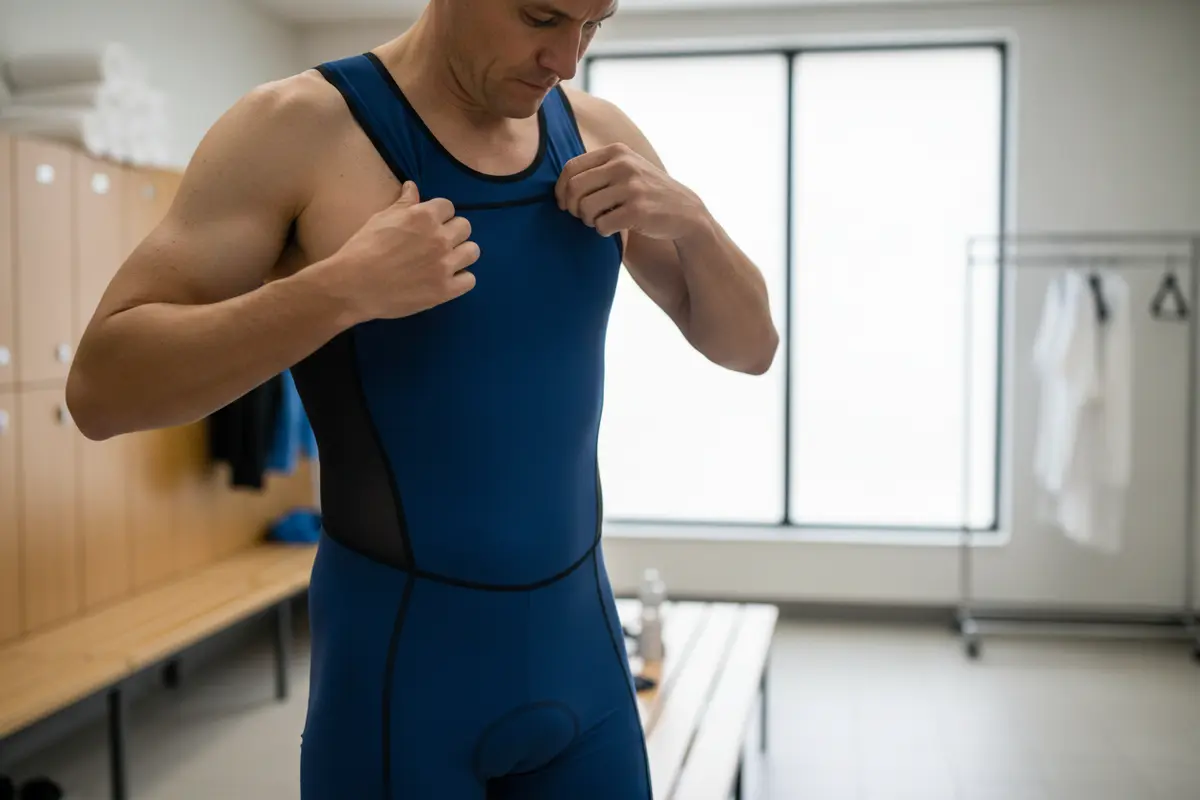
Fit should be close enough that the fabric stays orderly as you move, but not so tight that it restricts breathing, shoulder rotation or comfortable leg movement. When trying on a suit, follow the manufacturer's sizing guidance for the specific model. Use your measurements as directed rather than selecting a size from your everyday clothing label alone. If your measurements fall between sizes, consult the brand's chart and product-specific advice instead of guessing.
Check the fit in more than one posture. Stand naturally, raise your arms as if reaching forward, bend into a cycling position, and take a few controlled steps or squats. Look for tension across the shoulders, pulling at the zipper, loose fabric that could rub, or leg openings that dig in. A suit may feel different when wet or under exertion, so a brief try-on cannot reproduce every race condition; it can still reveal obvious pressure points.
Pay attention to seams and contact areas. Walk and move your arms to notice whether a seam rubs at the underarm, inner thigh or neckline. If the suit has a pad, check its position while standing and in a cycling posture. It should not bunch or feel like it gets in the way when you transition to running. Do not assume that a more compressive fit is better if it prevents comfortable movement.
Swim2000 carries triathlon and open-water apparel as part of its broader swim catalog. For example, the TYR women's tri short listing illustrates the kind of product-specific details to review; it is not a men's suit sizing substitute. Compare the size chart and construction on the exact item you plan to buy. Browse wetsuit new arrivals separately if your event or conditions call for evaluating wetsuit gear; a tri suit and a wetsuit serve different purposes.
In short: Use the exact product's size chart and test the suit in swim, bike and run positions. Look for secure coverage without pinching, excess movement or rubbing, and do not transfer sizing assumptions from another brand or garment.
Which suit details matter across swim, bike and run?
For the swim
Check that the shoulders and upper back allow a comfortable stroke. Fabric should not pull sharply when you extend your arms, and the neckline should sit comfortably without pressing or gaping. A tri suit does not replace a wetsuit where one is needed or permitted, and a wetsuit is not interchangeable with a tri suit. Review the event's equipment rules and conditions before race day.
Test the suit in a pool or other safe, appropriate setting before using it in an event. Notice whether it stays in place after several lengths and whether any seam or edge causes irritation. If you plan to wear a swim cap and goggles, try your routine with those items as well. Swim2000's swim goggles collection and Arena Classic Silicone swim cap listing can help you review separate swim-kit components; always verify the exact model and fit that suits you.
For the bike
The bike leg makes pad design and suit stability especially noticeable. Check whether the pad offers the feel you want on your saddle and whether it stays positioned when you lean forward. There is no single pad thickness that works for every rider, bicycle setup or distance. Focus on comfort in your own riding position. A product description may identify a suit's intended features, but it cannot guarantee that its pad will suit your body or equipment.
Check pocket access before loading anything. If a pocket sits where you can reach it safely, test it with the small items you expect to carry. A full pocket can behave differently from an empty one. Also check whether the zipper or seams press uncomfortably when you are bent forward. Practicing in the suit helps reveal distractions before race day.
For the run
After cycling, the suit should continue to feel manageable as you run. Watch for a pad that shifts, damp fabric that rubs, or leg openings that move with each stride. A short brick session—moving directly from cycling to running—can help you assess those transitions. Increase practice gradually and stop if the suit causes persistent irritation. A race is not the best first test of a new garment.
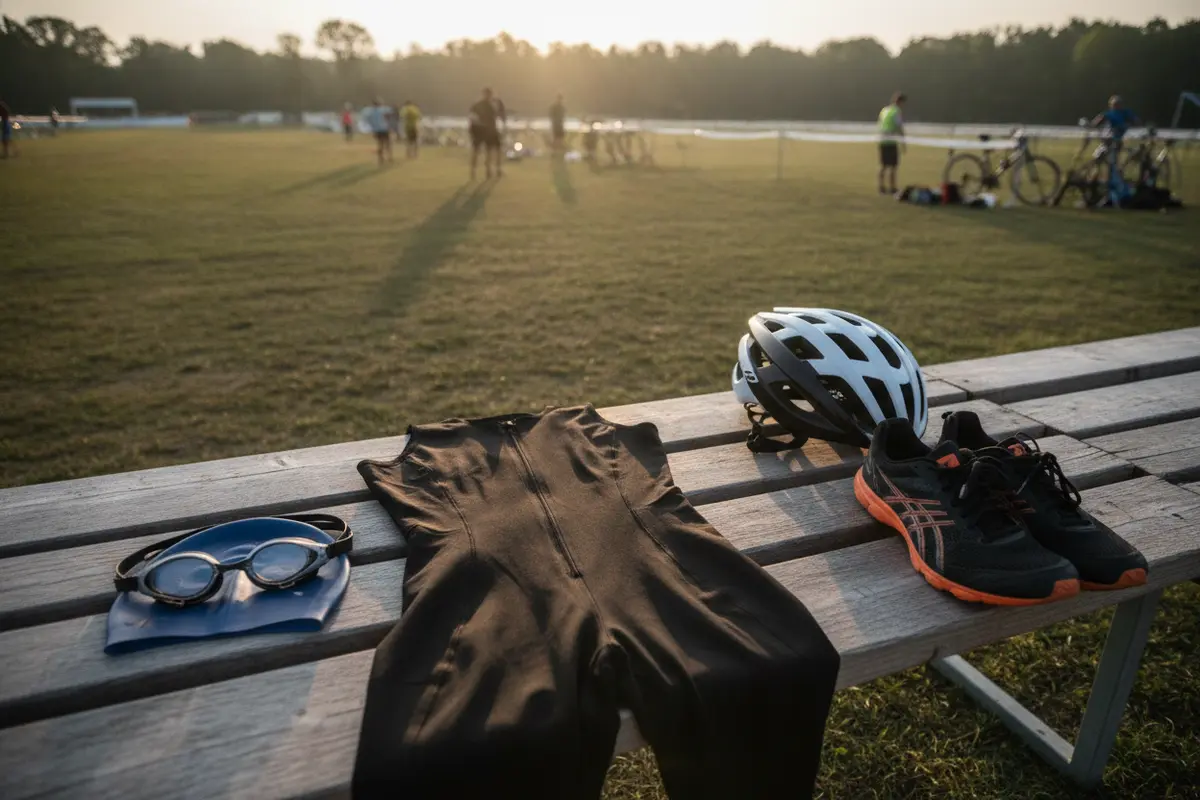
Other kit details should support rather than complicate your plan. Keep race equipment familiar and test it in training. For example, FuelBelt lace locks are a separate footwear accessory, while a TYR water bottle is a hydration item; neither determines which suit fits. Use a checklist to ensure accessories do not distract from the suit's comfort and event requirements.
What should you check before ordering?
Before placing an order, compare the exact garment's product details with your needs. Confirm whether it is a men's model, review available size and color information, and read the materials and care notes. A general category label does not confirm that a particular size or variant is in stock. Check the live product listing for current selection and availability.
- Event: Identify the race format, distance, expected conditions and any published apparel or equipment rules.
- Fit: Measure as the brand instructs, consult the model-specific chart and consider how the suit feels in all three movement positions.
- Construction: Compare sleeve and leg coverage, pad design, zipper comfort, seams and pocket placement.
- Use: Decide whether you will wear one garment across the full event or need separate layers or equipment.
- Care: Read the item's label and care directions before use; follow them rather than applying assumptions from another suit.
- Order details: Confirm the selected size, color, product description and current availability before checkout.
If you are assembling a wider kit, keep accessories purpose-specific. A pair of training fins or a pull buoy belongs to swim training, not necessarily race-day equipment. Those tools may be part of practice, but do not assume every item is legal or useful for a particular event. Check the event guide and plan what you will actually use.
For apparel care and sizing, follow the item-specific instructions and the retailer's current policy. Swim2000's qualifying exchange benefit is limited to one same-item size or color exchange per order, with free outbound Ground shipping within the continental United States; it does not mean return postage is free. Review current terms before ordering, especially for technical or specialty apparel, and confirm the condition requirements for any return or exchange.
How can you prepare the suit for repeat training?
Make the first wear a controlled practice, not a race-day experiment. Check the garment before putting it on, including seams, zipper function and any closures or pockets. Follow the product's own care label and directions; fabric blends and construction can call for different handling. Do not assume that advice for one suit applies to another model.
After a training session, inspect the suit for signs of rubbing or shifting and note when discomfort occurs. A detail that feels fine while standing may become noticeable after repeated strokes, time in a cycling position or a run. Adjust your fit assessment based on those observations. If you change your race kit, test the new combination in training rather than making several untested changes at once.
Care for the rest of your kit on its own terms as well. Keep goggles, caps and other equipment clean and stored according to their product directions. For example, swim essentials such as a silicone swim cap have a different role from the suit itself. Check each item's listing for its current materials and care instructions, and replace or adjust gear if it no longer works comfortably for you.
In short: Use practice to identify fit issues early, and follow the care directions for each specific item. Make changes deliberately so you can tell which adjustment improves comfort.
How should you compare suit options without overbuying?
It helps to separate must-haves from preferences. Must-haves may include an appropriate fit, suitable coverage and compliance with your event's requirements. Preferences may include sleeve length, pocket layout, a particular fabric feel or a certain color. Write those down before comparing listings so a long feature list does not distract from the basics.
Then compare products on a like-for-like basis. Check the model name, intended use, sizing information and construction. Do not infer that a higher price guarantees a better fit or that a similar-looking suit has the same materials or pad. Avoid using a discount label as a substitute for checking what is included. Review the current item page for its actual displayed price and eligibility details.
Keep the race context in view. A warm pool race and an event with open-water conditions can raise different equipment questions. A short local event and a longer-distance race may change how much attention you give to pocket access and pad comfort. The suit still needs to fit your body and your planned movements. You can compare accessories such as a FuelBelt LED armband only if it suits your overall training or safety plan; it is not a substitute for event-specific requirements.
For broader sport guidance, consult the event organizer and the relevant governing body. USA Triathlon's official website is a starting point for U.S. triathlon information; use current event materials for the rules that apply to your race. Rules and permitted equipment can vary, so verify directly rather than relying on a product description or a general article.
In short: Make a short comparison based on fit, event suitability and the construction details you will notice during use. Confirm the current product variant, and use event-specific information for rule and equipment decisions.
Explore triathlon apparel details
Frequently asked questions
Can I wear one triathlon suit for the whole race?
Some triathlon suits are designed for use across swim, bike and run stages, but whether a specific suit is right depends on the event, conditions, rules and your comfort. Check the product details and event guide before race day.
Should a men's triathlon suit feel tight?
It should stay in place without restricting comfortable breathing, shoulder movement or leg motion. Use the brand's model-specific sizing chart and check how the suit feels while reaching, bending into a cycling position and jogging.
Do I need a wetsuit as well as a tri suit?
Not for every race. Wetsuit use depends on event rules and conditions, while a tri suit is a separate garment. Check the event's current guidance and product information to determine what applies to your race.
How can I test a suit before race day?
Try it in a safe training setting and include the movements you expect: swimming, cycling posture and a short run. Notice pressure points, shifting fabric, zipper comfort and pad feel. Do not make race day the first time you wear it.
What should I do if I'm between sizes?
Recheck your measurements and the sizing instructions for that exact model. Review the brand's guidance or contact the retailer with a product-specific question rather than assuming that sizing runs the same across brands.
Choose your suit by matching its fit and construction to the race you plan to do, then practice in it before relying on it on event day. For more product-specific reading, explore the available triathlon apparel details and compare them with your own sizing and use needs.