

Open water swim training asks you to build endurance without the predictable walls, pace clock, and lane lines of a pool. A practical plan combines steady aerobic swimming with sighting, controlled pacing, gradual exposure to outdoor conditions, and race-specific practice so you can cover distance with a calm, repeatable stroke.
Shop open-water swim gear at Swim2000.
What should open water swim training include?
A complete open water swim training plan should develop four abilities: sustainable aerobic effort, efficient freestyle technique, navigation in a straight line, and composure when water temperature or surface conditions change. Pool sessions build the engine, while carefully planned outdoor sessions teach you how to use it beyond the lane.
Keep the plan flexible. Your current weekly distance, target event, experience in open water, water temperature, and access to a supervised swim location should determine how quickly you progress. The schedule below is a framework, not a requirement to increase distance when your body or conditions say to hold steady.
Build your pool endurance base first
The first phase of open water swim training is mostly about repeatable effort. Use a pace that lets you hold form and finish the set with control rather than chasing a fast first 100. A steady aerobic session might include a relaxed warm-up, technique drills, several moderate repeats with short rest, and an easy cooldown.
Practice the skills that become harder outdoors while the pool is calm. Swim some repeats breathing to both sides, vary your breathing pattern only when it feels natural, and occasionally swim without looking at the pace clock. You are learning to judge effort by breathing, stroke pressure, and how well you can maintain a long line in the water.
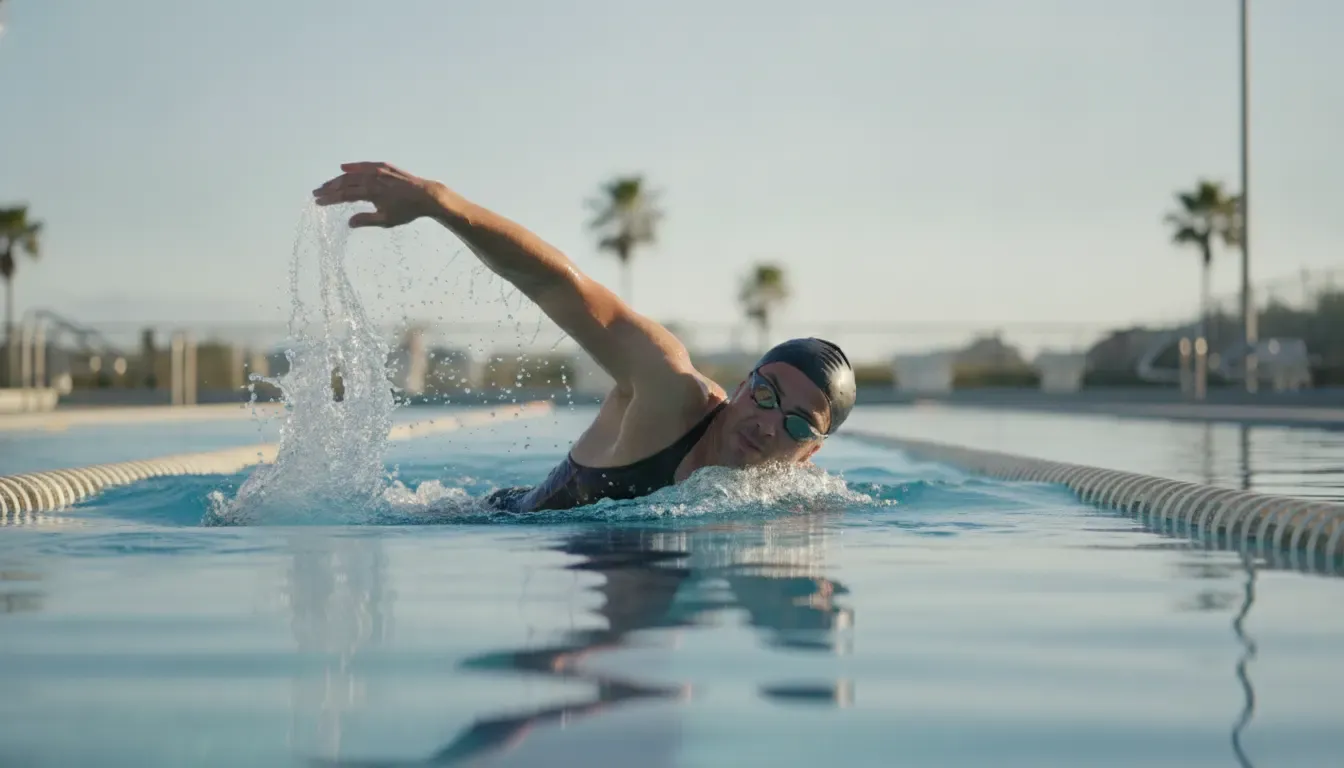
Key takeaway: Pool endurance gives you a controlled place to build consistent effort and protect your technique. Start with the distance you can already swim comfortably, then add time or distance in small steps while keeping easy sessions easy.
How can you practice sighting without losing rhythm?
Sighting is the navigation skill that helps you stay on course when there is no black line under you. Lift your eyes just enough to find a landmark, then turn to breathe as usual. Avoid lifting your whole head, which can make your hips sink and increase the effort required for every stroke.
Begin in the pool by placing a target at the end of the lane. During an easy repeat, sight once or twice before the wall, then return to your normal head position. You can also sight during a warm-up length every six to eight strokes, alternating which side you use to look forward. The goal is a small, relaxed movement that does not interrupt your exhale or catch.
When you move outside, choose a fixed landmark behind or beyond the water rather than trying to follow a swimmer who may change direction. Practice sighting in calm, supervised water before adding chop or a crowded start. For more navigation and risk-planning guidance, review Swim2000's open-water swimming safety guide.
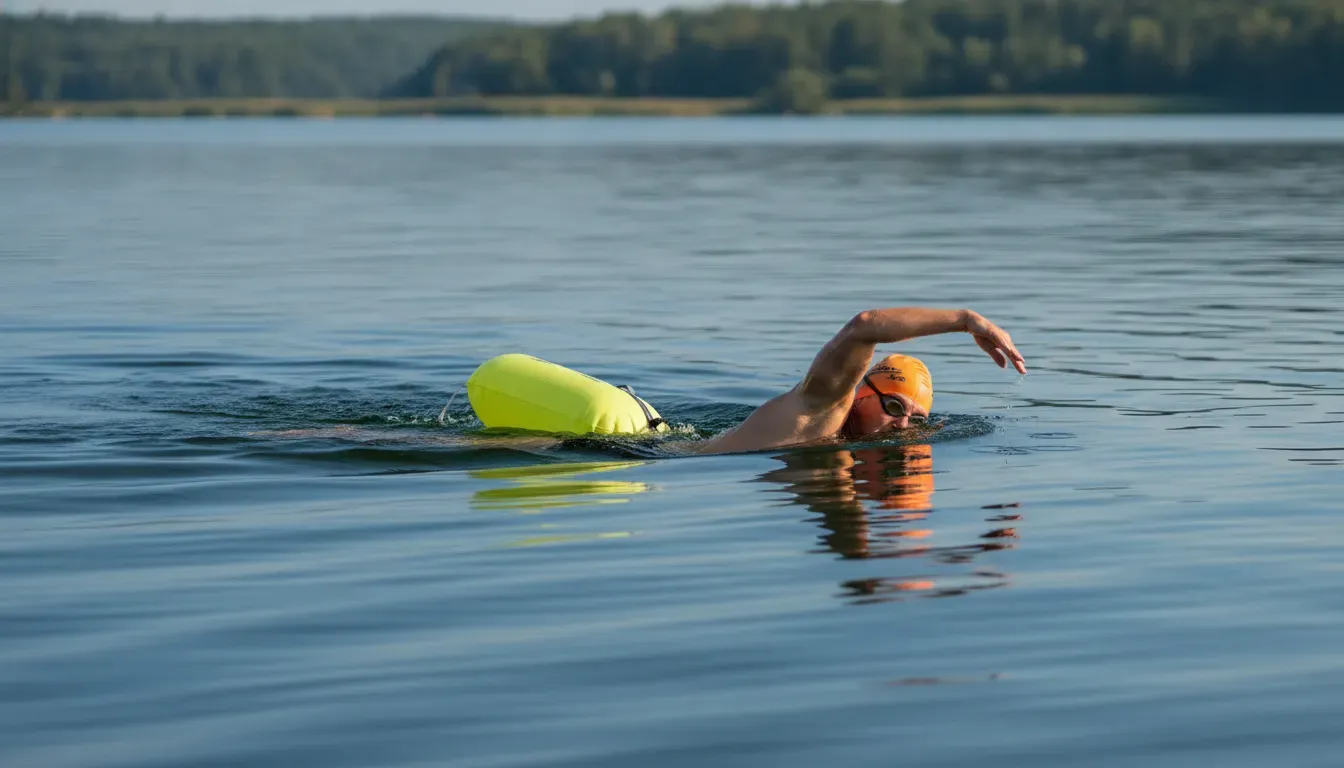
Key takeaway: Sighting works best when it is frequent enough to keep you on course but small enough to preserve your stroke. Train it in short, low-pressure repetitions before asking it to work during a long swim or race.
An 8-week open water swim training progression
This sample progression uses three primary swim sessions per week, with an optional fourth session when recovery is good. Keep at least one easy or rest day between demanding sessions. If you currently swim less often, repeat a phase before adding another session. If your event is farther away, extend a phase rather than making the distance jump larger.
| Weeks | Primary focus | Example practice |
|---|---|---|
| 1 to 2 | Pool base and technique | Two aerobic pool sessions, one technique session with bilateral breathing and short sighting drills. |
| 3 to 4 | First outdoor exposure | Keep two pool sessions and add one short, supervised open-water session focused on calm entry, direction, and relaxed breathing. |
| 5 to 6 | Endurance and conditions | Build the longest session gradually, add controlled race-pace sections, and practice sighting with a bright tow float in appropriate conditions. |
| 7 | Race-specific rehearsal | Practice the planned distance or a shortened version, including gear, fueling, pacing, entry, exit, and sighting decisions. |
| 8 | Taper and confidence | Reduce total volume, keep a few short efforts, and prioritize sleep, familiar equipment, and a clear race-day plan. |
For each week, keep one session deliberately easy. A useful three-session pattern is an aerobic endurance swim, a technique and pacing swim, and a longer continuous or broken-distance swim. A fourth session can be a short recovery swim or an outdoor skills session, not another hard workout.
Use pacing to make distance repeatable
Open water removes many of the cues swimmers use to regulate effort. There may be no pace clock, walls, or even a consistent current. Start slower than your maximum sustainable effort, settle into a breathing pattern, and check your form before increasing pace. The first part of a long swim should feel controlled enough that you could continue the same rhythm.
Use effort cues in the pool. For example, label a set as easy aerobic, steady, or controlled hard, then notice how each level feels in your breathing and stroke. During an outdoor session, use those cues instead of trying to match a pool split that conditions cannot support. Headwind, chop, current, and a crowded course can change speed without changing the quality of your effort.
Negative splitting can be useful in practice: swim the first half at a calm effort, then make the second half slightly more purposeful if your form remains stable. Do not turn every session into a test. The goal is to learn what sustainable distance feels like and finish with enough energy to exit the water safely.
Choose open-water goggles with a secure fit and useful visibility.
How should you acclimate to open-water conditions?
Acclimation is more than tolerating a lower temperature. It includes learning how entry feels, how your breathing responds to outdoor water, how to orient without lane lines, and how wind or small waves affect your stroke. Start in a supervised location with a clear entry and exit. Enter gradually, pause until your breathing is under control, and keep the first session short.
Do not use a training plan to override warning signs. Exit if you develop confusion, unusual weakness, persistent shivering, loss of coordination, chest discomfort, severe shortness of breath, or a feeling that conditions are becoming unsafe. The National Weather Service explains why cold water can create serious hazards even when the air feels comfortable. Check local water conditions, weather, and site rules before every swim.
Temperature-specific equipment can help you manage exposure, but gear does not make an unsafe location safe. A wetsuit, neoprene cap, socks, or gloves should fit correctly and be tested before event day. Use Swim2000's cold-water swim gear collection to compare thermal layers for your conditions.
This article provides general training information, not medical advice. If you have a medical condition, have experienced unexplained symptoms during exercise, or are unsure whether open-water swimming is appropriate for you, speak with a qualified healthcare professional before starting a new plan.
Make every outdoor session safety-conscious
Safety is part of the training plan, not an afterthought. Swim at a designated or supervised location when possible, tell someone your route and expected return time, and know where you can exit. Do not swim alone in an unfamiliar area. Check water quality, tides or currents when relevant, wind, storms, boat traffic, and visibility before entering.
- Use a bright cap and a high-visibility tow float where local rules and conditions allow.
- Keep your planned route and turnaround point within your current ability.
- Carry only what you need, and protect a phone or key in a separate waterproof pouch if required.
- Plan hydration and fueling for longer sessions without assuming a tow float is a life-saving device.
- Tell your support person when you enter and when you are safely out of the water.
U.S. Masters Swimming's open-water swimming guide is a useful reference for beginners and experienced swimmers reviewing locations, equipment, training, and event preparation. Swim2000's open-water gear checklist can help you organize equipment without turning a list into a substitute for judgment.
Prepare for race-day execution
Race-day confidence comes from rehearsing decisions before the start. Use the final two weeks to practice the equipment you intend to wear, including goggles, cap, wetsuit, anti-chafing products, and any tow float used for training. Do not introduce an untested item on race morning.
Review the course map and identify the first landmark, turn points, likely exit, and places where you can pause if the event permits it. Decide how often you will sight, what effort you will use for the opening section, and how you will respond if you lose the course. If you are swimming a triathlon, practice the transition from water to standing and walking while breathing normally.
For a longer event, plan hydration or carbohydrate intake according to the event rules and your prior practice. The race is not the place to test a new drink, gel, wetsuit, or pacing strategy. Pack dry layers for after the swim, and leave enough time to arrive, check conditions, and settle your breathing before the start.
Key takeaway: A strong race-day plan is a series of familiar actions: check conditions, warm up appropriately, start controlled, sight deliberately, fuel only as practiced, and exit when safety requires it. Preparation should reduce decisions, not encourage you to ignore them.
Build your open-water setup at Swim2000 before your next training session.
Open Water Swim Training FAQs
How many days a week should I train for an open-water swim?
Three swim sessions per week can provide a useful structure for many swimmers: one aerobic session, one technique and pacing session, and one longer session. Add a fourth session only when you can recover well and keep it easy or skills-focused. Beginners may need to start with fewer sessions and build gradually.
How do I build endurance for open-water swimming?
Build endurance by repeating controlled aerobic swimming, extending the longest session gradually, and keeping your technique stable as you fatigue. Combine pool distance with short, supervised open-water sessions so you practice pacing, sighting, breathing, and conditions instead of adding distance in open water alone.
How often should I practice sighting?
Include short sighting drills in regular pool sessions, then practice them during every appropriate outdoor session. Start with occasional forward looks and return to normal breathing immediately. Increase the frequency only when you can keep your hips, stroke rhythm, and direction under control.
Should I wear a wetsuit for open-water swim training?
It depends on water temperature, local rules, your comfort, and the event's equipment policy. If you use a wetsuit, choose a swim-specific fit and test it during training. A wetsuit can support warmth and comfort, but it does not replace a safe location, supervision, gradual acclimation, or an exit plan.
What should I do if I feel anxious in open water?
Choose a supervised site, enter gradually, stay near a planned exit, and swim with a buddy or support team according to local safety guidance. Begin with short sessions focused on relaxed breathing and orientation. If anxiety does not settle or you feel unsafe, leave the water and seek qualified instruction before progressing.