


Open Water Swimming Gear: A Complete Checklist
The right open water swimming gear helps you manage the variables a pool never throws at you: changing light, waves, cool water, long distances, and an exposed shoreline. Before every training swim, use this checklist to choose equipment for the actual water temperature, route, weather, and support available that day.
Build your open water kit with Swim2000's curated open water swimming gear.
No piece of equipment can make open water risk-free. Swim at a designated or supervised location whenever possible, check local conditions and rules, tell someone your plan, and swim with a buddy or organized group. Treat a tow float as a visibility aid, not as a life jacket or substitute for appropriate supervision.
Open Water Swimming Gear Checklist at a Glance
A practical open water swimming gear checklist starts with a secure swimsuit, well-fitting goggles, a bright swim cap, a high-visibility tow float, and a plan for entering and exiting the water. Add thermal protection, hydration, navigation tools, and recovery items as the temperature, distance, and conditions demand.
| Gear category | Bring for most swims | Add when conditions call for it |
|---|---|---|
| Core swim kit | Swimsuit, goggles, bright cap | Spare goggles and cap |
| Visibility and awareness | High-visibility tow float, known route | Whistle where appropriate, support paddler or escort |
| Warmth | Wetsuit when suitable for conditions | Neoprene cap, gloves, and socks |
| Comfort and protection | Water-resistant sunscreen, anti-chafe product | Earplugs, nose clip, rashguard |
| Hydration and fuel | Water waiting on shore | Accessible fluids and fuel for longer sessions |
| Post-swim recovery | Towel, warm dry layers, footwear | Dry robe, warm drink, changing mat |
What Is Essential Safety Gear for Open Water Swimming?
Essential safety-minded gear improves visibility, awareness, and readiness without replacing judgment. Start with a bright cap and tow float, then confirm the route, entry and exit points, weather, water conditions, local hazards, and the people who will swim with or support you.
Bright swim cap
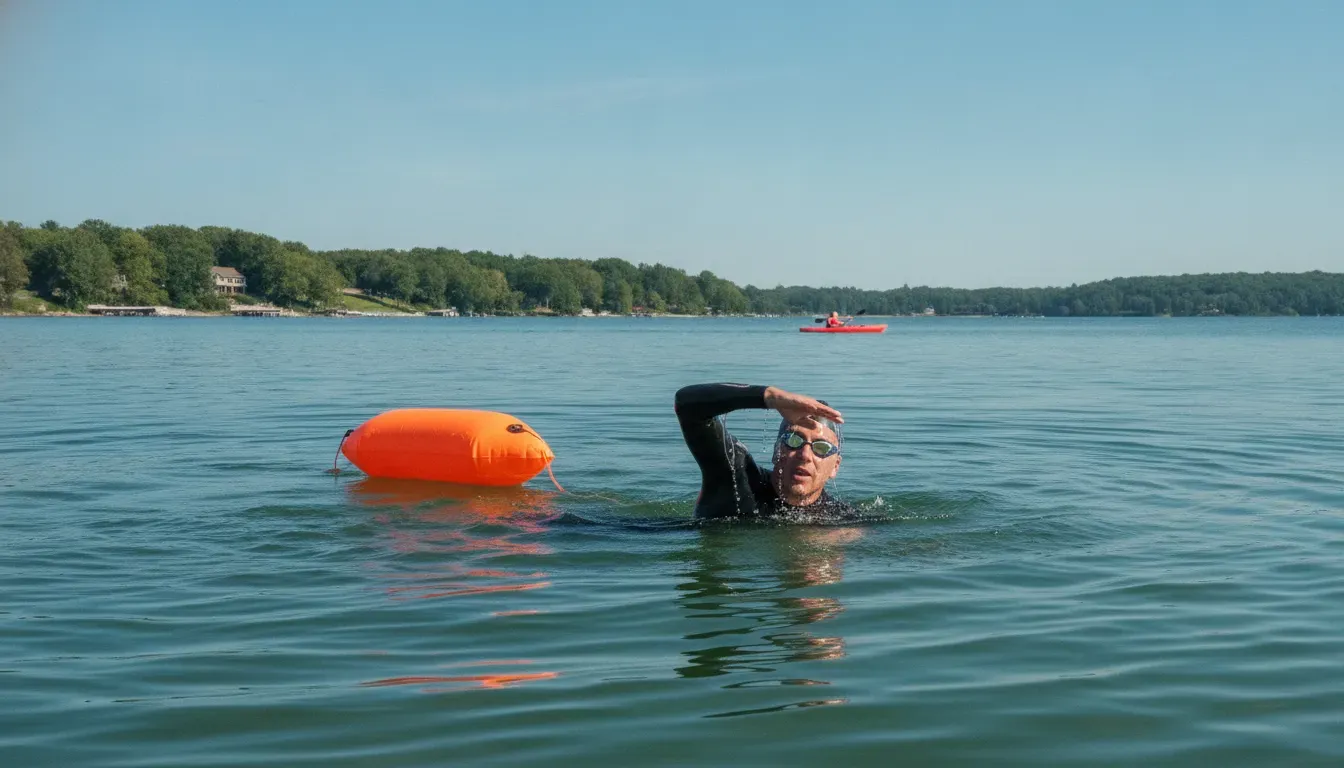
Choose a cap in a highly visible color that contrasts with the water. Orange, pink, yellow, and bright green are generally easier to spot than black, navy, or white in changing light. A regular silicone or latex cap works in warmer conditions, while a neoprene cap can add warmth in cooler water.
High-visibility tow float
A tow float trails behind the swimmer on a waist belt and increases surface visibility. Some models include dry storage or a place for fluids, but storage capacity and waterproofing vary. Keep electronics and keys in a separate waterproof pouch even when the float includes a dry compartment. A tow float is not a certified personal flotation device.
Buddy, route plan, and shore contact
Your most important safety system is not a product. Swim with a buddy or organized group, preferably where trained supervision is available. Before entering, identify landmarks for sighting, a turn-around point, more than one exit option, and a clear reason to end the session early. Share the route and expected return time with someone on shore.
Whistle and communication plan
A pealess whistle may provide a simple way to attract attention when local rules allow it. Attach it where it stays accessible and test it before the swim. Phones belong in a genuinely waterproof case, but reception and touchscreens may be unreliable on the water, so never make a phone your only plan.
How Do You Choose Goggles and Visibility Gear?
Choose open water goggles for fit first, then match the lens to the light. A secure seal and useful field of view matter on every swim. Clear or lightly tinted lenses suit dim conditions, while tinted, mirrored, or polarized options can reduce brightness and glare in strong sun.
Fit-test goggles before relying on them outside. Press the eyecups gently against your face without using the strap; a brief seal suggests the gasket shape may suit you. Then adjust the strap only enough to hold the seal. Overtightening often adds discomfort without fixing the wrong fit.
- Bright sun: Consider mirrored, dark-tinted, or polarized lenses.
- Overcast skies or dawn: Clear, amber, or lightly tinted lenses can preserve visibility.
- Changing light: Photochromic lenses can adapt as brightness changes.
- Long swims: Prioritize a comfortable gasket and bring a tested spare pair.
- Navigation: A wider field of view can make sighting buoys, landmarks, and other swimmers easier.
Pair goggles with a bright cap and tow float rather than expecting one item to do all the work. Practice sighting in training: lift your eyes just enough to find the next landmark, then return smoothly to your stroke. Learn more in Swim2000's guide to the best goggles for open water.
Compare swim goggles and find a lens and fit for your next outdoor session.
How Should Water Temperature Change Your Kit?
Water temperature should influence your exposure time, thermal protection, route, and recovery plan. A swimming wetsuit may add insulation and buoyancy, while a neoprene cap, gloves, or socks can protect exposed areas. Rules vary by event and location, so check them before choosing your setup.
Do not decide based only on air temperature. Measure or confirm the water temperature, consider wind and sun, and account for your experience in similar conditions. Cold affects swimmers differently. If you are new to cooler water, start conservatively with experienced supervision and an easy exit close by.
Wetsuit selection and fit
Choose a wetsuit made for swimming or triathlon. It should fit closely without restricting your shoulders, creating a large gap at the lower back, or causing neck discomfort. Sleeveless suits can offer more shoulder freedom, while fullsuits generally provide more coverage. Practice putting it on, swimming in it, and removing it before a long session or event.
Explore Swim2000's new arrival wetsuits for open water and triathlon, then use the manufacturer's sizing guidance for the specific model. If a suit changes your body position or stroke feel, build familiarity through shorter training sessions before increasing distance.
Cold-water accessories
- Neoprene cap: Adds insulation around the head and ears.
- Neoprene gloves: Add hand coverage, but may change feel for the water.
- Neoprene socks or booties: Add foot coverage and may help around rough entry points.
- Earplugs: Some swimmers find them useful in cool water, provided they fit correctly and do not interfere with awareness.
Thermal gear can extend comfort, but it should not encourage you to ignore shivering, confusion, unusual fatigue, loss of coordination, breathing difficulty, or other signs that something is wrong. Exit promptly and seek appropriate help if needed.
Comfort and Protection Items Worth Packing
Small comfort items can prevent a good training swim from turning into an irritating one. Pack water-resistant broad-spectrum sunscreen, anti-chafe balm, simple footwear for the shoreline, and a backup cap and goggles. Test products during training rather than introducing them on event day.
Sun and skin protection
Apply water-resistant sunscreen according to its label before you enter. Remember exposed areas such as the back of the neck, shoulders, face, ears, and backs of the legs. Reapply as directed, especially during long sessions or between repeated swims. A rashguard can add coverage when it is appropriate for the activity and conditions.
Anti-chafe product
Apply a swimming-compatible anti-chafe product to friction points such as the neck, underarms, and suit seams. Confirm that it is suitable for your wetsuit material. Petroleum-based products can damage some types of neoprene, so follow the suit manufacturer's care instructions.
Simple spares
Keep a spare pair of goggles and cap in your bag. A broken strap or torn cap should not push you into using unfamiliar, poorly fitting gear. A small mesh pouch helps wet items drain after the swim, and a separate bag keeps dry clothing ready for recovery.
What Hydration and Fuel Do Open Water Swimmers Need?
Hydration and fueling needs depend on swim duration, effort, weather, and the individual. Bring water for before and after every session. For longer swims, plan how fluids and fuel will be safely accessible through a support person, escort craft, fixed feeding point, or suitable tow-float setup.
Swimming can mask thirst because you are surrounded by water and may feel cool. Arrive normally hydrated, follow a practiced plan, and avoid trying an unfamiliar drink or food during an important training day. If a route takes you far from shore, decide how you will access supplies before entering.
- Water or a familiar sports drink in a secure bottle
- Easy-to-handle fuel that you have used in training
- A support plan for retrieving bottles and wrappers
- Extra fluids and a familiar snack waiting at the exit
Keep the environment clean. Secure every item and bring all packaging back to shore.
Post-Swim Gear for a Better Recovery
Post-swim gear should help you get dry, warm, and comfortable without delay. Set out a towel or changing robe, loose dry layers, warm socks, easy footwear, fluids, and a familiar snack before entering. In cool or windy conditions, organize the bag so the warmest items are reached first.
- Dry off: Use a large towel or changing robe immediately after exiting.
- Replace wet layers: Put on loose, warm clothing that is easy to manage with cold hands.
- Protect your feet: Wear sandals, water shoes, or warm socks appropriate for the shoreline.
- Rehydrate and refuel: Use the fluids and food you planned and practiced.
- Clean and dry gear: Rinse goggles, cap, tow float, and wetsuit according to product instructions.
Never leave a wetsuit compressed in a closed bag. Rinse it with fresh water when appropriate, let it dry away from direct heat, and store it as the manufacturer recommends. Browse swim training gear and accessories for useful additions to your kit bag.
Shop open water swimming essentials for visibility, warmth, and training comfort.
How Do Distance and Conditions Change the Checklist?
The longer or more exposed the route, the more conservative and detailed your plan should become. Distance adds time for weather, fatigue, chafing, hydration needs, and navigation errors to matter. Rough water, currents, low light, cold, boat traffic, and remote exits all justify stronger support or a different swim.
| Scenario | Gear and planning emphasis |
|---|---|
| Short, supervised swim near shore | Core kit, bright cap, tow float if permitted, simple recovery bag |
| Longer distance session | Proven anti-chafe setup, hydration and fuel access, clear turn points, support plan |
| Cool water or wind | Appropriate thermal protection, shorter route near exits, warm post-swim layers |
| Strong sun and glare | Suitable goggle lens, sunscreen, hydration plan, visible cap and float |
| Chop, current, or boat activity | Experienced local guidance, increased visibility, active escort or supervised venue; change or cancel the swim if conditions exceed your ability |
Use a simple pre-entry pause: temperature, weather, water, route, support, exit. If one part is uncertain, resolve it before swimming. Sometimes the right equipment choice is to keep the session close to shore, move to a supervised venue, or train in the pool instead.
Before-You-Leave Checklist
Pack the night before, then make the final decision at the water. This list covers the essentials while leaving room to adjust for your venue and personal needs.
- Swimsuit and appropriate swimming wetsuit
- Bright swim cap plus a spare
- Well-fitting goggles plus a tested spare
- High-visibility tow float where appropriate and permitted
- Water-resistant sunscreen and compatible anti-chafe product
- Neoprene cap, gloves, socks, or booties when conditions call for them
- Water, familiar fuel, and a safe access plan for longer swims
- Towel or changing robe, warm dry layers, and footwear
- Known route, entry and exit points, buddy or group, and shore contact
- Current check of weather, water conditions, local warnings, and venue rules
Open Water Swimming Gear FAQs
What gear do you need to start open water swimming?
Most beginners need a secure swimsuit, comfortable goggles, a bright swim cap, a high-visibility tow float where permitted, and warm dry items for afterward. Depending on water temperature and venue rules, you may also need a swimming wetsuit and neoprene accessories. Start at a supervised venue or with an experienced group.
Do you need a wetsuit for open water swimming?
Not for every swim, but water temperature, exposure time, personal experience, venue rules, and event regulations may make one appropriate or required. A swimming wetsuit can add insulation and buoyancy. Choose a close fit that allows comfortable breathing and shoulder movement, then practice in it before swimming farther.
Is a tow float a life-saving device?
No. A tow float improves visibility and some models carry small items, but it is not a life jacket or substitute for a personal flotation device, supervision, a buddy, or a support craft. Follow the manufacturer's instructions and local venue rules.
What color swim cap is best for open water?
Choose a bright color that contrasts strongly with the water and surroundings. Fluorescent orange, pink, yellow, and bright green are common visibility choices. Avoid relying on dark colors that may blend into the water, especially in low light or choppy conditions.
Should open water swimmers wear pool goggles or larger goggles?
Either can work if it fits securely and suits the conditions. Many swimmers prefer open water goggles with a wider field of view and lenses selected for outdoor light. Fit matters most. Test the seal and comfort in training, and carry a proven spare pair.
How should you care for open water swimming gear?
Follow each manufacturer's care instructions. Generally, rinse salt, sand, chlorine, and debris with fresh water when appropriate, then air-dry equipment away from direct heat. Avoid touching the inside of anti-fog lenses, and do not leave a wet wetsuit compressed in a closed gear bag.
Pack for the Swim You Are Actually Doing
A reliable checklist is not about carrying every accessory. It is about matching your open water swimming gear to that day's temperature, distance, light, route, conditions, and support. Start with visibility and a sound swim plan, add warmth and hydration as needed, and have dry recovery gear ready before you enter.
When you are ready to assemble or update your kit, Swim2000 offers open water swimming gear selected for outdoor swimmers, triathletes, and distance training.


