


Explore Swim2000's collection of rash guards and swim shirts to find your perfect fit today!
Rash guard vs swim shirt options differ based on how you plan to use the gear in the water. A rash guard is a tight top made to stop skin rubs from surfboards or sand. It stays in place during fast moves and often has a UPF 50 rating to block the sun. A swim shirt has a loose fit that looks like a normal tee but uses special fabric to block UV rays. This loose style is better for lounging by the pool or light swimming where you want more air. Both tops provide much better safety than a normal cotton shirt. This is key because a wet T-shirt provides much less UV protection than a dry one. Choosing between them depends on if you need a sleek fit for sport or a loose fit for comfort.
Rash Guard Vs Swim Shirt: What is the Difference Between a Rash Guard and a Swim Shirt?
Rash Guard vs Swim Shirt: A rash guard vs swim shirt differs in fit and function. A rash guard is skin-tight to protect against surfboard chafing and water drag. A swim shirt has a loose, t-shirt fit designed for casual comfort and sun protection. While both offer UV shielding, rash guards are built for sports and swim shirts for leisure.
Many people use the terms for a rash guard vs swim shirt as the same thing. While they look alike, these shirts have unique jobs and fits. Picking the right top can help you stay safe and feel good in the water. One is made for hard sport, while the other is best for a day at the beach. You should know the traits of each before you buy your next set of gear. A rash guard is built for work and speed, while a swim shirt is made for comfy wear and sun safety.
The Tight Fit of a Rash Guard
A rash guard is a sports shirt that fits very close to the skin. It is made to stop skin from rubbing against a surf board or other gear. This "board rash" can be very sore, so the tight fit keeps the cloth in place. Title Nine says these shirts protect you from skin burn, sunburn, and board rash (F001). They use a thick, stretchy cloth that stays tight even when it gets wet. This helps you move fast through the water.
At Swim2000, we see these tops used for more than just surfing. They are great for sports like BJJ or water polo where loose cloth could get in the way. Most pros look for a rash guard with a UPF 50 rating to keep the sun off their skin (F007). The fit also keeps you warm in cool water by holding a thin layer of heat next to your body. If you want to move without any drag, this is the top for you.
Sun Safety and Relaxed Fit
A swim shirt has a looser fit than a rash guard. It looks more like a common tee but uses special cloth to block the sun. These tops give you UV shield that will not wash off like sun cream might (F002). They are a top pick for people who want to stay safe without a skin-tight feel. You can wear them all day at the park or on a boat without feeling too squeezed.
The CDC notes that clothes made with a tight weave give the best shield from the sun (F003). It is key to know that a wet shirt blocks less light than a dry one (F004). Both UVA and UVB rays can raise your risk of skin cancer. Having the right gear is vital for your health (Mayo Clinic) (F005). Some shirts even meet top world rules to show how well they block rays (F006).
How to Choose the Right One
Your choice depends on what you plan to do in the water. If you are surfing or diving, a rash guard will stay in place and stop skin burn. The tight fit means it won't ride up when you move fast in the waves. For a slow swim or a day of play, a swim shirt is often the more comfy pick. If you are shopping for kids, a loose shirt is easy to put on and take off between swims. For laps, go for the tight rash guard to help you move with less drag.
| Key Feature | Rash Guard | Swim Shirt |
|---|---|---|
| Fit Style | Skin-tight. | Loose / Tee. |
| Main Use | Sports & Chafing. | Beach & Sun Safety. |
| Material | Thick Nylon/Spandex. | Light Polyester. |
| Sun Safety | UPF 50+. | UPF 30-50+. |
| Drag in Water | Low. | High. |
Fit and Fabric: Why the Cut Matters in and Out of the Water
Fit and Fabric: The cut and material of your swim top determine its performance. A tight rash guard reduces drag and prevents fabric from shifting during athletic water sports, while a loose-fit swim shirt maximizes airflow for comfort. Both rely on durable, quick-drying nylon-spandex blends with a tight weave to protect your skin.
The main point in the rash guard vs swim shirt debate is how they fit your body. Each style has a clear goal for people at the pool or beach. Picking the right cut helps you stay at ease and safe during water sports.
The snug fit of rash guards
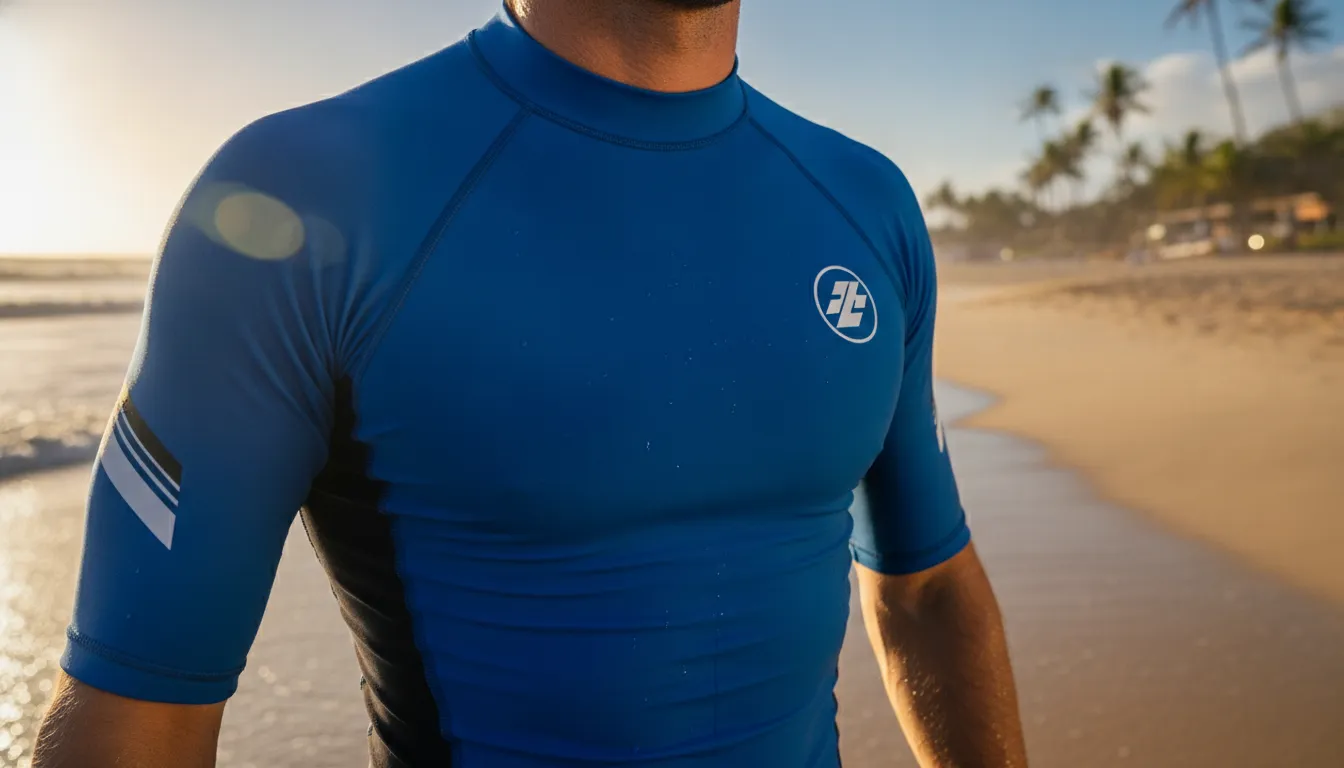
A rash guard is a form-fitting shirt made to act like a second skin. This tight fit is key for active water sports. It cuts down on drag in the water, which helps you move faster. The snug cut also keeps the shirt in place while you surf or swim. If a shirt is too loose, it can bunch up and make it hard to move your arms.
The tight fit also stops skin soreness. These shirts are built to protect your skin from board rash and chafing. This often happens when your body rubs against a surfboard or pool edge. Because they sit so close to the skin, they prevent sand and grit from getting trapped under the cloth. This keeps you focused on your sport instead of itchy skin.
Relaxed fit for swim shirts

Swim shirts have a much looser fit than rash guards. They look and feel more like a standard t-shirt you would wear on land. This relaxed cut makes them a top choice for people who want to stay cool and comfy while lounging by the water. They are easy to pull on and off, making them great for kids or for quick trips to a beach cafe.
Since they do not hug the body, swim shirts allow for more airflow. This can help you stay cool on a hot day. But this loose fit can be a problem if you try to do fast laps in a pool. The extra cloth will catch the water and slow you down. For that reason, swim shirts are best for light fun like wading in the waves or playing catch on the sand.
How fabric weave protects skin
The way the cloth is woven is just as key as the cut. Most swim gear uses a mix of nylon and spandex. These fabrics dry fast and stretch well. A tight weave is vital because clothes made from tightly woven fabric offer the best shield against UV rays. This weave blocks the sun from reaching your skin.
Dry gear also works better than wet gear. A wet t-shirt gives much less UV safety than a dry one. This is why quick-drying fabrics are so helpful for sun safety. By picking a good rash guard or swim shirt, you make sure your skin stays safe even after you leave the water. Darker colors can also add a bit more safety than light ones in some cases.
Sun Protection and Safety: Tightly Woven Protection for Every Activity
Sun Protection and Safety: Premium rash guards and swim shirts block both UVA and UVB rays using tightly woven fabrics that physically barrier UV radiation. Unlike normal cotton t-shirts, which lose their sun-blocking ability when wet, specialized swim gear maintains high UPF ratings (typically UPF 50+) even when saturated with water.
When you choose between a rash guard vs swim shirt, sun safety is likely your top goal. Both types of gear help block the sun, but how they do it matters. The way a shirt is made can change how well it shields your skin from harm. Knowing the facts behind these fabrics helps you stay safe while you enjoy the water.
How Tightly Woven Fabrics Work
The best way to block UV rays is with tightly woven fabric. When threads are close together, they leave very small gaps for light to pass through. This physical shield acts as a wall for your skin. Many top rash guards and swim shirts use these dense knits to stop the sun from reaching you.
Some gear even has a tested rating to show its level of block. These ratings tell you how much of the sun's energy can get through the cloth. Choosing clothes with a high rating ensures you have a strong layer of safety. You can find many choices in our shop for rash guards and swim shirts to suit your needs.
Wet vs Dry Sun Protection
It is also key to know how water affects your gear. A wet shirt often offers much less UV protection than a dry one. When fabric gets wet, the fibers may stretch or gap. This allows more light to hit your skin. If you spend all day in the pool, you need gear that keeps its shape even when soaked.
Top swim shirts are built to handle this change better than a plain cotton tee. They use man-made yarns that do not hold as much water. This helps the shirt stay tight and keep its safety power. Using a dry shirt or a proper UV shirt is much safer for long hours in the sun.
Understanding UVA and UVB Rays
Sunlight carries two main types of rays that can hurt you. UVB rays are the main cause of sunburns on the top layer of your skin. UVA rays go deeper and can cause your skin to age faster. Both types of UV radiation can increase the risk of skin cancer. A good swim shirt should help block both kinds to give you full safety.
By wearing the right gear, you add a layer of safety that lotion alone might miss. Since you do not have to rub on a shirt like cream, it gives you steady block all day long. This is why picking the right rash guard vs swim shirt is a smart move for your health and comfort.
Choosing Your Gear: Water Sports, Paddling, or Beach Lounging?
Choosing Your Gear: To select the right top, match the garment style to your activity level. Choose a tight-fitting rash guard for high-speed water sports, BJJ, or swimming laps to eliminate drag and chafing. Opt for a relaxed swim shirt for beach lounging, walking, or paddling where casual comfort and breathability are your primary goals.
Picking between rash guards and swim shirts depends on your plans for the day. Both types of gear keep your skin safe from the sun and sand. But they feel and act in unlike ways once you get in the water. You should choose your top based on how much you move and how fast the water flows around you.
Check Your Sport Type
If you plan to surf or swim fast laps, you need gear that fits like a second skin. A loose shirt will fill with water and act like a small sail. This drag makes it much harder to move through the waves. It can also lead to painful skin rub as the wet cloth moves across your body.
For slower tasks like water moves or light wading, you might not need such a tight fit. These slower moves do not cause as much drag in the pool. A looser shirt can feel more like a normal tee. It also lets more air reach your skin when you are out of the water.
Step-by-Step Guide for Buyers
Finding the right top for your day in the sun is easy if you follow a few simple steps. This guide will help you pick the best fit for your needs.
- Assess your task level. If you will be in rough surf or swimming fast, go for a tight fit. For beach walks or slow wading, a loose shirt is a good choice.
- Choose your fit. Some people like the snug feel of a rash guard. Others want the room and ease that a swim shirt offers for a long day.
- Select the right sleeve length. Long sleeves block more of the sun's rays. Short sleeves stay cooler on hot days and let your arms move with less weight.
- Think about water speed. Fast water will pull and tug at any loose fabric. A snug fit stays in place even when you dive or get hit by a big wave.
Shield Your Skin from the Sun
One of the best reasons to wear this gear is to block UV rays. Normal clothes can let some rays pass through to your skin. Fabrics that are woven tight give you the best shield. It is a good idea to check for a high sun rating when you buy.
Guarding yourself is about more than just avoiding a burn. Both types of UV rays can lead to a higher risk of skin cancer over time. A wet cotton shirt loses most of its power to block the sun. Swim gear keeps its strength even when it gets wet in the pool or sea.
Think About Your Ease and Style
How you feel on the beach is just as vital as how you act in the water. Many swimmers find that a loose shirt is better for a lunch break or a stroll. It looks more like normal clothes and dries fast. You can wear it from the pool to the snack bar without feeling out of place.
But if you want to spend hours in the surf, ease comes from a snug fit. A good rash guard will not bunch up under your arms or ride up your back. This keeps you focused on your sport instead of your clothes. Think about where you will spend most of your time before you make your final choice.
Is a Rash Guard Supposed to Be Tight?
Is a Rash Guard Supposed to Be Tight? Yes, a rash guard must fit snug like a second skin to function properly. This skin-tight fit keeps the fabric in place during movement, preventing painful chafing from sand or gear, and eliminates drag in the water. If the fabric has folds or sags, it is too loose.
Protection against chafing and sun
The snug fit of a rash guard serves a clear goal. It creates a shield between your skin and your gear. Surfers use them to stop wax and sand from rubbing against their chest. This skin-tight layer also blocks rays that lead to skin cancer. The Mayo Clinic notes that both UVA and UVB rays increase health risks. A tight, tightly woven fabric offers the best defense against these rays.
Performance in the water
A loose shirt will drag in the water and slow you down. A tight rash guard stays close to your body to help you move fast. It does not pool with water or sag when wet. This keeps you light and agile for sports like swimming or water polo. Most rash guards and swim shirts use stretchy blends to give you a full range of motion. You want the shirt to be snug but not so tight that it stops you from breathing deep.
How to find your size
When you buy a rash guard, look for a fit that feels firm. It should feel like a light hug across your chest and arms. If the shirt has folds or extra cloth, it is likely too big. Check that the sleeves end at your wrists and the hem stays at your hips. A good fit will help you stay safe and move well. If you want a more relaxed feel for the beach, a swim shirt may be a better choice for your needs.
Browse Swim2000's full range of rash guards and swim shirts to find your ideal style.
Frequently Asked Questions
Are sun shirts and rash guards the same?
No. Both shirts block the sun, but they fit in two ways. A rash guard is very tight. This snug fit helps you move in the water with ease. A swim shirt is loose like a normal tee. As seen on Title Nine, rash guards are for active sports like surfing. Swim shirts work best for resting at the beach or pool.
Can I wear a rash guard for swimming?
Yes, you can wear a rash guard for swimming. These shirts are built for use in the water. They are made from thin cloth that dries fast. Because they fit tight, they will not bag or sag when they get wet. This makes them a great choice for pool games or fast swimming. They also keep your skin safe from the sun and stop the water from making you cold.
Why are swim tops called rash guards?
These tops get their name from their main job. They keep your skin safe from rashes. When you surf, your skin can rub against the board. This rubbing causes painful sores. A rash guard fits tight to stop this skin rub. It also keeps you safe from sand and the sun. Experts at Title Nine say they are a must for active water sports.
Do swim shirts protect you better than T-shirts?
Yes. A normal tee does not block much sun once it is wet. The CDC says that a wet T-shirt gives much less safety than a dry one. Swim shirts use tight fabric to block sun rays. This cloth stays safe even when you get in the water. Most of these shirts have a UPF 50 rating. This means they block almost all of the sun's rays.
Ready to pick the right swim gear for your next session?
If you wait to get the right gear. You might deal with a painful sunburn or skin rash that keeps you away from the pool for a long time. It is hard to enjoy your time in the water when you do not have the right layer to keep your skin safe. But picking the right fit today will help you avoid the stress of a last-minute shop before your next trip or race starts. Getting your new top now means you can jump into your next swim with ease and stay in the water for as long as you want without wasting a good day of sun.
Ready to shop? Contact our staff at Swim2000 to explore and shop our premium collection of competitive and recreational rash guards and swim shirts today!


