

Choosing Speedo prescription goggles means checking more than a lens number. The right pair needs to offer a useful prescription configuration, sit comfortably, and suit the light and conditions where you swim. This guide explains what to verify in the product information before you order, without assuming every model offers the same choices.
Compare goggle product details
What should you check first when comparing Speedo prescription goggles?
Start with the exact product listing and the prescription information you have. Prescription swim goggles are not automatically a direct replacement for everyday glasses or contact lenses. Models can differ in available strengths, lens styles, and the way each eye is selected. Confirm these specifics for the exact item rather than relying on a brand name, a product photo, or assumptions based on another pair.
Before moving to color or appearance, check these core details:
- Available lens strengths: Note the choices shown on the listing. Do not assume it includes every value from an eyeglass prescription.
- Left and right eye selection: Determine whether the product allows separate strengths or is sold as a matched pair.
- Prescription type: Check whether the offered lenses are spherical only or whether the listing describes other correction options. Do not assume that astigmatism or other prescription details are included.
- Lens tint and coating: Confirm whether the actual prescription version is clear, tinted, mirrored, or otherwise described. Features can vary between versions.
- Included fit parts: Review the listing for information about nose bridges, straps, or adjustments. Do not infer included components from a photograph.
If the listing does not answer a question that affects your vision or fit, pause and ask for clarification. An eye-care professional can help explain the prescription you have; the product listing or retailer must confirm the ordering options for the particular goggles. Keep the prescription details handy so you can ask a precise question rather than trying to convert the values from memory.
Takeaway: Confirm lens configuration first. A preferred tint or familiar brand does not help if the available lens strength or left-right arrangement does not suit your needs.
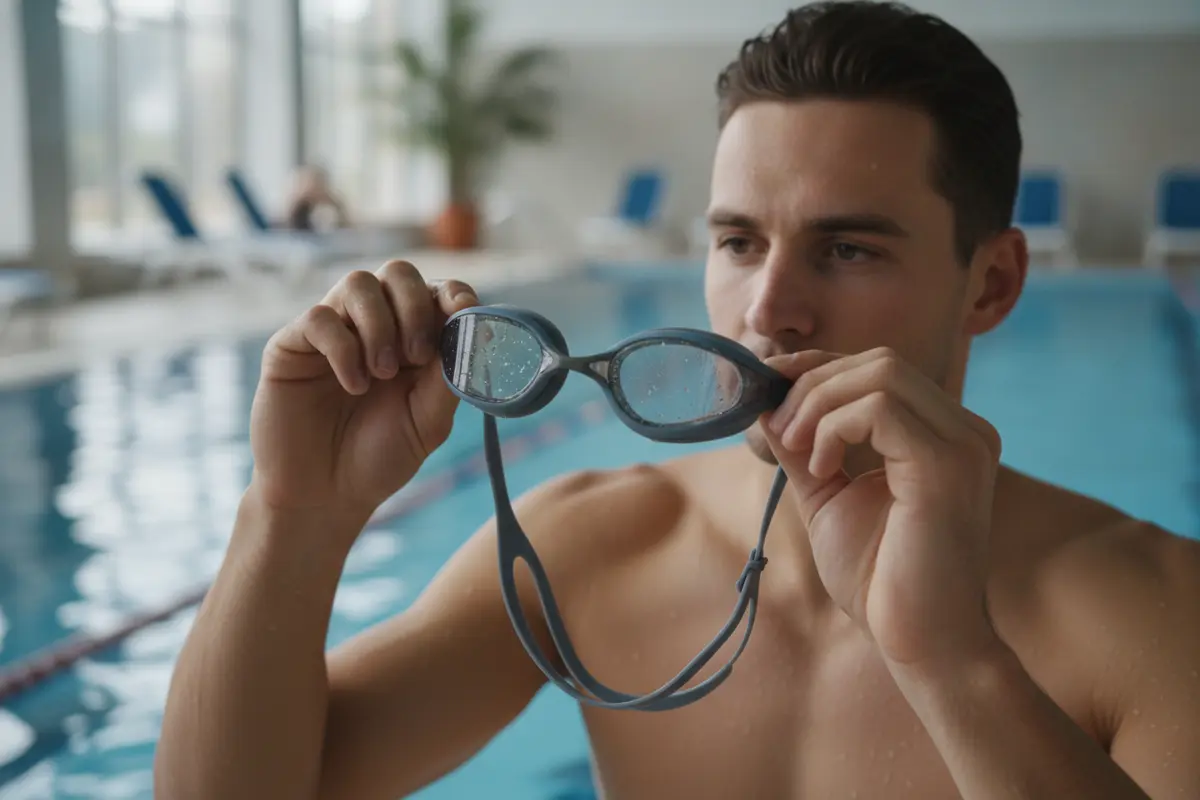
How do swim goggle prescriptions differ from eyeglass prescriptions?
Eyeglass prescriptions are written for lenses worn in a frame in front of the eyes. Swim goggles sit close to the face and the water changes the viewing conditions. A ready-made goggle may offer a limited set of lens strengths rather than a lens made to match each value in a glasses prescription. The available choices depend on the product.
Read the full prescription, not only the strongest or most familiar number. It may have different values for the right and left eyes, or include cylinder and axis information for astigmatism. A product that offers only spherical strengths may not reproduce all elements of a prescription. Avoid making your own conversion or choosing a value simply because it appears close. Ask an eye-care professional how to interpret your needs and verify with the seller how the product can be ordered.
It also helps to decide what you need to see during your swim. One person may want to identify lane markings and the wall during a familiar lap session. Another may need more precise vision for a particular activity. Those are different expectations, and the goggles' available correction may not meet every person's needs. Do not assume corrective swim eyewear provides the same vision as your everyday eyewear.
For a child or a swimmer who relies on precise vision, involve a parent or guardian as appropriate and speak with an eye-care professional when you are unsure. Stop using goggles if vision is uncomfortable or unclear. Goggles can help with vision in water, but they are not a substitute for safe swimming practices or attentive adult supervision. For broader water-safety information, consult the Centers for Disease Control and Prevention.
How can you assess fit and seal?
A suitable prescription does not guarantee a comfortable fit. Facial shape, eye socket depth, nose-bridge position, and strap placement all affect how a goggle feels. A frame that presses painfully or leaks repeatedly may not work for you, even if its lenses seem appropriate. Do not try to fix a poor match by pulling the strap excessively tight.
When trying goggles on dry, follow the manufacturer's instructions and avoid forcing the frame. A brief, gentle contact check can help you notice whether the cups touch evenly, but it cannot prove that the seal will hold during a full swim. Make adjustments gradually. If you test the goggles in water, begin with a short, supervised swim in a setting where you can stop easily.
- The cups should sit evenly around the eyes without pinching or pressing painfully.
- The nose bridge should feel stable and should not pull the lenses inward in an uncomfortable way.
- The strap should hold the goggles in place without creating excessive pressure.
- Check for leaking and pressure points early in a swim; leave the water to adjust if you cannot see comfortably.
- Stop use if irritation, persistent discomfort, or unclear vision develops.
Fit can differ between models, so the size or style that worked in a previous pair may not work in a new one. Consider what you can learn from the product description, and review applicable return conditions before buying if you are uncertain about fit. For young swimmers, an adult should help check the fit and supervise use. A secure seal is practical, but it does not remove the need for normal care around water.
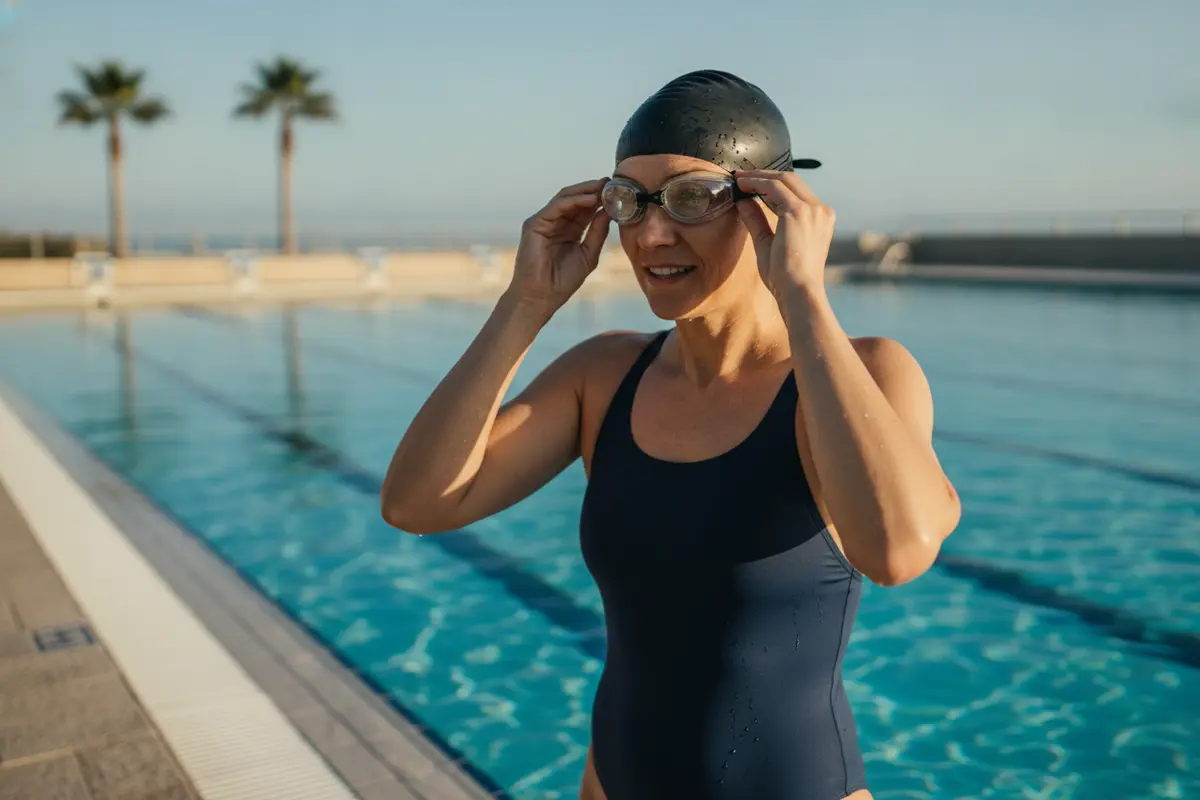
Which lens tint suits your swimming setting?
Lens tint can affect how comfortable a swim feels, but color alone does not tell you how much light passes through or whether a lens has a particular protective feature. Start with the place you usually swim, then check the manufacturer's specifications for the exact prescription version. The options may not be identical across all models or strengths.
| Swimming setting | What to consider | What to verify |
|---|---|---|
| Indoor pool with lower light | A clear or lighter lens may preserve more of the available light. | Confirm the actual tint offered with the prescription configuration you need. |
| Bright indoor pool | A tint may feel more comfortable to some swimmers, depending on lighting. | Check that the lens will not feel too dim in the pool where you swim. |
| Outdoor swimming | Sunlight and glare can vary with time, weather, and location. | Verify any stated UV or mirrored features in the product details; do not infer them from appearance. |
| More than one setting | A single lens may be convenient, but conditions still differ. | Decide whether it suits your most common setting or whether separate eyewear would be more practical. |
For example, a swimmer who mostly trains in a dim indoor pool may put visibility ahead of a darker appearance. Someone who swims outdoors may want to compare the specifications for glare-related features. Neither example proves that a particular tint is best for everyone. If the prescription version you need is not offered in your preferred tint, weigh visibility and correction needs before appearance.
Takeaway: Match the lens to your typical setting, and rely on stated product specifications rather than guessing from color. When you swim in several environments, prioritize the one you use most and consider how well the lens works in the others.
How does your swimming routine affect the choice?
Your routine changes what matters in a pair of goggles. A swimmer who trains frequently may value a consistent fit and comfortable adjustment over a long session. A recreational lap swimmer may prioritize clear vision in a familiar pool and ease of use. An aquatic exercise participant may focus on a stable fit during movement. These are practical priorities, not promises that one model suits every activity.
- Practice frequency: If you swim several times a week, inspect the strap and seal regularly and handle the lenses carefully. If you depend on corrective eyewear to participate, consider whether you need a backup plan for a session when the goggles are unavailable or uncomfortable.
- Pool conditions: Think about indoor versus outdoor light, glare, and whether you use one facility or several.
- Session length: A pair can feel acceptable during a brief try-on and create pressure later. Start comfortably and stop if irritation develops.
- Other gear: A cap may affect where the strap sits. Adjust the strap without shifting the frame out of position.
- Transport: A case or a separate compartment can help keep lenses away from hard objects in a swim bag.
Accessories can support a routine but do not change the prescription or guarantee that goggles fit. If you need a way to protect goggles in a bag, review the Arena goggle case. A swim cap may be part of a pool kit, while a mesh swim bag can help organize gear. These products are separate from corrective eyewear; check their individual details before choosing.
What should you confirm before placing an order?
Use a written checklist to catch a mismatch before checkout. If you shop for someone else, check their prescription and fit questions with them rather than assuming their preferences.
- Write down the prescription details and note any parts you do not understand.
- Open the exact product page and record the lens strengths and choices that are actually available.
- Confirm whether left and right lenses can be selected separately, if that matters for the swimmer.
- Check whether the listing describes only spherical correction or mentions other prescription features.
- Review lens tint and any stated features for the usual pool or open-water setting.
- Think about frame comfort, strap adjustment, and fit questions. Check the return terms before purchase.
- Make sure you have selected a prescription model rather than a standard goggle that looks similar.
- Ask for clarification if any important detail is missing. Do not place an order based on an unverified assumption.
Keep a record of the exact model and configuration you reviewed. If you need to contact the retailer, describe the question directly: for example, ask whether separate strengths are available for each eye, or whether a stated tint is offered with the selected prescription. That makes it easier to get a product-specific answer. Confirm purchase terms and availability on the live listing, since product information can change.
A broader swim kit may include different equipment for training. A pull-kick training aid, kickboard, or training fins serves a different role from prescription goggles. Check each product's description for its use and specifications; buying an accessory does not resolve a lens or fit question.
How can you care for prescription goggles?
Follow the care directions supplied with the goggles because lens coatings and materials may differ. As a general routine, rinse swim gear with clean fresh water after use and let it air-dry away from direct heat. Handle the lenses carefully. Avoid rubbing the inner surface unless the maker says it is safe, since some coatings can be delicate. Do not use household cleaners or apply an anti-fog product unless the instructions permit it.
Once dry, store the goggles in a protective case or a separate compartment where hard objects cannot scratch the lenses. Do not leave them under heavy equipment or in a hot car. From time to time, check the strap, seals, and lens surface. If the seal is damaged, the strap no longer holds reliably, or vision is unclear, stop relying on the goggles in the water and decide whether repair or replacement is appropriate.
Let goggles dry fully before long-term storage. Do not share eyewear without cleaning it according to the manufacturer's guidance. If irritation occurs, stop using the goggles and seek appropriate advice. Care can help avoid preventable damage, but no routine guarantees a particular product lifespan.
How can you make a careful final choice?
Compare prescription availability first, then fit, lens setting, and routine. This order keeps a preferred tint or familiar brand from distracting from the central question: does the specific model provide the lens configuration you need? If the listing does not answer that, ask before buying or consider another product whose options are clear.
It can help to compare the information you need side by side: lens strengths and eye selection, lens style, fit details, and purchase terms. A shopper who has equal values for both eyes may have a different selection question from a shopper who needs different strengths. Someone who swims only indoors may weigh tint differently from someone who swims outside. Neither case calls for guessing: verify what the listing actually offers.
For more equipment context, compare details on Arena goggles and TYR goggles. These product pages are examples of other goggle listings, not evidence that they are prescription models or interchangeable with Speedo prescription goggles. Check the exact listing and product specifications for any eyewear you consider.
Frequently asked questions about Speedo prescription goggles
Can prescription goggles match my exact eyeglass prescription?
Not necessarily. A product may offer selected lens strengths and may not include every feature of an eyeglass prescription. Compare the available choices with your prescription and ask an eye-care professional about interpretation when needed.
Can I choose a different strength for each eye?
That depends on the model and its ordering options. Check whether the exact listing allows separate left- and right-eye selections instead of assuming that it does.
Are tinted lenses suitable for every pool?
No. Pool lighting and outdoor conditions vary, and lens options differ by product. Consider where you swim most often and verify the features stated for the prescription version you are considering.
How tight should swim goggles feel?
They should stay in place without pain or excessive pressure. Do not compensate for a poor seal by overtightening the strap, and stop using goggles that cause persistent discomfort or unclear vision.
How should I store my goggles after swimming?
Rinse and dry them according to the maker's instructions, then protect the lenses in a case or separate compartment away from heat and hard objects.
Careful checking of lens options, fit, and intended setting can help you choose swim eyewear that better matches your needs and supports a comfortable pool routine.