

Swimming pool workouts can serve very different goals: steady lap swimming, technique practice, short intervals, or comfortable aquatic exercise. The right session is one that fits your current ability and gives each repeat a purpose. Start with a clear goal, then choose a manageable amount of work and enough rest to keep your movement controlled.
Explore a versatile swim training aid
What should a pool workout accomplish?
Choose one main focus before you get in. Trying to train endurance, speed, and technique equally in one session can make the plan difficult to follow. A single priority helps you decide how long each repeat should be, how much recovery to take, and whether a training aid belongs in the session.
- Steady endurance: Swim repeat lengths at a controlled, sustainable effort. The aim is consistency from the first repeat to the last.
- Technique: Use short lengths or simple drills and pay attention to one cue at a time, such as a relaxed exhale or a comfortable body line.
- Speed practice: Use brief faster efforts with recovery between them. Keep each effort distinct rather than turning every length into a race.
- Aquatic exercise: Combine comfortable swimming with water movement suited to your confidence and the pool setting.
In short: Decide what the session is for before choosing the set. Keep the other parts easy enough to support that goal, rather than competing with it.
How can you structure swimming pool workouts?
A repeatable framework makes it easier to adapt a workout to your lane, schedule, and experience. Start easily, prepare for the main set, complete focused work, and finish with relaxed movement. The sample structures below are planning templates, not prescriptions or performance promises. Adjust repeat length and recovery to your comfort.
| Workout focus | Example structure | Adjustment to keep control |
|---|---|---|
| Steady swimming | Easy warm-up, several moderate repeats, easy finish | Shorten each repeat or add rest if your stroke becomes less controlled |
| Technique | Easy swimming, brief skill lengths, easy swimming between drills | Work on one cue at a time and stop a drill that feels uncomfortable |
| Intervals | Warm-up, repeated brisk lengths with recovery, cool-down | Slow the effort or lengthen recovery so repeats remain distinct |
| Aquatic exercise | Gentle movement, alternating swim and water exercise, relaxed finish | Choose a depth and movement where you feel secure |
For a new lap swimmer, a first session might be a few easy lengths, short swims separated by generous rests, and a relaxed finish. There is no need to force a fixed lap count. A regular swimmer could instead plan several moderate repeats and aim for a similar effort on each one. In both cases, the useful measure is whether the set stays manageable and purposeful.
Write the set down before starting. A short note such as “easy start, six short repeats, rest as needed, easy finish” is often more practical than trying to remember a complicated sequence. If you lose count, pause at the wall, regain your bearings, and continue easily rather than adding a hurried repeat.
How should you adapt a plan to your experience?
Choose a session based on what you can do comfortably now, not on a past routine or an ideal distance. Pool length, lane traffic, breathing comfort, and familiarity with swimming all affect how a workout feels. Make the first version simple enough that you can finish with attention left for safe movement.
- New to lap swimming: Set a short time window instead of chasing a distance. Alternate easy swimming and rest. If breathing or orientation feels difficult, stop and use the facility's available support.
- Returning after time away: Begin with fewer repeats or shorter lengths than you used to do. Let a familiar, comfortable session be the starting point before increasing the workload.
- Consistent lap swimmer: Keep most of the plan familiar and adjust one variable—repeat distance, effort, or rest—at a time.
- Water-exercise participant: Mix swimming and simple water movement only in a setting where you feel stable and can follow pool rules.
A shorter pool means more frequent turns; a longer pool can make uninterrupted swimming feel more demanding. Follow posted lane directions and facility rules. When sharing a lane, leave space, communicate as appropriate, and avoid abrupt stops in the middle of the swimming path.
In short: Progress is easier to assess when you change one thing at a time. Repeat a familiar plan until it feels controlled, then make a modest adjustment rather than increasing distance, pace, and frequency all together.
What belongs in a balanced session?
A balanced workout moves from easy effort to the main work and back down. The warm-up gives you time to settle in and notice how you feel. The main set addresses your chosen focus. The cool-down lets you finish at an easier effort instead of stopping immediately after the hardest repeat.
- Begin gently. Swim or move easily for several minutes. Avoid making the first length your fastest.
- Set one cue. Choose a simple reminder, such as breathing calmly or keeping your head in a comfortable position.
- Do the main set. Use repeats you can complete without forcing your stroke. Rest at the wall when you need to.
- Ease out. Lower your effort for a few minutes. Leave the water feeling that you can recover, not as though you had to race to finish.
During technique work, avoid trying to fix several things at once. A useful cue should help you pay attention without distracting you from breathing or other swimmers. If a drill or cue makes movement uncomfortable, stop it and return to easy swimming. If you are unsure whether a particular activity is suitable for you, seek guidance from a qualified health professional.
How do you pace intervals and rest?
Intervals are easier to manage when you decide what “easy,” “moderate,” and “brisk” mean for that day. A brisk repeat should feel quicker than your steady swimming, but still controlled. You do not have to time every length: consistent effort and a clean transition into recovery can be enough to organize a recreational set.
For example, imagine a set of repeated short lengths. If the first two feel smooth but the next ones become rushed, reduce the speed or take more recovery before continuing. If you finish every repeat with consistent control, you can consider a small change in a later session. The point is not to make the last repeat a test; it is to keep the set aligned with its purpose.
Rest belongs in the plan. Take enough time to regain composure, especially after a brisk effort, when sharing a lane, or when you need to orient yourself. Do not hold your breath to complete a repeat, and do not race another swimmer without agreement. Fatigue, dizziness, or unusual shortness of breath are reasons to stop and get appropriate help, not to push harder.
Which gear can support pool workouts?
Begin with the basics that suit your session: a comfortable swimsuit and goggles that seal without uncomfortable pressure. A cap may be useful if you prefer one or your pool requires it. A towel and water bottle can help make the time before and after swimming more comfortable. Training aids are optional; you can complete many workouts without them.
A pull-kick aid can support different types of practice depending on its design and use. A kickboard can be used to focus on kicking, while a pull buoy can be used for pull-focused drills. Check the individual product description and follow facility rules. An aid does not replace sound technique, safe supervision where needed, or a plan suited to your experience.
Use one aid at a time so you can tell what it changes. If it makes your position uncomfortable or a drill causes pain, stop and return to easy swimming. Keep equipment out of other swimmers' way, and rinse and dry it according to the product instructions.
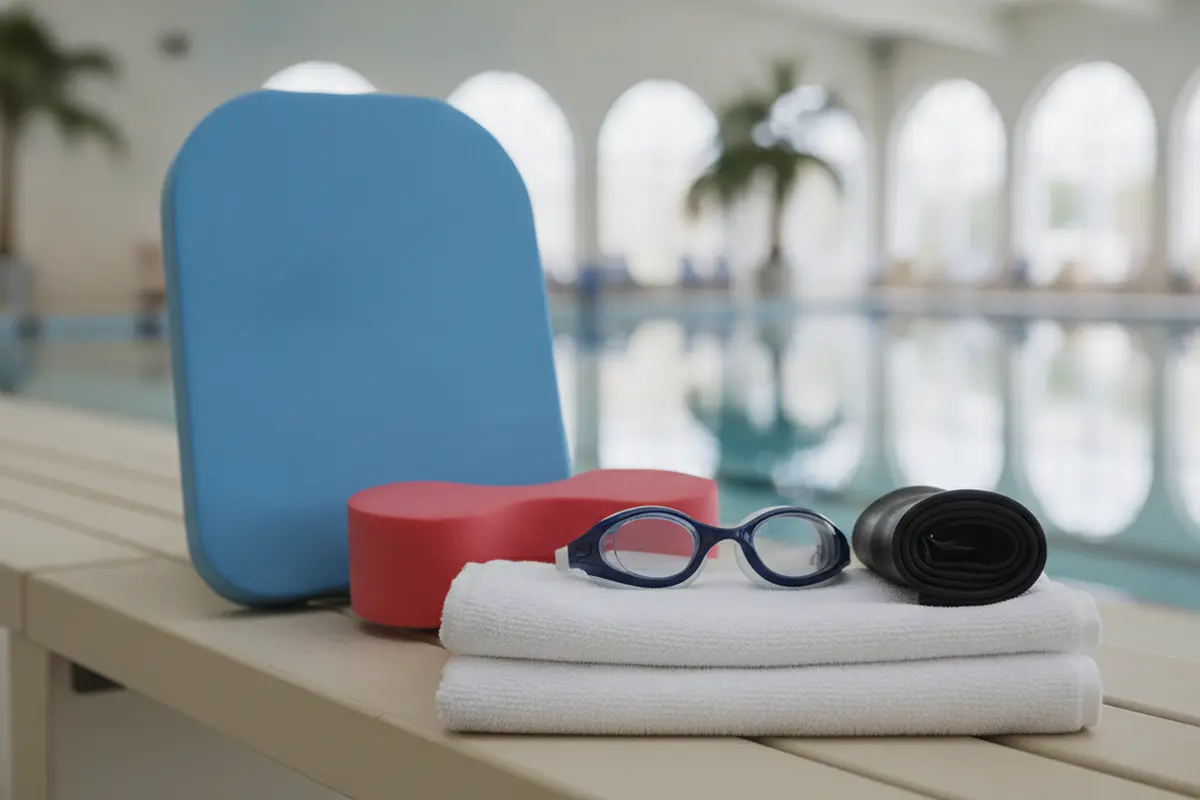
For goggles, compare fit and lens features with the pool conditions and the listing details. You can review an option such as Arena goggles alongside those practical needs. To organize equipment between sessions, compare a mesh swim bag or a goggle case. Choose based on what you need to carry or protect, rather than assuming any one item is necessary for every workout.
In short: Match equipment to a specific task and verify details on the product listing. Gear should make a drill or routine easier to organize, not turn a familiar session into an unfamiliar challenge.
How can you track progress without overcomplicating it?
After each swim, record a few useful details: the session focus, approximate amount of swimming, how you handled the rest, and how the effort felt. A brief note might read: “technique, short lengths, relaxed effort, took extra rests.” This gives you a comparison for the next similar session without requiring a stopwatch or a complicated log.
Compare like with like. A steady swim and a technique session have different purposes, so distance alone does not tell you whether either one went well. Ask whether you completed the planned work at a controlled effort, whether you had to change the set, and whether anything felt uncomfortable. Use those answers to choose the next step.
If the session felt harder than expected, repeat or simplify it rather than treating the note as a reason to make up missed work. If it felt manageable on more than one occasion, make a small, clear adjustment—for example, one additional repeat or a slightly different recovery interval. Keep the other parts steady so you can tell what changed.
How can you keep pool sessions safe and practical?
Check the pool environment before starting: posted lane direction, depth, equipment rules, and any facility-specific instructions. Adapt the plan if lanes are crowded. Shorten the set, choose repeats that are easy to pause, and avoid sudden stops in the center of a lane. If you are accompanying children or less-confident swimmers, follow facility supervision requirements and keep your attention on water safety.
Hydration and recovery still matter during pool exercise. Take breaks and drink water when appropriate. General activity guidance is available from the Centers for Disease Control and Prevention; that broad public-health resource is not a personalized swimming plan. If you have a health concern or questions about suitable activity, consult a qualified health professional.
Which common workout mistakes should you avoid?
- Opening too fast: Starting at your hardest effort can make the rest of the session difficult. Begin at a controlled pace.
- Changing too many variables: Increasing distance, speed, and weekly frequency at the same time makes it harder to judge what you can comfortably sustain. Adjust one element at a time.
- Using equipment without a purpose: Pick an aid for a specific drill, and stop if the drill is uncomfortable.
- Ignoring lane conditions: Follow facility rules and share space considerately. Adapt the workout to the environment.
- Counting every extra lap as progress: A shorter, focused session can be more useful than unfocused volume when it fits your current needs.
- Skipping recovery: Rest is part of the set. Rushing through it can make it harder to keep the next repeat controlled.
One simple way to avoid these mistakes is to prepare a small fallback plan. If the lane is busy, shorten the main set. If you feel tired, make the remaining work easy. If an aid is unavailable, do the session without it rather than replacing it with an unfamiliar drill. Flexibility helps preserve the purpose of the workout without forcing the original plan.
Frequently asked questions about swimming pool workouts
How long should a swimming pool workout be?
There is no single duration that fits every swimmer. Choose a time you can manage while allowing for an easy start, rest, main work, and a relaxed finish. Build only when your current routine feels comfortable.
What is a simple swimming pool workout for a beginner?
Start with easy movement, alternate short swims with rest, and finish with relaxed swimming. Keep the session modest and focus on comfort and controlled breathing instead of a fixed lap total.
Do you need equipment for pool workouts?
No. A swimsuit and comfortable goggles are enough for many sessions. A kickboard, pull buoy, or other aid is optional and is best used for a specific purpose.
How often should you change your workout?
Repeat a familiar plan while it remains manageable. When you can complete it with consistent control, make one small change, such as adjusting a repeat or its recovery, rather than changing several parts at once.
What should you do if the pool is crowded?
Follow posted lane rules, communicate as appropriate, and simplify the plan so it is easy to pause. Avoid stopping suddenly in the middle of a lane, and choose another time or activity if you cannot swim safely in the available space.
Browse training gear for your next pool session
Build your next pool session around one clear goal, adjust the work to your current comfort, and choose equipment only when it supports the plan.