


Water workout dumbbells offer a hand-held way to move against water during a pool exercise session. Their feel is not the same as a fixed-weight dumbbell: buoyancy, shape, direction, speed, and range all affect how much effort a movement requires. The useful question is not simply how large a pair looks, but whether you can hold and control it comfortably in your pool setting.
Explore a pool exercise equipment option
This guide covers what creates resistance, how to inspect product details, and how to approach an initial session without turning it into a prescribed program. It also compares aquatic dumbbells with swim-training aids. If you have an injury, health concern, balance difficulty, or activity restriction, seek advice from a qualified professional and use a suitable supervised pool.
How do water workout dumbbells create resistance?
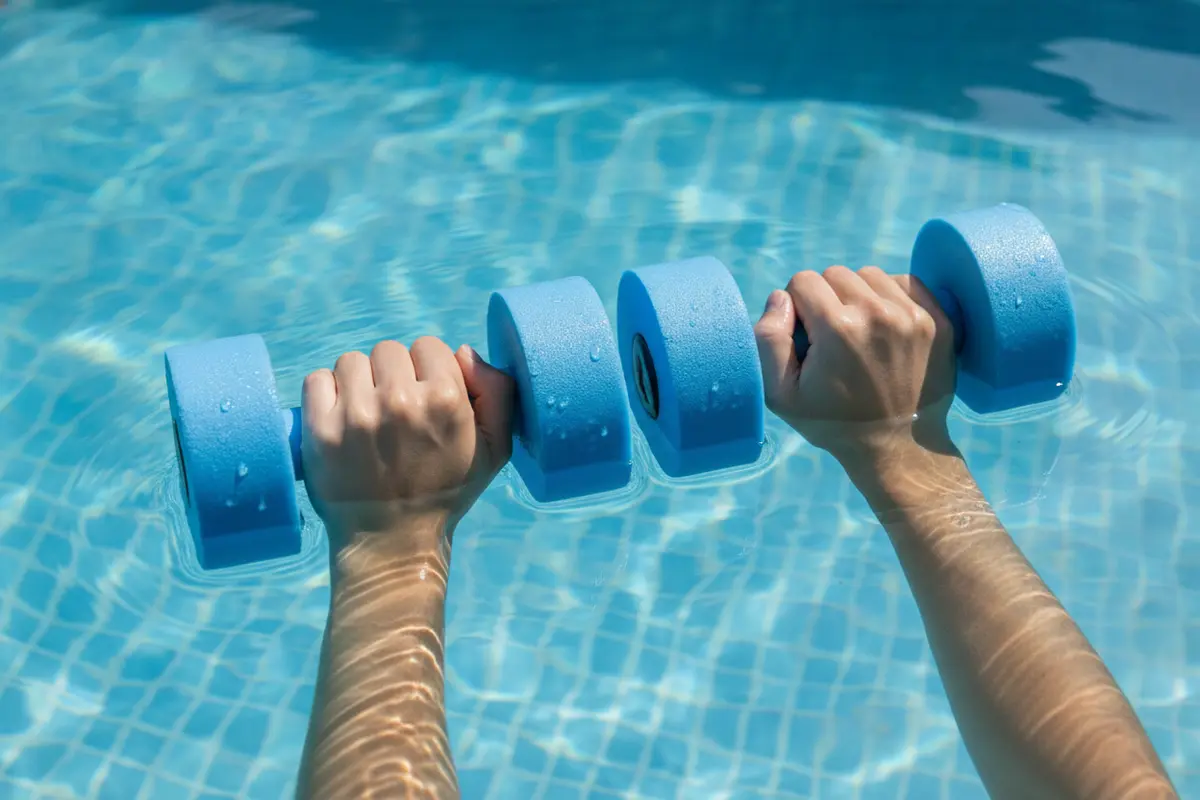
Aquatic dumbbells are buoyant pieces held in the hands. When you press them down or move them through a sweep, you move equipment through water while also managing its tendency to rise. That combination produces a changing sensation rather than a simple printed load. A downward press, a forward push, and a side sweep can all feel different, even with the same pair.
Key takeaway: The tool’s resistance is dynamic. Begin with movements you can control, and assess comfort and balance before you change the speed or range.
Which details change how a movement feels?
- Direction: A downward press works against buoyancy in a different way from drawing the equipment toward your body or sweeping it sideways.
- Speed: Moving faster can make water feel more demanding. Slower movement gives you more time to notice your posture and adjust.
- Range: A wide arc travels through more water than a small one. A larger range is not automatically better if it makes you lean or strains a joint.
- Shape and surface: The size and surface presented to the water can affect flow. A product photo alone cannot tell you how a movement will feel in use.
- Depth and footing: Your stance and available room affect how easily you can control the movement. Follow facility rules and choose a place where you can stand securely.
Think of these factors as ways to adjust a movement, not as a formula for predicting a training result. Water exercise does not map neatly to a land routine by counting repetitions alone. If you are using exercise to address a health goal, ask a qualified professional which activity is suitable for you.
What should you compare before buying?
Start with the movements you expect to do and the environment where you will use the equipment. A pair for broad arm sweeps may not feel as convenient for close-to-the-body motions. Read the current listing for stated materials, dimensions, intended use, included pieces, and care instructions. If a specification matters and is absent, ask the seller or manufacturer instead of filling the gap with an assumption based on color or appearance.
Key takeaway: Match the handle and overall design to your hands, planned movements, available depth, and storage. Product details and your ability to keep a comfortable grip matter more than a guess based on size.
| What to compare | What to inspect | How it informs the choice |
|---|---|---|
| Grip | Handle width, surface, and whether you can hold it without squeezing hard | A manageable hold helps you move in a controlled way |
| Shape and size | Dimensions and the surfaces that pass through water | Design changes how water moves around the equipment |
| Buoyancy information | Any stated behavior or intended use in the product description | Buoyancy affects pressing and lifting sensations |
| Construction | Materials, joins, and maker care directions | Pool exposure and storage needs vary by product |
| Pool setting | Depth, open space, and facility rules | The gear should suit the setting and allow room to move |
| Alternative tool | Whether a swim-training aid better fits your planned activity | Different gear serves different purposes |
How do you assess grip and construction?
If you can inspect a pair in person, hold it as you would during an easy movement. Notice whether the handle sits naturally and whether the equipment remains manageable without a hard grip. Do not test it by swinging it near other people. When shopping online, use dimensions and product descriptions to think through fit, and check return terms before purchase rather than assuming opened or water-used gear can be returned.
Inspect both pieces before each use. A crack, torn foam, loose joint, or noticeable change in shape is a reason to stop and check the maker’s guidance. Do not use a damaged item. Follow the product’s own cleaning and storage directions because materials and construction differ.
If you want to compare another format for pool exercise, the Speedo pool push plate has a different form from hand-held dumbbells. If your purpose is swim drills, a pull buoy has a different role. Check the product page for current details and intended use rather than treating these items as interchangeable.
How can you plan a controlled first session?
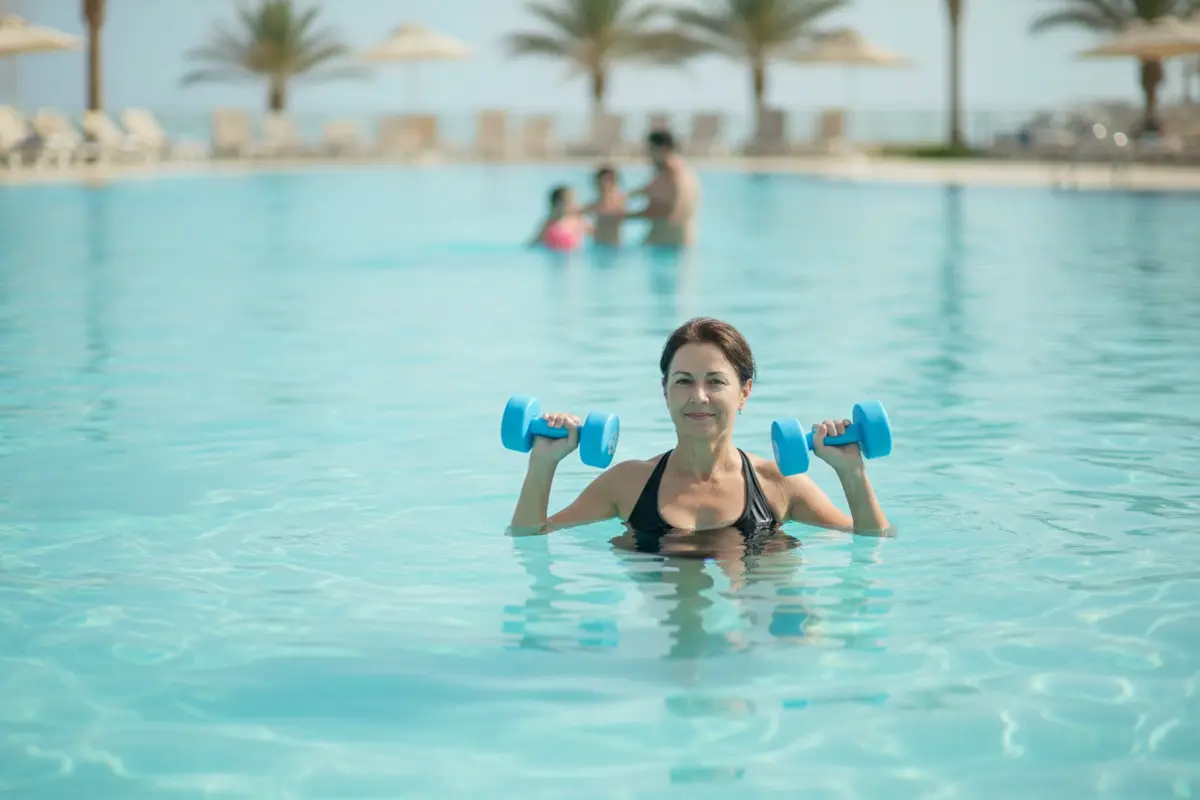
Keep an initial trial simple. Pick a clear area, choose a depth where you can stand securely, and leave room between yourself and other swimmers. Begin with easy walking or gentle movement in the water. Then try a small number of familiar motions, such as a short forward press or an easy side sweep. This is a practical way to explore the equipment, not a prescribed exercise program.
Key takeaway: Start with an easy, short practice. If you cannot maintain a relaxed posture or control the movement, reduce the range, slow down, rest, or stop.
- Check the setting: Read posted instructions, confirm there is room to move, and identify a safe route in and out of the pool.
- Warm up gently: Walk or move your arms comfortably for several minutes, staying within your ability.
- Try one motion at a time: Test a controlled forward press, downward press, or side sweep. Keep your wrists comfortable and shoulders relaxed.
- Pause and assess: Rest with the equipment safely at your sides. Notice your balance, grip, and comfort before deciding whether to continue.
- Cool down and care for gear: Finish with easy movement, exit carefully, and rinse or dry the equipment only as its instructions recommend.
What might a brief trial look like?
After warming up, try a few slow forward presses and pause. If you remain steady and comfortable, test a few gentle side sweeps, then rest again. Keep the motion small enough that you do not lean, twist sharply, or need to brace against the pool wall. It is reasonable to end after this brief trial; a longer session is not automatically better when you are learning how a tool feels.
At the end, make a note of the water depth, grip comfort, motions tried, and whether you needed extra room. On another day, change only one factor, such as movement range or duration. That makes it easier to tell what changed your experience. Avoid changing speed, range, and session length all at once. Stop if you feel pain, dizziness, unusual shortness of breath, or unwell, and seek help as appropriate.
How can you adapt the movement without making it complicated?
Use a simple sequence of adjustments. First reduce the movement range. If that does not make the motion comfortable, slow down and pause between repetitions. You can also try a different direction or put the equipment aside. A wall may be nearby for orientation, but do not use it as a substitute for secure footing or supervision. If the activity still feels awkward, end the trial rather than forcing a particular motion.
For example, if a side sweep makes you rotate your torso, keep your arms closer to the front of your body and use a smaller arc. If the equipment pulls upward more strongly than expected during a downward press, reduce the range and keep your shoulders relaxed. These are ways to make an exploratory movement simpler, not treatment instructions. Seek individualized guidance if you need a modified activity.
What safety checks matter in a pool?
Pool exercise calls for attention to footing, depth, and other swimmers. Follow facility rules and use appropriate supervision. Aquatic dumbbells are exercise equipment, not flotation or lifesaving devices. They do not replace swimming ability, supervision, or approved safety equipment.
- Enter and exit by a safe route, and take care on wet surfaces.
- Keep a stable stance and choose a range you can control without leaning or losing balance.
- Leave room so the equipment will not strike another swimmer, a wall, or pool fixtures.
- Take breaks and do not exercise when you feel unwell.
- If you have a condition, injury, or activity restriction, ask a qualified professional before starting.
- Follow the pool’s rules and the manufacturer’s instructions for use and care.
For general physical-activity information, the U.S. Centers for Disease Control and Prevention is a government source. General public-health information cannot determine which movements are suitable for a particular person. If you are exercising during recovery or managing a health condition, consult a clinician or qualified aquatic exercise professional about your situation.
What should parents and caregivers consider?
Children should use pool equipment only in an appropriate setting with the level of supervision required by the pool and their abilities. A buoyant exercise aid is not a safety device and does not make an unsafe depth suitable. Keep equipment within the designated activity area, and put it away when the session ends so it does not become an obstacle on the deck.
For adults who are new to pool activity, the same principle applies: select a setting and movement that match current ability, not an imagined ideal routine. A lifeguard or facility staff member can clarify pool rules, but questions about personal health or exercise restrictions belong with an appropriate qualified professional.
How do aquatic dumbbells differ from swim-training aids?
Choose gear according to the activity. Aquatic dumbbells are held in the hands for movement through water. A pull buoy or kickboard is associated with swimming practice and drills, not interchangeable hand resistance. Fins also change a swimming activity and do not serve as a substitute for a hand-held resistance tool.
Key takeaway: Decide whether your purpose is pool exercise or a swim drill. Choose equipment intended for that role and use reliable product information or coaching guidance to understand it.
| Equipment | General role | Consider it when |
|---|---|---|
| Aquatic dumbbells | Hand-held movement through water | You want to explore controlled arm motions in a suitable pool |
| Pull buoy | Swimming accessory placed between the legs during drills | Your plan calls for swim practice rather than a standing arm session |
| Kickboard | Swimming aid held in front during kick-focused drills | Your practice includes an appropriate kick drill |
| Training fins | Foot-worn equipment for swimming practice | The drill and pool setting suit their intended use |
For swimming practice, compare a swim training board or training fins. A coach can help determine whether an aid fits a drill. For pool exercise, focus instead on a tool you can control in your available space.
How should you care for and store them?
Care depends on the equipment’s materials and construction. Read the product instructions before first use and follow them after each session. If instructed, rinse the pair and allow it to dry fully before storage. Avoid cleaners, solvents, or heat unless the maker says they are suitable. Store the pieces so they are not crushed, scraped, or exposed to conditions the maker warns against.
Keep the pair together and inspect both pieces. If one becomes damaged or changes shape, do not assume the other remains suitable as a matched pair. Contact the manufacturer or seller if you are uncertain. A short post-session routine—check, rinse as directed, dry, store—makes it easier to notice wear before the next use.
How do you keep a pool bag organized?
Separate damp equipment from dry items until it has been cared for according to its instructions. Avoid storing it under heavy gear that could deform foam or place stress on joins. If you carry several kinds of equipment, label or separate them so you can inspect the pair and avoid confusing exercise tools with swim aids. A dedicated bag is useful only if the product can dry as directed before being enclosed for storage.
Shop listings should be read on their own terms. For instance, a short-sleeve rashguard is apparel, not resistance equipment. It may be relevant to someone assembling pool gear, but its product details—not the fact that it is used around water—determine whether it fits that person's needs.
How can you make a practical purchase decision?
Before choosing, write down three things: the movements you expect to try, the conditions of the pool where you will use the gear, and the product details you still need to confirm. This short checklist keeps the decision tied to a real use case instead of a vague promise about exercise equipment.
- Use case: Are you seeking hand-held pool movement, a swim drill aid, or another kind of equipment?
- Fit: Do the dimensions and handle appear manageable for your hands and intended movement?
- Environment: Do pool depth, available room, supervision, and facility rules support the activity?
- Product information: Are materials, intended use, care, included pieces, and return conditions clear?
- Condition: Can you inspect the item before use and stop if damage appears?
Consider two common shopping cases. A recreational pool user who plans small arm movements may prioritize a comfortable handle and a manageable design, then test it in a clear, shallow-enough area where standing is secure. A swimmer who is preparing for lane drills may discover that a board or pull buoy better matches the plan. In both cases, selecting by actual use is more helpful than assuming all buoyant pool gear does the same job.
When a listing does not answer a practical question—such as dimensions, care after chlorinated-water use, or what is included—pause and verify it. This avoids relying on a product photo to infer construction or suitability. For a different type of pool exercise format, the pool push plate listing is a separate point of comparison; review current specifications before deciding whether it matches your needs.
Compare pool exercise equipment
Frequently asked questions about water workout dumbbells
Do water workout dumbbells use fixed weights?
They do not feel like a conventional dumbbell with a simple fixed load. Buoyancy, shape, movement speed, direction, and range all affect the sensation. Check product specifications for stated characteristics rather than assuming a resistance number.
Can a beginner try aquatic dumbbells?
A beginner can explore a few controlled motions in a suitable pool if they can stand securely and follow facility rules. Keep the first trial easy, rest as needed, and stop if uncomfortable or unwell. Seek individual professional guidance when a health concern or balance issue applies.
Can aquatic dumbbells replace swimming equipment?
No. They serve a different purpose from swim aids such as kickboards, pull buoys, or fins. Choose equipment according to whether you plan a pool exercise movement or a swimming drill.
How should I clean a pair?
Follow the manufacturer’s care instructions. Rinse and dry only as directed, inspect for damage, and store the equipment in a way that avoids crushing or conditions the maker advises against.
Choose aquatic dumbbells for movements, pool conditions, and a level of control you can maintain, and let verified product guidance and personal comfort shape the decision.


