


A useful swimrun training plan prepares you to alternate between swimming and running, not just to complete either activity on its own. The framework below helps you build a repeatable routine, rehearse transitions, and adjust the workload to your current experience, event format, and access to safe training locations.
Choose a swim training aid for your next pool session
What does a swimrun training plan need to prepare you for?
Swimrun events connect open-water swimming and running, often with more than one change between the two. The exact distance, terrain, water conditions, mandatory equipment, and rules vary by event. Read the event information before shaping your plan; it determines whether your preparation should emphasize longer steady efforts, repeated short segments, hills, technical footing, or a particular gear setup.
In short: train the two sports separately to maintain sound technique, then combine them in manageable blocks. Build familiarity with the transitions and conditions you will actually face, while leaving room to reduce or change a session when safety, fatigue, or weather calls for it.
Swimrun training is not simply a pool workout followed by a run every day. A balanced week develops comfortable swimming, relaxed running, and the ability to restart each activity after switching. It also includes rest. If you are new to either discipline, have been inactive, or have a health concern, ask an appropriate health professional about beginning or changing exercise before increasing your workload.
How should you set a safe starting point?
Before following a schedule, take stock of what you can already do comfortably. Write down your recent typical swim duration, run duration, and how you feel later that day and the next morning. Use familiar, easy sessions rather than a maximal test. If one activity is much less practiced, make that the limiting factor: start with shorter, easier work for it and keep the stronger discipline steady.
- Swimming: Can you swim continuously with a calm, repeatable breathing pattern in a supervised pool? If not, begin with lessons or short pool intervals and avoid making open water the place where you learn basic water confidence.
- Running: Can you complete an easy run or run-walk without needing to push through pain? If not, begin with gentle intervals on predictable terrain.
- Combined work: Have you tried changing from swimming to running and back? Start with a few short changes in a controlled setting before attempting a long continuous session.
- Recovery: Is your current week already full of hard training, work, or other demands? Reduce the added swimrun load rather than stacking new sessions onto every available day.
Keep most early work at a conversational or otherwise comfortable effort. One simple guide is a perceived-effort scale from 1 to 10: easy practice feels around 3 or 4, while a harder but controlled interval may feel around 6 or 7. These are prompts, not targets you must hit. Stop or modify activity if you feel unwell, unusually breathless, dizzy, or experience pain that changes your movement. Seek medical advice for concerning symptoms.
Open water needs its own safety plan. Choose a venue suited to your experience, check local conditions and restrictions, and follow event or venue guidance. Do not swim alone; use an organized, supervised setting or a capable swim partner and agree on a clear plan. Water temperature, visibility, currents, boat traffic, entry and exit points, and weather can change the risk of a session. Virginia Department of Health's open-water and beach safety guidance is one source to review, alongside local rules and advice from the venue.
How can you build a weekly routine?
A practical starting week can include two swim sessions, two runs, and one short combined practice, with at least one full rest day. That is a menu, not a minimum quota. If you currently train fewer days, begin with two or three total sessions and alternate the activities. If you already train consistently, preserve your familiar easy and recovery days while adding only one new swimrun-specific element at a time.
In short: make the week predictable, separate demanding sessions when possible, and keep a day for full rest. Progress by adding a small amount of time or one repeat to an existing session—not by increasing duration, speed, and transition complexity all at once.
| Training block | Main focus | Example session | How to adjust |
|---|---|---|---|
| Foundation | Comfortable technique and routine | Easy pool intervals; separate easy run or run-walk | Shorten intervals or add recovery between them |
| Combination | Simple swim-to-run changes | Two or three easy swim and run blocks in a controlled setting | Use fewer blocks and take a longer rest |
| Specific preparation | Event-like terrain, segments, and gear practice | Several modest swim-run alternations on a safe route | Match the event format without copying its full duration every week |
| Taper and recovery | Arrive rested and keep movement familiar | Short easy sessions with relaxed transitions | Reduce volume; avoid last-minute hard tests |
Three ways to scale the same week
Keep the structure but change the amount of work to suit your starting point. These examples show how to adapt a week; they are not fixed prescriptions.
- New to one or both sports: Schedule one supervised, easy swim and two short run-walks on separate days. If you feel comfortable, add a few relaxed swim-to-walk changes in a pool, with plenty of time to rest. Keep at least one day completely free of training.
- Comfortable with regular swimming and running: Keep two familiar sessions in each sport, then replace one short session with an easy combined practice. Do not add a long swim, long run, and demanding transition session in the same week.
- Preparing for a known event: Keep most sessions familiar and easy. Make one session specific to a course feature—such as a trail surface or repeated changes between sports—provided conditions and rules allow. Review the event guide and use recovery time afterward.
Fit the plan around your existing commitments. For example, a beginner might swim easily on Tuesday, take a short run-walk on Thursday, and do a brief pool swim-run practice on Saturday, with rest or gentle mobility on other days. An experienced swimmer who is new to running could keep two familiar swims but add only one short, easy run and one optional transition practice. A runner who is less confident in water should prioritize coached or supervised swimming and keep runs familiar.
What should each swim and run session include?
Swim sessions
Keep one swim focused on relaxed continuous movement or longer easy intervals. Use the other to practice controlled starts, breathing rhythm, and changes in pace without sacrificing technique. For example, after an easy warm-up, swim a series of short repeats at a steady effort, resting long enough to reset your breathing and form. Finish with relaxed swimming rather than adding speed because you feel tired or rushed.
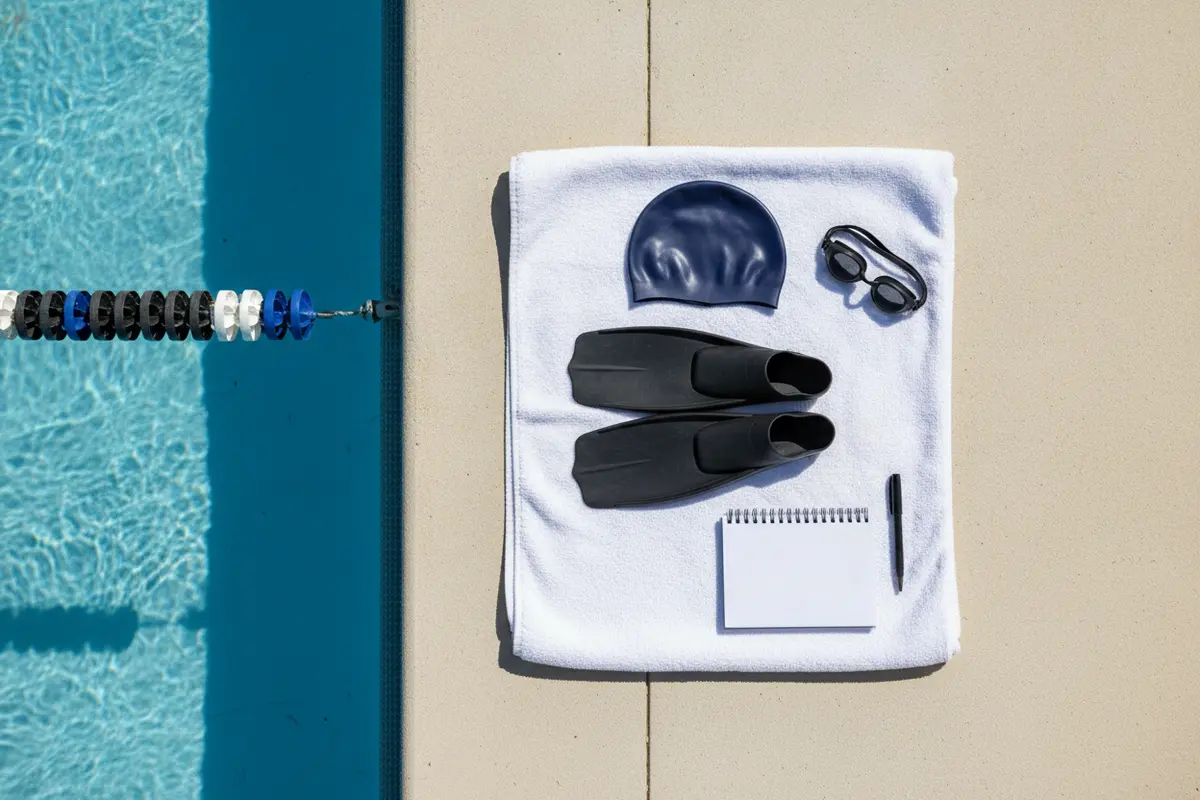
Training aids can help organize a pool session, but they do not replace sound technique or coaching. A kickboard can isolate kicking for a brief drill; a pull buoy can support a pull-focused set; and short training fins may be used for selected drills if they suit your ability and the session. Keep each aid optional. Follow the manufacturer's instructions, use equipment only where permitted, and do not assume a pool aid belongs in an event.
Run sessions
Build easy running time before adding demanding hills or speed. A steady run on a familiar path can develop routine without making every session a test. If your running base is modest, alternate easy jogging and walking, and increase only when the current duration feels manageable. Include varied terrain gradually: a trail surface may require more attention to footing than a flat, predictable path.
In later preparation, make one run session event-specific by choosing a safe route with terrain similar to the event. Practice staying controlled when your legs feel different after swimming, but do not chase pace immediately after a transition. For beginners, even one or two short, relaxed run segments are enough to learn how the change feels.
Combined swim-run sessions
Begin in a pool or another controlled location where you can exit and re-enter safely. One early session could be an easy swim, a short jog or walk, then another easy swim. Over time, add a small number of changes between the two. Take enough time at each change to put away or manage equipment and regain composure. The goal is familiarity, not a fast transition.
When moving to open water, choose a venue and conditions appropriate to your experience, and do not turn a workout into a solo experiment. Check the event's equipment and course rules before rehearsing them. Some events have specific requirements or restrictions for items such as flotation, paddles, or footwear; rules differ, so follow the organizer's current instructions rather than assuming gear is allowed.
How do you progress over several weeks?
A four-stage progression is easier to adapt than a rigid prescription. Spend as long as needed in each stage. Repeat a stage if sessions feel too difficult, if your schedule becomes crowded, or if you are not recovering well. The time frames below are examples, not a promise that everyone will be ready for an event after a set number of weeks.
- Establish the routine: Keep swims and runs separate, easy, and familiar. Record the session duration and a brief note about how you felt.
- Introduce transitions: Add a few short swim-to-run or run-to-swim changes in a controlled setting. Keep total session time close to what you already tolerate.
- Practice event details: If safe and appropriate, rehearse the event's likely terrain, segment order, and permitted equipment. Make this one focused session, not a reason to turn every workout hard.
- Reduce and review: Before an event, cut back the overall workload while keeping brief, easy movement familiar. Review logistics, route information, and required gear instead of adding a long final workout.
Progress only one main variable at a time. You might add one short repeat, extend an easy session slightly, or include one more transition. Then hold that change long enough to see how it fits. If soreness, fatigue, or loss of technique persists, back off and reassess rather than forcing the next step. For a planned event, a qualified coach can help tailor training to your history, distance, and conditions.
How should you practice transitions?
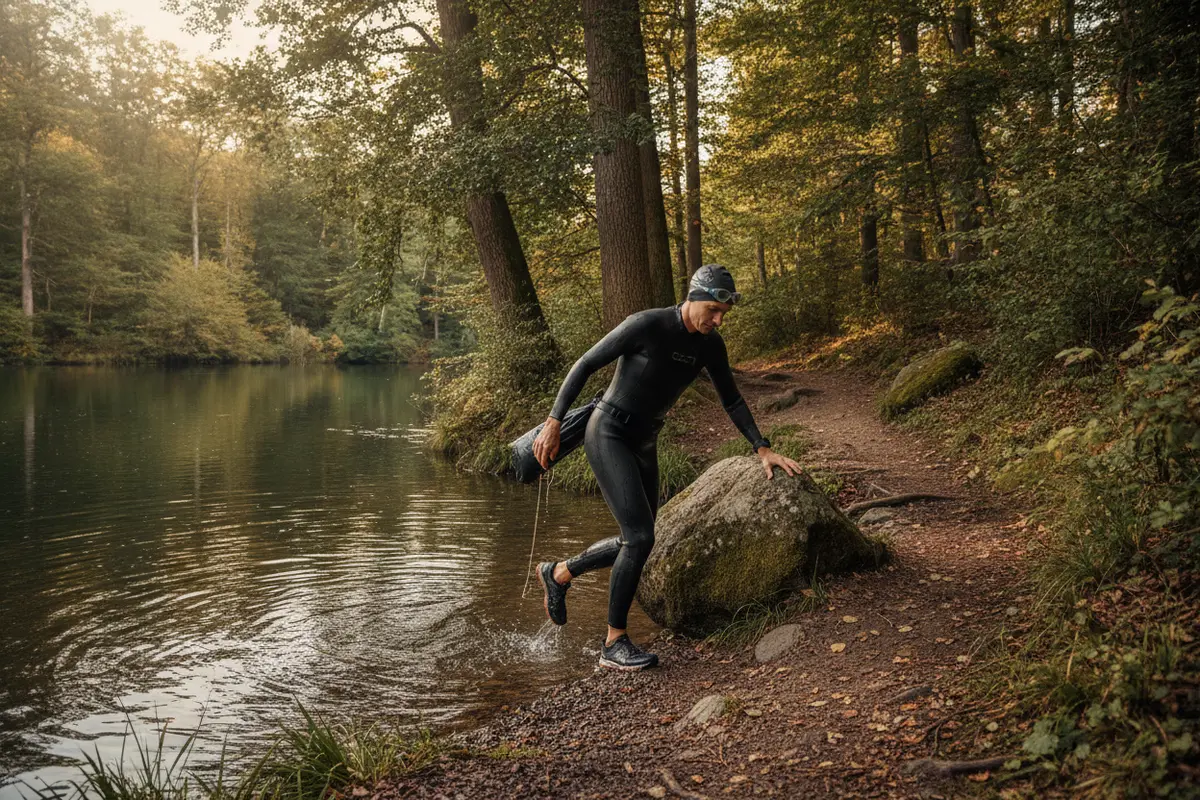
Transitions are part of the work because each one asks you to change movement, manage equipment, and orient yourself for the next segment. Practice the sequence at low intensity first. Leave the water carefully, find stable footing, take a moment to settle, and begin the run at an easy pace. At the next swim entry, make sure you are ready to enter safely before returning to the water.
Build a simple repeatable checklist: know where the swim ends, know where the next segment begins, secure any gear you are carrying, and confirm that the route is clear. Rehearse handling your own equipment under event rules. Avoid adding complicated gear changes until the basic sequence feels calm. When practicing with a partner, agree on regrouping points and what to do if one person needs to stop.
Use a controlled pool deck or a permitted, supervised route to learn the routine. Open-water entries and exits can be slippery, uneven, or affected by changing conditions. Do not run on a surface where you cannot see your footing, and do not enter water when local advisories or event staff say conditions are unsafe. The event's safety plan takes precedence over completing a planned repetition.
What equipment should you consider?
Start with comfortable, familiar essentials: swimwear appropriate to the session, goggles that fit, and any additional items required by the venue or event. If you are practicing outdoors, check organizer rules and local conditions before choosing equipment. Do not assume a particular suit, flotation item, or accessory is right for every course or temperature.
For pool technique work, a pair of swim goggles that fits your face and stays comfortable is more useful than a model you have not tested. Try them in a pool before an event. Keep a swim bag organized so that your training items are easy to check, and bring a pool towel for changing and drying after practice. A stopwatch can help you track intervals, but use it to keep sessions organized rather than to force a pace.
Do not buy a collection of accessories before checking whether your event allows them and whether you can use them confidently. Introduce unfamiliar gear during low-stakes practice, check fit and comfort, and follow product care instructions. If you train with a coach, ask which equipment supports your specific drill; if you participate in an event, use its official guide as the final word on required items.
How do recovery and safety fit into the plan?
Recovery is a planned part of training, not a reward you earn after completing a hard session. Leave room for at least one full rest day each week, and avoid placing your longest or most demanding swim, run, and combined session on consecutive days. Light movement is optional; rest means you can also choose not to train.
Keep a simple training log with duration, perceived effort, conditions, and any discomfort. Look for patterns rather than reacting to one ordinary tired day. If you are repeatedly struggling to complete easy work, or your normal technique and movement are deteriorating, reduce the load and take more recovery. Pain that persists, worsens, or affects daily movement merits professional advice.
For every open-water workout, tell someone where you plan to go and when you expect to return. Check local advisories and weather, use a venue with appropriate supervision or a capable swim partner, and choose an exit point before starting. Follow posted signs and lifeguard or event-staff direction. If the setting feels beyond your ability or conditions change, skip or stop the session. A workout is never more important than getting out of the water safely.
How can you tell whether the plan is working?
Review the plan every week or two. Ask whether easy sessions still feel controlled, whether you can complete the planned transitions without rushing, and whether you are recovering between workouts. A useful sign of progress is not a single fast split; it is being able to repeat a suitable session with steady form and without accumulating excessive fatigue.
If training feels manageable, make one modest adjustment and keep the rest of the week stable. If it does not, reduce duration, repetitions, or difficulty. Revisit the event distance and conditions, your recent training background, and the time you can realistically commit. A plan that you can adapt consistently is more useful than a demanding schedule that ignores your circumstances.
Get your swim training gear organized
Frequently asked questions about a swimrun training plan
How many days a week should I train for swimrun?
There is no single weekly schedule for every athlete. Start from the number of days you already train comfortably, and add a swim, run, or short transition session gradually rather than adding everything at once. Preserve rest days and adjust based on your experience and recovery.
Can beginners train for swimrun?
Beginners can build toward swimrun by developing swimming confidence and easy running gradually. If you are new to swimming, prioritize lessons or supervised pool practice before open-water sessions. Choose an event and plan that fit your current ability, and seek qualified guidance when you need help adapting the workload.
Should every workout combine swimming and running?
No. Separate sessions help you focus on technique and build a routine in each activity. Combined practice is useful for learning transitions, but it can be occasional and short, especially early in a plan.
When should I start practicing with event equipment?
Test familiar, permitted equipment well before the event, beginning in a controlled setting. Check the organizer's current rules for required or restricted items, then rehearse a practical setup that you can manage calmly. Do not assume gear used at one event is allowed at another.
What should I do if I miss a week of training?
Resume with an easier week rather than trying to make up every missed session. Choose familiar, comfortable workouts, then rebuild only if you are recovering well. If you missed training because of illness or injury, follow appropriate professional advice before returning.
A sound swimrun training plan is flexible: it builds comfortable swimming and running, adds transitions in stages, and treats safety and recovery as part of the work. Adjust it to your experience and the event's actual rules, and choose consistency over rushed progression.


