


Choosing what to wear under wetsuit depends on the activity, water temperature, suit design, and how snugly the wetsuit fits. For many pool-to-open-water swimmers, a well-fitting swimsuit is the simplest layer; triathletes may wear a tri suit, while colder conditions can call for a purpose-made thermal layer if the wetsuit maker allows it.
Explore open-water swim preparation
What should you wear under a wetsuit for swimming?
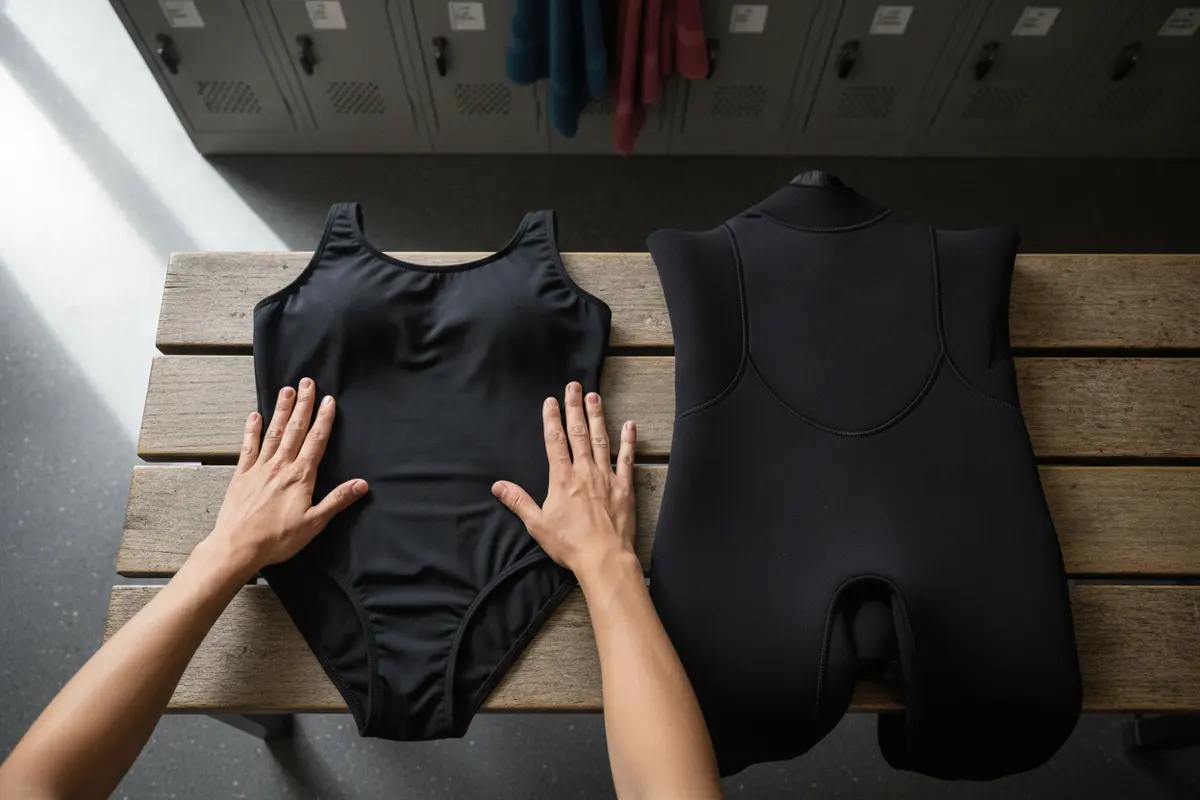
Start with the simplest layer that meets your needs: a swimsuit or swim brief that stays in place, lies flat, and feels comfortable beneath the suit. A wetsuit is designed to fit close to the body. Extra fabric, bulky seams, drawstrings, or folds can bunch up and make it harder to pull the outer suit on or move comfortably.
For a pool swim followed by open water, many swimmers wear the same swimsuit under a wetsuit that they would use for pool training. Choose a cut and fabric that you already know stays secure during repeated arm movement and kicking. A one-piece, brief, jammer, or other swimwear style may work; personal fit and comfort matter more than a single required style. If you can, try the underlayer during an ordinary swim first. Notice whether straps shift, the leg opening creeps, or seams become distracting. A garment that feels fine during a quick fitting may behave differently after repeated strokes.
Check that the swimsuit has no loose straps or hardware that presses against the skin. Smooth the fabric before putting on the wetsuit, then check for folds around the shoulders, waist, hips, and legs. Compare options such as an Arena one-piece swimsuit or a Dolfin jammer by fit and intended use, rather than assuming either style is right for every wetsuit.
In short: Choose a low-bulk swimsuit that stays put and feels comfortable before adding any extra layer. Fit the wetsuit over it and reassess movement, pressure, and bunching.
What changes if you are doing a triathlon?
Triathletes often wear a tri suit under a wetsuit so they can continue into the bike and run legs without changing clothes. A tri suit is different from ordinary swimwear: its fabric and construction are intended for multisport use. If you already have one, try it under the wetsuit during training before race day. Review the event organizer’s current equipment guidance instead of assuming every event treats wetsuits or clothing layers the same way.
Check the event rules and instructions for both garments. The combination should allow you to reach overhead, rotate your shoulders, breathe comfortably, and move your legs without pulling or pinching. A pad or seam that feels acceptable while standing may feel different during a swim, so test the complete outfit in a supervised practice setting. Rehearse taking off the wetsuit while damp; a layer that catches or twists can make a transition frustrating.
Do not add cycling shorts, a loose base layer, or a second swimsuit under a tri suit just to make the wetsuit feel warmer. Extra layers may bunch or create pressure points. If you need more insulation, look for a layer made for use under a wetsuit and confirm compatibility with the manufacturer. Test the fabric, seams, and fit during training, and pack dry clothes for after the event rather than relying on a wet underlayer for warmth on shore.
Think through the full sequence, not only the swim start. Put on the tri suit first, then the wetsuit, and time a practice removal after a short training swim. Check whether the tri suit stays positioned when the wetsuit comes off and whether any closures or seams catch. If a race has a transition-area procedure or specific clothing rule, follow that instruction. A familiar setup is easier to manage than a new garment combination, so avoid introducing an untested layer on event day.
Do you need a thermal base layer?
A thermal layer may be useful when a swimsuit alone does not provide enough comfort for the conditions, but it should be designed for swimming and intended to go beneath a wetsuit. Some makers offer thin thermal tops, liners, or other layering pieces. These differ from everyday thermals, cotton shirts, or bulky outdoor base layers, which can absorb water, gather into folds, and interfere with fit. Check the proposed liner’s intended activity; the word thermal alone does not tell you its thickness or whether it will work with your suit.
Use the wetsuit maker’s guidance as your starting point. Not every wetsuit is designed to accommodate an added layer, and thicker fabric can change how the suit sits at the neck, shoulders, torso, and legs. If the suit becomes difficult to put on, restricts movement, or develops new gaps after layering, the combination may not fit as intended. When in doubt, ask the maker about the exact liner rather than selecting by appearance or warmth claims.
Warmth depends on the whole setup and conditions, not just on what is worn underneath. Water temperature, exposure time, wind, activity level, and individual comfort all matter. A journal study on recreational surfers wearing wetsuits examined perceptions of heat loss, comfort, and wetness; it offers context on comfort, not a universal underlayer recommendation. Read the research on thermal perception in wetsuits as context, not as an individual cold-water safety plan.
Wetsuit layering is sometimes explained as though the suit works simply by trapping a thin layer of water against the skin. The Appalachian Mountain Club addresses that common claim in its wetsuit myth explanation. For a practical decision, follow the instructions for your exact wetsuit and any thermal layer rather than relying on a simplified rule about adding clothing.
In short: Consider a thermal layer only when it is made for the purpose and allowed by the suit maker. Trial the full combination in suitable conditions before depending on it for a longer swim.
How can you decide which layer to test first?
Start with the activity and the outfit you already know works. For a pool session or brief open-water practice, a familiar swimsuit gives you a simple baseline. A triathlete can begin with the planned tri suit, since changing the underlayer later may affect both swim comfort and transition. Consider a thermal liner only after checking the wetsuit’s guidance and identifying a specific comfort need; adding fabric without testing can create a fit problem without solving the original one.
Make the decision in small steps. First, note the suit model and its layering instructions. Second, select one underlayer rather than stacking several garments. Third, check the complete outfit through the range of motion you will use. Finally, try it in a familiar, appropriately supervised session and record what you notice: whether you feel restricted, where fabric shifts, and whether the wetsuit is easy to remove. If you change the layer, repeat the check rather than assuming a small fabric difference will not matter.
For example, if a swimsuit and wetsuit already feel comfortable during a short swim, adding a shirt simply because the air feels cool may not address how the outfit feels in the water. Conversely, if a maker-approved liner is being considered for a longer outing, try it first under controlled conditions and check for new pressure at the shoulders or neck. These are fit checks, not a formula for deciding that a particular water temperature is safe for everyone.
How can you reduce rubbing and chafing?
Chafing can happen where the wetsuit edge or seam repeatedly contacts the skin, often around the neck, underarms, or other high-movement areas. A rough seam or fabric fold beneath the suit can add friction. Begin by checking fit and the position of every layer; clothing should be smooth, with no twisted straps or gathered material beneath the outer suit.
Some swimmers use an anti-chafe product on areas that rub. Confirm that the product is safe for your skin and compatible with the wetsuit material. Do not assume every oil, balm, or lubricant is suitable for neoprene; check the label and suit care instructions. Apply only as directed, and avoid getting product on surfaces where it could make handling the suit unsafe.
Rinse and care for the wetsuit as its maker directs after use. A clean suit in good condition is easier to inspect for rough damage, stretched seams, or a change in fit. If you are unsure whether a product is suitable, contact the manufacturer first. A goggle-care product such as TYR anti-fog spray is for goggles, not for treating skin or wetsuit chafing; use each product only for its labeled purpose.
How should the wetsuit and underlayer fit together?
Try on the swimsuit or base layer first, then put on the wetsuit slowly according to its instructions. The inner layer should stay flat rather than rolling at the waist or twisting at the shoulders. Reach forward, rotate each shoulder, bend at the hips, and lift each leg. Notice whether fabric shifts, seams press uncomfortably, or the outer suit pulls sharply across a joint.
A wetsuit should feel close-fitting, but fit should not create painful pressure or make it difficult to move or breathe comfortably. Do not size up automatically to make room for an extra layer; a larger suit may sit differently and form folds or spaces. Equally, do not force an additional garment beneath a suit that already feels restrictive. Compare the maker’s size guidance with your measurements and planned layering combination.
Check these areas before a swim:
- Neck and shoulders: Look for pinching, excessive rubbing, or fabric gathering where the arms move.
- Torso and waist: Smooth any swimsuit seam or waistband that folds beneath the wetsuit.
- Hips and legs: Make sure the underlayer does not ride up and that the outer suit does not pull sharply when you kick.
- Movement: Reach, rotate, and kick gently to see whether the combination stays in place.
- Removal: Practice taking off the wetsuit when damp, without yanking hard on the material.
Do the check in a consistent order so it is easier to spot what changed. Start at the neck and shoulders, then smooth the torso and waist before checking hips and legs. Move each arm overhead and across the body; bend and straighten the knees, then take a few gentle practice strokes if space allows. Ask yourself whether pressure is even, whether the suit shifts as you move, and whether you can breathe and turn comfortably. If one area feels suddenly tight after adding a layer, remove the extra garment and repeat the movement check.
If you want sun coverage outside the wetsuit, a rashguard may be useful on its own or over swimwear. It is not automatically a thermal underlayer, and it can add fabric or change fit beneath a wetsuit. Check the suit maker’s advice before layering it. Compare the construction of a long-sleeve swim rashguard with your wetsuit rather than assuming the two are designed to work together.
What should you wear under a wetsuit in open water?
For an open-water swim, select the underlayer for the water and weather, planned duration, wetsuit design, and event rules. A swimsuit is a straightforward starting point when it is adequate for you. A purpose-made thermal layer may be considered when recommended by the wetsuit maker. Neither option replaces a suitable wetsuit or a thoughtful safety plan.
Plan for the full outing, not only the time in the water. Wind, air temperature, waiting, and the trip back to shore can affect comfort. Bring dry clothing for after the swim and avoid staying in wet gear longer than necessary. A quick-drying towel can make changing more comfortable; consider a TYR sport towel as part of a practical swim bag.
If you are new to open water, swim with appropriate supervision and make decisions based on conditions and your experience; clothing alone cannot make a swim safe. Tell someone your plan, know how you will exit the water, and do not use an underlayer as a reason to extend a swim beyond your comfort or experience. Check local guidance and event requirements, and change the plan if conditions exceed your experience or the suit’s intended use. The open-water swimming guide is one preparation resource, not a replacement for current local safety advice.
Some wetsuit accessories are worn outside the suit, not underneath it. A cap, gloves, or other item may be subject to event rules and maker instructions. Keep the underlayer simple, and avoid accessories or clothing that interfere with movement, visibility, or safe removal.
Build a practical checklist before leaving home: check the suit and underlayer for damage, pack any permitted accessories, bring dry clothes for afterward, and tell someone where you plan to swim. On arrival, reassess conditions instead of treating the clothing choice as a reason to proceed. If you are uncomfortable, cannot move normally, or conditions have changed, adjust or postpone the outing. This preparation keeps clothing decisions in their proper place as one part of an overall plan.

Which under-wetsuit options can you compare?
Use this comparison as a starting point, then check your wetsuit instructions and relevant event rules. The table describes common layering approaches, not a guarantee that a combination will fit every suit or swimmer.
| Option | When to consider it | What to check |
|---|---|---|
| Swimsuit or swim brief | Pool-to-open-water swimming or a simple, low-bulk layer | Secure fit, flat seams, and no fabric bunching |
| Tri suit | Triathlon when the same suit will be worn for later legs | Practice the combination; check event rules and comfort |
| Purpose-made thermal layer | When extra insulation is being considered | Wetsuit-maker compatibility, intended use, and movement |
| Everyday shirt or bulky base layer | Generally not the first option beneath a close-fitting wetsuit | Water absorption, folds, added bulk, and maker guidance |
| Rashguard | Often used as swimwear or sun coverage outside a wetsuit | Do not assume it is thermal or suitable underneath |
When comparing swimwear, keep its use in mind. An Arena technical swim suit or Speedo training swimsuit may have a different cut and purpose from a tri suit or thermal liner. Read product details and sizing information; do not treat a category label as confirmation that an item is designed to go beneath a wetsuit.
Use three questions to narrow the options: Is the garment made for swimming? Does the wetsuit maker allow it? Does the complete outfit remain comfortable through movement and removal? If one answer is no or uncertain, pause before relying on that combination. The point of comparing layers is not to add as many as possible; it is to find the least complicated setup that meets the activity and fits as intended.
What should you do before your first swim in the outfit?
Test the full combination before a race or longer outing. Start with a fitting session on land and check for pressure, movement, and bunching. If conditions and supervision allow, try it in a familiar setting before relying on it in open water. Do not wait until race morning to discover that a seam rubs or the wetsuit is difficult to remove.
- Read the wetsuit and layer care and fit instructions.
- Put on the planned underlayer and smooth it flat.
- Don the wetsuit without pulling forcefully on delicate material.
- Reach, rotate, bend, and move your legs to check comfort and range of motion.
- Check for folds, pressure, rubbing, and changes in how the suit sits.
- Practice removal and pack dry clothes for afterward.
Keep a brief note after testing: which garments you wore, where the suit felt tight or rubbed, and whether removal was straightforward. That record helps you compare a second setup without relying on memory. Change one element at a time, such as switching from a swimsuit to a permitted liner, so any difference is easier to identify. If the fit changes in several places at once, return to the simpler setup and check the wetsuit sizing guidance before trying again.
Make one change at a time if the combination feels wrong. First remove an unnecessary layer or adjust the swimsuit, then reassess fit. If discomfort remains, stop and consult the manufacturer or a knowledgeable retailer rather than trying to solve a fit problem by forcing more clothing underneath.
Explore swimwear for your next wetsuit session
Frequently asked questions about what to wear under a wetsuit
Can you wear a swimsuit under a wetsuit?
Yes. A swimsuit is a common low-bulk layer. Choose one that stays in place, lies flat, and is comfortable beneath your particular wetsuit.
Can you wear nothing under a wetsuit?
That depends on the wetsuit design, activity, and personal preference. Follow the maker’s directions and consider comfort, hygiene, modesty, and event rules before deciding.
Can you wear a thermal shirt under a wetsuit?
Only consider a layer intended for swimming beneath a wetsuit, and check that the wetsuit maker allows it. Everyday shirts can add bulk or bunch up, so they are not an automatic substitute for a purpose-made layer.
Should a wetsuit feel tight over a swimsuit?
It should fit close according to its maker’s guidance, without painful pressure or restricted movement. A swimsuit should not create folds, and adding a layer should not make the outer suit uncomfortably restrictive.
What should you wear under a wetsuit for a triathlon?
Many triathletes wear a tri suit beneath the wetsuit and continue in it for later legs. Practice the setup and check event rules, fit, movement, and transition before race day.
The best under-wetsuit layer is the simplest one that suits the activity and conditions, stays smooth, and works with the manufacturer’s fit guidance. Test the full outfit before relying on it for a race or open-water swim.


