


Buying a pricey wetsuit is a waste of money if the neoprene bunches at your shoulders. Proper fit is the key factor for safety and performance. You need a suit that stays tight without cutting off your breath.
How should a triathlon wetsuit fit is a vital question for anyone racing in open water. Your suit must fit snugly against your skin with no gaps or air pockets to keep you warm and buoyant. It should feel tight on land because neoprene stretches once you get it wet. A good fit means you can move your arms and breathe deep without the suit pulling on your neck. If the suit is too big, it will trap cold water and drag you down. Experts at 220 Triathlon state that fit is the main factor when picking gear. Aim for a suit that feels like a tight hug but still lets you reach and pull with every stroke.
Ready to find your perfect fit? Shop Swim2000's triathlon wetsuit collection for top brands with expert sizing guidance.
Many triathletes struggle to tell a safe, tight fit from a suit that is too small. It takes practice to know if your gear is sitting right on your body. To help you decide, let's look at what a proper triathlon wetsuit fit feels like.
How Should a Triathlon Wetsuit Fit? What a Proper Fit Feels Like
Finding the right fit for your triathlon wetsuit is the key step before you hit the water. A common phrase among swimmers is that fit is king when you choose gear for open-water events. This is because a suit that fits well keeps you safe and helps your body hold in heat while you swim. To get these perks, you need to know how should a triathlon wetsuit fit before you start your race.
The second skin feel
A good triathlon wetsuit should fit snugly against your body, much like a second skin. You want the neoprene to press firmly against your skin without any baggy spots or air pockets. While it should feel tight, it must not stop your power to breathe or move freely. If the suit feels loose in any area, it may trap too much water. This extra water can create drag and slow you down during your swim.
Many athletes find that wearing a wetsuit can feel quite tight or even a bit harsh at first. Data in studies from PubMed show that many swimmers rate wetsuits as not being easy to wear, but they still use them for the real perks. The tight fit is what allows the suit to work well. Do not be shocked if it feels much more snug than your usual swim gear when you first pull it on.
Buoyancy and water flow
The main goal of the snug fit is to control how water moves inside the suit. A thin layer of water should enter and stay trapped between your skin and the neoprene. Your body heat warms this water, which gives you the safety you need in cold lakes or oceans. If the suit is too large, cold water will always flush through. This makes you lose heat and power fast, which can put your swim at risk.
A proper fit also makes sure you get the full gains of buoyancy. When the suit fits right, it keeps your hips and legs high in the water, which cuts the work needed to stay afloat. You can check your own size against a triathlon wetsuit sizing guide to see if your suit matches your body type. This helps you find a mix between a tight seal and enough room for your arms to move.
Freedom for your swim stroke
While the torso and legs should be very tight, your shoulders need enough space for a full range of motion. You should be able to move your arms through your whole swim stroke without feeling like the suit is pulling back. A suit that is too tight in the chest or shoulders can make you tire out fast during a long swim. It is vital to pull the suit up high into the crotch and armpits to give your joints the room they need.
Using a wetsuit is a key part of training and racing in open water for most triathletes. Based on reports from PMC, these suits are needed for both safety and better buoyancy during a race. Taking the time to adjust the fit will help you swim with more ease and less stress on your body. Making sure your gear fits right before race day will help you stay focused on your swim rather than how you feel.
Not sure where to start? Read our complete triathlon wetsuit sizing guide for brand-specific size charts and pro tips.
How Tight Should a Wetsuit Be on Land vs. in the Water?
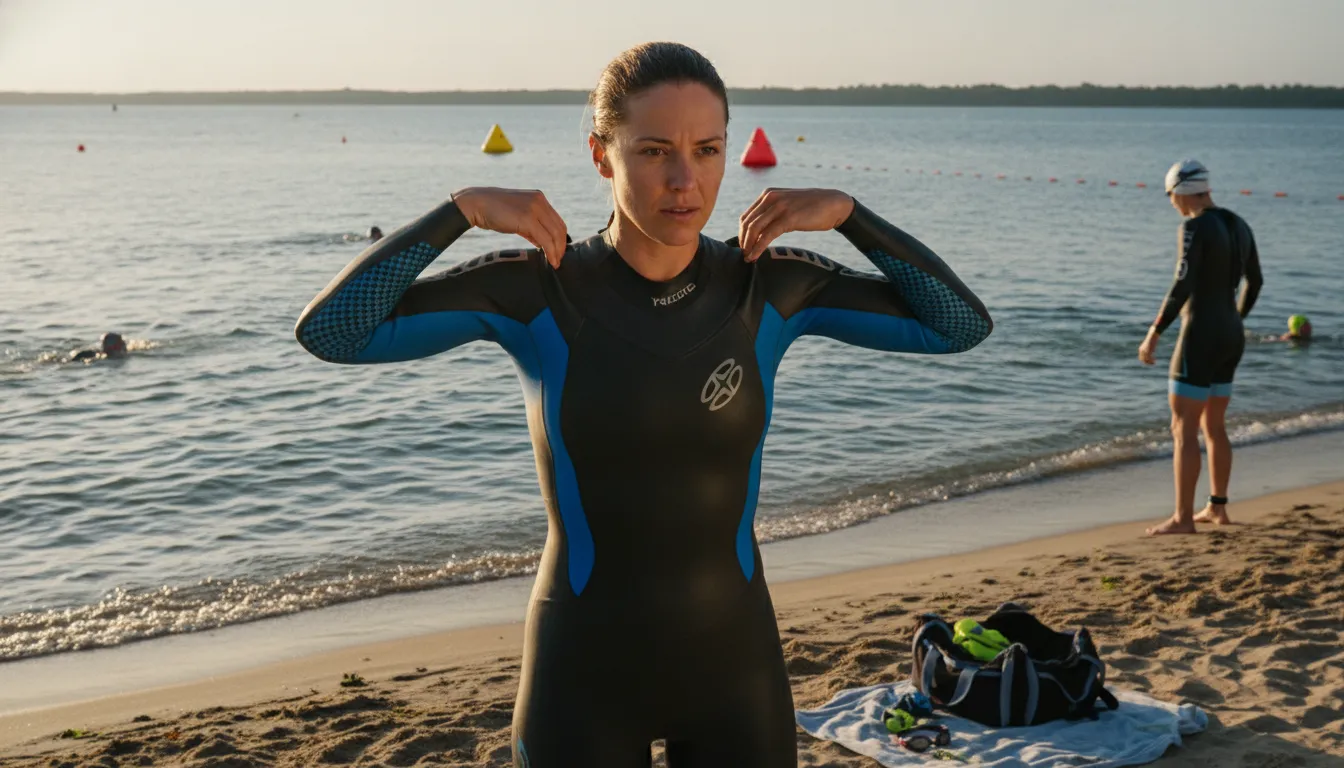
When you first put on a triathlon wetsuit, it may feel too small. On land, a good fit should feel very snug and a bit stiff. It might even feel hard to breathe at first. This is normal since neoprene is made to change when it hits the water. Facts from Triathlete.com show that neoprene stretches and grows a bit after an hour in the lake or sea. Knowing how this fit shifts will help you use a triathlon wetsuit sizing guide with no stress.
The snug land fit
A new suit should feel like a second skin. It must press on your body in all spots. If the suit is easy to pull on like a shirt, it is likely too big. You want the suit to be tight enough so that no gaps show at the lower back or under the arms. Even if the suit feels tight, you still need to move your arms. You can check this by swinging your arms in a circle. Some folks worry about arm pain, but research shows that muscle work depends more on how fast you swim than on the suit you wear.
Changes in the water
Once you jump in, the suit starts to change. A small bit of water gets in and stays between your skin and the suit. Your body heat warms this thin layer. This helps the neoprene soften and stretch to fit your shape. This shift makes the suit feel better than it did on land. The water layer also helps you float, which keeps you high in the pool or lake. If the suit fits well, it will keep you warm and cut down on drag. A perfect competitive suit fit keeps that warm water inside where it belongs.
Checking the neck and chest
The neck seal is a key part of the fit. It must be tight enough to stop water from rushing in. But it should not be so tight that it hurts to swallow. If the chest feels too tight in the water, pull the suit higher up into your legs and armpits. This move can add slack to the top of the suit. Most swimmers find that a suit that felt too tight at home feels just right once they start to swim.
Shoulder Range of Motion: The Key Mobility Check
Why shoulder mobility matters
The way a wetsuit fits around your shoulders is the most vital part of the suit. If the shoulders are too tight, your arms will tire out fast. This happens because you have to fight against the thick rubber with every stroke. You want to make sure your arms can move freely through the whole swim path.
Many swimmers think they must choose a sleeveless suit to get a full range of motion. But research shows that suit style might not be the main factor. One study found that shoulder muscle activity is more changed by how fast you swim than by the type of wetsuit you wear. This means a full suit can work just as well as a sleeveless one if it fits you right.
How to test your range of motion
Once you have the suit on, you must test how it feels while you move. Do not just stand still in front of a mirror. You need to act like you are in the water. Follow these steps to check if your suit allows for a full range of motion.
- Reach both arms straight up over your head as if you are starting a dive.
- Slowly move your arms in big circles to see if the suit pulls at your armpits or chest.
- Put one hand behind your neck and reach the other hand to your mid-back to check for tight spots.
- Lean forward at the waist and reach out in front of you to feel for any push in the lower back or shoulders.
- Check the neck area for any rubbing or pinching while you turn your head from side to side.
- If you feel the suit pulling down on your shoulders, pull more of the arm rubber up toward your neck to create more slack.
Getting the right amount of slack
The key to a good fit is having enough slack in the shoulder area. You want to avoid any gaps, but the rubber should not feel like it is dragging your arms down. If the suit feels too tight, you may need to adjust the torso or legs first. Pull the neoprene up from the ankles and knees toward the hips. Then, work the rubber from the waist up to the shoulders.
When the suit is dry, it will feel tighter than when it is wet. The water will help the neoprene slide and stretch slightly. But you still need to be able to move your arms well before you get in the water. If you have done these steps and the suit still feels very tight, you might need a different size. You can check our triathlon wetsuit sizing guide to see if a larger size would be better for your build. A suit that fits well will let you swim with less work and more speed.
Browse men's triathlon wetsuits or open water swimming gear at Swim2000 for expert-recommended options.
Step-by-Step: How to Put On a Triathlon Wetsuit
Mastering the suiting up process
Putting on a triathlon wetsuit takes time and care. The first time you try it, the process may take about ten minutes as said by blueseventy. Do not rush the process. If you pull too hard on the thin neoprene, your nails might tear the suit. It is better to practice at home before your race day. This helps you get used to the snug feel of the gear. Practice makes the task much easier and faster over time.
A cheap suit that fits well will always be better for you than a costly one that fits poorly. You will swim with less fatigue when your gear fits right. Following a clear set of steps helps you avoid gaps or bunched-up skin. This guide will show you how to suit up without hurting the suit. You will feel more sure on the starting line once you know your suit is on right.
The step-by-step guide
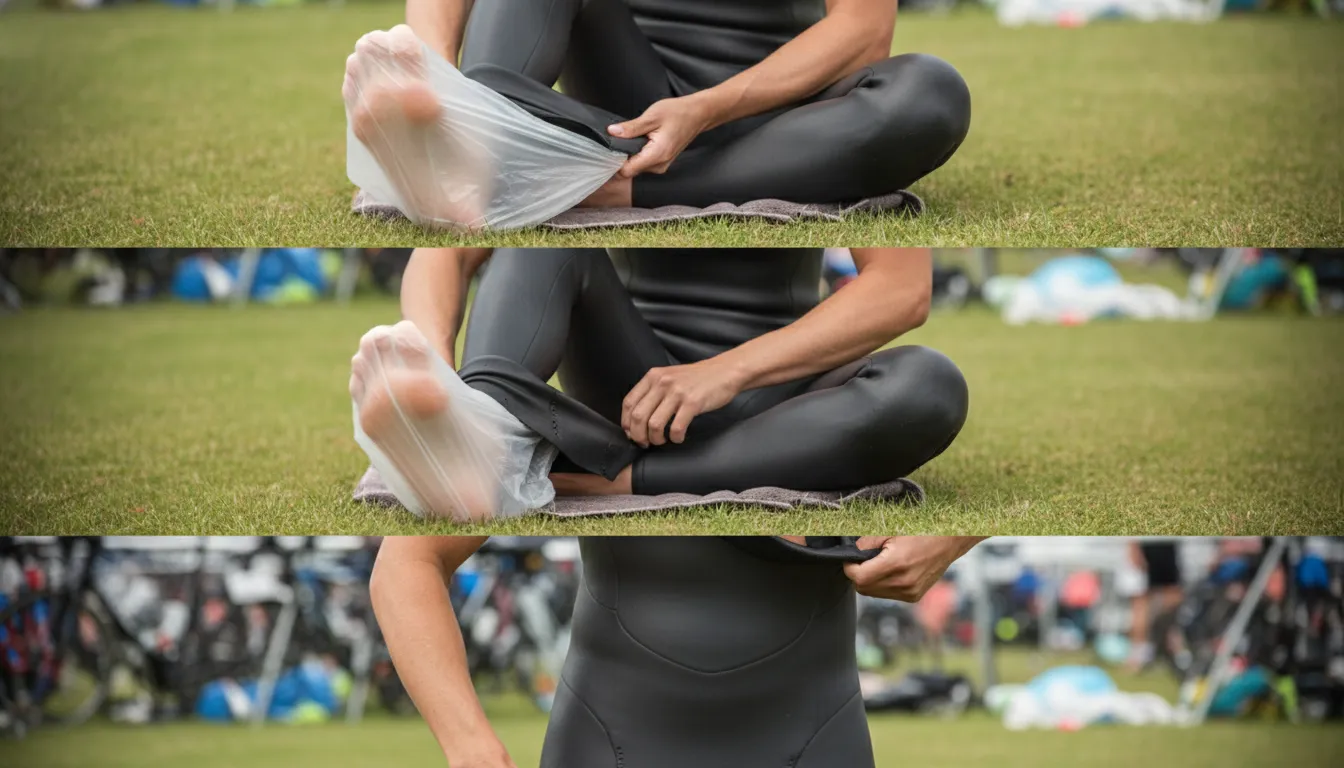
Before you begin, make sure your skin is dry. Trying to put on a wetsuit while your skin is damp is much harder. You may want to use a bit of body glide on your wrists and ankles. This helps the suit slide over your joints more easily. Check the suit for any small nicks or tears before you put it on.
- Use plastic bags or gloves. Slide a plastic bag over your foot to help it slide through the leg hole. Wear thin gloves to protect the suit from sharp nails.
- Roll the suit up from the ankles. Pull the bottom up so it sits two inches above your ankle bone. Use your finger pads to move the cloth up in small bits.
- Pull the suit over your waist and seat. Work the cloth up to your thighs so the crotch area is snug. This prevents gaps that would stop you from kicking well.
- Fit the torso and arms. Pull the suit over your chest and slide your arms in one at a time. Smooth out any extra cloth under your arms and across your back.
- Adjust the shoulders and neck. Pull any slack from your waist up toward your neck. This gives your shoulders the room they need for an easy swim stroke.
- Zip up and check the seal. Have a friend pull the zipper up while you stand tall. Close the neck flap and move your arms in circles to test the fit.
Why a proper fit matters for safety
Getting the suit on right is not just about speed. It also helps you answer the question of how should a triathlon wetsuit fit for your body type. A good fit helps with thermoregulation by keeping a thin layer of water next to your skin. This water warms up and keeps you from getting too cold in the lake or sea. If the suit is too loose, cold water will flush through and take your energy. A well-fitted suit keeps you safe and warm during long swims. It also ensures you stay high in the water for better speed.
Many swimmers ask how should a triathlon wetsuit fit before they buy one. The suit should feel snug on land. This is because neoprene will stretch and expand a bit once you get in the water. If the suit feels like it is a bit too tight while you are dry, it is likely just right for the swim. Look for air pockets at the small of your back or under your arms. A suit that fits like a second skin will give you the most buoyancy and least drag. If you are still unsure about the size you need, check a triathlon wetsuit sizing guide to compare your body size. Knowing your body size is the first step to a great race.
Signs Your Wetsuit Is Too Big or Too Tight
Finding the right size for a triathlon wetsuit is about more than height and weight. You need to know how the neoprene feels on your body to avoid common fit problems. A suit that is too big will fill with water. This adds weight and makes you slower in the pool or lake. A suit that is too tight can make it hard to breathe or move your arms during a race. A triathlon wetsuit sizing guide can help, but your own feel matters too.
Comparing the fit in key areas
When you try on a suit, look for signs of a poor fit in these main spots. A good fit should feel like a second skin. It stays close to your body without squeezing you too hard. Use the table below to check your suit's fit against the ideal feel for each body area.
| Body Area | Too Big (Signs) | Too Tight (Signs) | Ideal Fit |
|---|---|---|---|
| Neck | Large gaps at the back | Feeling of choking | Flush against skin |
| Chest | Air pockets or folds | Hard to take deep breaths | Snug but moves with you |
| Shoulders | Folds of loose material | Arms feel stuck or heavy | Full range of motion |
| Torso | Bagginess in lower back | Suit pulls down at neck | Flat against your spine |
| Arms/Legs | Wrinkles at elbows/knees | Hand or foot holes pinch | Ends clear of joints |
Problems with a large wetsuit
A suit that is too big causes water flushing. This is when cold water flows in and out of your suit. This stops the neoprene from keeping you warm and makes you slower. Research on swimming performance and buoyancy shows that a wetsuit works best when it stays tight to the skin. If you see bags of water at your chest or back, the suit is likely a size too large.
Risks of an overly tight fit
While a suit should be snug, it should not cut off your air or blood flow. Tight fits often cause a pulling feeling from the crotch to the shoulders. This stress can tire your muscles before you finish your swim. A perfect competitive suit fit means you can reach up without the suit pulling on your neck or shoulders. Pair your wetsuit with the right open water swimming gear for a complete race-ready kit.
A Quick Triathlon Wetsuit Fit Checklist
Checking the torso and crotch
Once you pull the suit up, the first thing to check is how the torso and crotch feel. The suit must be high enough in the crotch area to avoid a sagging feel. If there is a gap between your body and the suit at the crotch, you need to pull the neoprene further up your legs. A good fit here ensures you have the full range of movement needed for a strong kick. As the saying goes, fit is king when you pick a suit for open water. Check our triathlon wetsuit sizing guide to help you find the right start point for your body type.
The torso length also matters for your comfort. If the suit feels too short, it will pull down on your shoulders. This can lead to back pain or make it hard to stand up straight. You want the suit to sit flat against your skin without any air pockets. A snug fit helps with buoyancy and keeping you warm in cold lakes or oceans. If you see folds or bunching, you likely have the wrong size or need to pull the suit higher.
Testing shoulder and leg movement
Your shoulders need to move freely for a good swim stroke. To test this, reach your arms up and make big circles. The suit should feel tight but not so stiff that it stops your reach. You may need to pull a bit of extra slack from the arms into the shoulder area. This small move can make a big change in how tired you feel during a race. It helps to keep your arms moving without fighting the suit on every stroke.
Leg movement is just as vital. Walk around and try a few lunges or high knees. The suit should stay in place and not slide down. While a suit should be tight, it must not pinch your skin or cut off blood flow. You want to feel held, not trapped. If the suit is too tight on your legs, it may be hard to get off in the transition area. A suit that fits well will feel like a second skin and let you move in all ways. Learn more about staying comfortable in the water with our complete men's wetsuit buyer's guide.
Neck and chest comfort
The neck seal must be snug to keep water out but soft enough to let you breathe. Many swimmers feel a bit of pressure on the neck at first. This is normal, but it should not cause pain. Look for any gaps at the back of the neck where water could leak in. Cold water inside the suit can lead to a chill and slow you down. A proper seal is a key part of how a triathlon wetsuit should fit for safety and warmth.
Last, check your chest for tightness. You must be able to take full, deep breaths without effort. If you feel like you cannot expand your lungs, the suit is too small. Neoprene will stretch a little when wet, but it should never make it hard to breathe. Take a few deep breaths while standing on land to test the limits. If it feels okay on land, it will likely feel great once you hit the water.
Find your ideal wetsuit at Swim2000's triathlon wetsuits shop and get free shipping on orders over $50.
Frequently Asked Questions
Can I use a surfing wetsuit for a triathlon race?
Surfing wetsuits are not the best choice for triathlons. Research on PubMed shows that triathlon suits use different thicknesses to help you float and move well. Surf suits are made for warmth while you sit on a board. They do not have the right stretch for a swim stroke. Using a surf suit may slow you down and cause more drag in the water.
Should I buy a full-sleeve or a sleeveless wetsuit?
Picking between a full-sleeve or sleeveless style depends on your goals. A study in PMC found that shoulder muscle use is about the same for both types. Full-sleeve suits give you more lift and warmth in cold water. Sleeveless suits let your arms move more freely and are easier to put on. You should think about how cold the water is before you choose.
Should I wear a new wetsuit for a race without practicing?
Do not wear a new wetsuit for the first time during a race. Experts at Synergy Wetsuits suggest that you take a few practice swims first. This helps the suit adjust to your body so you can find a good fit. Practice also makes it easier to put the suit on quickly. A well-fitted suit helps you stay fresh and feel more safe and sure in open water.
Can I use buoyancy shorts during triathlon training?
Yes, buoyancy shorts are a helpful tool for training. As noted in PMC, these shorts use the same rubber and thickness found in full wetsuits. They help you practice the right body position in a pool without getting too hot. While they help with drills, you should still swim in your full wetsuit at times. This ensures you are ready for the feel of your gear on race day.
How do I know if my wetsuit is too big?
Signs of a wetsuit that is too big include visible gaps or folds at the neck, lower back, and under the arms. You may feel cold water rushing in and moving around inside the suit. Excess fabric can bunch at your elbows and knees. A baggy suit creates drag that slows you down and reduces the buoyancy benefits. Compare your fit against a triathlon wetsuit sizing guide to confirm.
Ready to find your perfect triathlon wetsuit?
Finding the right fit for your triathlon suit is one of the key steps you can take to make sure you have a strong swim. A suit that is too loose will let in cold water and create drag, while one that is too tight can make it hard to breathe. Getting your gear ready today means you will feel good on race morning instead of dealing with stress in the water. Take the time now to make sure your wetsuit feels like a second skin. This simple check will help you focus on your stroke and your speed when it counts the most on race day.
Call (415) 867-3073 to speak with Swim2000's gear experts about finding the right triathlon wetsuit for your body and your race.


