


Triathlon Wetsuit Sizing and Fit Guide for Athletes
A wetsuit can look like the right size on a hanger and still feel wrong once you start swimming. The best triathlon wetsuit sizing choice fits close to the body, limits excess water entry, and lets you rotate your shoulders without fighting the material on every stroke.
Shop new-arrival wetsuits and compare the verified size chart for your chosen model.
Start with the size chart for the exact brand and model, using current measurements rather than your usual clothing size. Then put the suit on completely, check the critical fit zones on dry land, and test it in the water if the seller permits. A label is only the starting point. Your breathing, mobility, neckline comfort, and the absence of loose folds determine whether the fit works.
This guide walks through that process without relying on universal size claims. Because every brand and model uses its own cut, always let the product's verified size chart take priority. You can also compare equipment for the full discipline in the triathlon shop.
Start with the brand's triathlon wetsuit sizing chart
A medium in one wetsuit line may not fit like a medium in another. Manufacturers build suits around different body proportions, panel layouts, and intended uses. That is why the chart for the exact suit matters more than a familiar label or the size of a surf wetsuit you already own.
Take current body measurements
Review the chart before measuring so you know which dimensions the manufacturer requests. Common inputs include height, weight, chest, waist, and hips. Use a flexible tape, stand naturally, and keep the tape level without pulling it tight enough to compress the body. Ask another person to help when possible.
- Height: Stand barefoot against a wall and look straight ahead.
- Weight: Use a current measurement rather than an estimate from a previous training block.
- Chest: Measure around the fullest part while breathing normally.
- Waist and hips: Follow the brand's measuring instructions because chart definitions can differ.
Write the measurements down and compare all of them with the chart. Do not round numbers simply to land in a preferred size. If your measurements point to different sizes, read the model-specific guidance or ask the retailer for help before ordering.
Treat the chart as a model-specific guide
Body shape matters when two athletes share the same height and weight. One may have broader shoulders, while another carries more length through the torso. The correct response is not always to move up or down. A different model or brand cut may match those proportions more effectively.
When reviewing new-arrival wetsuits or the broader triathlon wetsuit collection, open the product information for the exact suit and use only its verified chart. Never transfer a size decision from one brand to another without rechecking.
How to put on a triathlon wetsuit without damaging it
You cannot judge fit accurately until the suit is fully seated. Material left low at the calves, hips, or crotch creates tension that travels upward and makes an otherwise suitable suit feel restrictive at the shoulders.
- Prepare your hands and the suit. Remove rings and watches. Make sure fingernails are smooth, and use fingertips or the flats of your fingers rather than digging nails into neoprene.
- Work one leg at a time. Feed each foot through carefully. Gradually move small sections of material upward instead of pulling hard from the top edge.
- Settle the knees, hips, and crotch. Align the knee panels if the suit has them. Pull enough material upward so the suit sits close at the hips and fully into the crotch, without a low hanging pocket.
- Insert the arms gently. Ease the sleeves into place in stages. Settle the cuffs and move spare material toward the upper arms rather than yanking at a seam.
- Set the shoulders before closing the zipper. Make sure the suit is pulled into the armpits. Roll each shoulder, then have a helper close the zipper if the product instructions recommend it.
- Secure the neckline and recheck. Close the neck as designed, then perform the breathing and movement checks below.
Take your time. Rushing can damage the outer surface and also leaves the suit improperly positioned. If shoulder tightness improves after you move material higher from the legs and torso, the original problem was dressing technique rather than the labeled size.
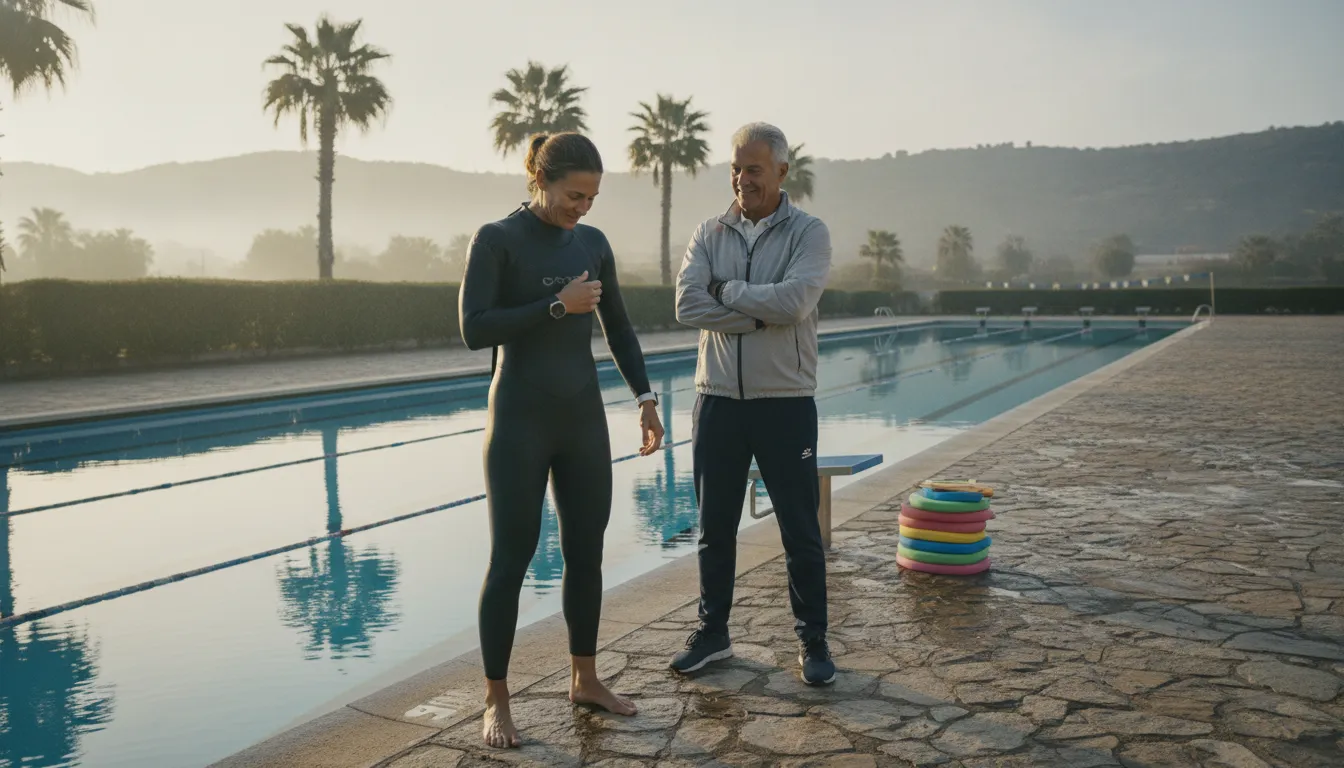
How should a triathlon wetsuit fit on dry land?
A triathlon wetsuit should feel close and supportive on land, but close does not mean painful. You should be able to stand upright, breathe in a controlled way, and simulate the key parts of a swim stroke. The suit should not have obvious loose folds that could collect water.
Check breathing and torso contact
Take several calm breaths. Some firm pressure is expected from a close fit, but you should not feel panicked, dizzy, or unable to take a useful breath. Look for folds at the lower back, stomach, hips, and crotch. Large loose areas suggest the cut or size is not maintaining consistent contact.
Also inspect the zipper. It should close according to the manufacturer's directions without extreme pulling or visible strain. Do not force a zipper to prove that a smaller size works.
Test shoulder mobility
Raise both arms overhead, reach forward, and perform several slow freestyle recoveries. Pay attention to where tension begins. A little resistance on dry land can occur, but the suit should not drag your arms down or sharply limit rotation.
Before blaming the size, confirm that the legs, hips, crotch, armpits, and shoulders are fully seated. If the upper body remains restrictive after careful adjustment, compare the next chart-recommended option or consider a different cut.
Inspect the neck, wrists, and ankles
The neck should lie smoothly enough to limit flushing without pinching, folding inward, or rubbing a painful spot as you turn your head. Check that the closure is aligned and that no flap or zipper edge is sitting incorrectly.
Wrist and ankle openings should sit smoothly without large gaps. Exact sleeve and leg length varies by athlete and design, so prioritize secure contact and comfort over a universal placement rule.
Is your triathlon wetsuit too small or too large?
Fit problems tend to appear in a group. One minor sensation may be solved by repositioning the suit, while several consistent warning signs suggest that the size or cut should change.
| Fit zone | May be too small | Likely correct | May be too large |
|---|---|---|---|
| Shoulders | Arm recovery remains sharply restricted after the suit is fully seated | Close contact with usable stroke motion | Loose panels or folds around the upper body |
| Neck | Painful pressure, pinching, or immediate rubbing | Smooth, secure contact without painful pressure | Gaping or frequent flushing at the opening |
| Torso | Breathing remains uncomfortably limited or zipper is under excessive strain | Supportive contact and controlled breathing | Loose folds, pockets, or material that moves independently |
| In the water | Mobility or breathing prevents a relaxed stroke | Secure feel with comfortable movement | Noticeable water entry, pooling, or movement inside the suit |
First rule out a dressing problem
A suit that sits low at the crotch can pull hard on the shoulders and neck. Before changing sizes, take it off and put it on again slowly. Move the material upward in small increments, settle every panel, and repeat the movement checks.
Know when the cut is the issue
If one size is loose through the torso but the smaller size restricts the shoulders, the problem may be the model's proportions rather than your position between labels. Compare another chart and cut rather than accepting a poor compromise.
Solve shoulder restriction, neck chafing, and water entry
Shoulder restriction
Start by moving material upward from the calves, thighs, and torso. Settle the suit high into the armpits, then retest your stroke motion. Persistent restriction can come from a suit that is too small. A torso that is too short for your proportions, or an upper-body cut that does not suit your shoulders.
Do not assume that every close feeling disappears in the water. If dry-land movement is severely limited or painful after correct dressing, reassess before swimming.
Neck chafing
Check whether the neckline is smooth, centered, and closed as designed. A fold, trapped zipper flap, or low-seated suit can create friction. Turn your head in both directions and simulate breathing to each side. Pressure that quickly becomes painful is not a sign to ignore.
Use only lubricants and anti-chafe products that the wetsuit manufacturer says are compatible with its materials. Product instructions should take priority over general advice.
Excess water entry
A small amount of water may enter a suit, but repeated flushing or pockets of moving water can indicate gaping at the neck, wrists, ankles, or torso. First check that every closure is secured and the suit is positioned correctly. If water continues to rush through or pool, compare the fit with the brand chart and consider a different size or cut.
Why should you test the fit in the water?
Dry-land checks catch obvious problems, but swimming reveals whether the complete fit supports your stroke. If the seller's policy permits a water test, use a controlled session well before race day. Do not make your first open-water swim in a new suit at the starting line.
What to evaluate during the swim
- Can you settle into normal breathing without chest or neck discomfort?
- Can your shoulders recover smoothly through repeated strokes?
- Does the neckline stay comfortable when you rotate to breathe and sight forward?
- Do you notice water repeatedly flushing through or collecting in loose areas?
- Does the suit remain in position rather than shifting around your torso?
Begin with easy swimming in a safe environment. Stop if the suit affects breathing, causes pain, or prevents normal motion. After the swim, note any rubbing or red spots, because repeated contact can become worse over a longer race.
Retest after making adjustments
If you discover a problem, determine whether it comes from positioning, size, or cut. Put the suit on again carefully and retest only if it remains safe and the seller's policy allows it. A consistent issue after correct dressing is stronger evidence than a single rushed try-on.
When should you size up, size down, or change the cut?
There is no universal rule that every athlete between sizes should move in one direction. Use the exact brand chart and verified product guidance first. Then use fit checks to decide whether the chart-recommended option works for your body.
Consider another chart-approved size
A larger option may deserve comparison when the current suit remains painfully restrictive, prevents controlled breathing, or sharply limits shoulder movement after it is fully seated. A smaller chart-approved option may deserve comparison when there are large loose folds, gaping openings, or repeated flushing.
These are signals to compare, not automatic instructions. Verify that your measurements fall within the manufacturer's guidance for the other size before making the change.
Choose a different model when proportions do not align
Changing the cut can be better than forcing a size decision. Athletes with broader shoulders, longer torsos, or different chest-to-waist proportions may find that another model sits smoothly without becoming loose elsewhere. Recheck every measurement against the new chart.
Complete a pre-race fit check
- Put the suit on slowly and fully seat every panel.
- Confirm controlled breathing and usable shoulder motion.
- Inspect the neck and closures for folds or pressure points.
- Complete a permitted swim test before race day.
- Practice removing the suit so transition does not become the first trial.
After training, follow the manufacturer's care instructions. In general, rinse away salt or pool water with fresh water and dry the suit away from direct heat. Careful handling helps protect the fit you worked to find.
Complete your race-day kit with triathlon accessories from Swim2000.
Frequently asked questions about triathlon wetsuit sizing
Should a triathlon wetsuit feel tight?
It should feel close and supportive without large loose folds, but it should not cause pain, prevent controlled breathing, or severely restrict shoulder movement. Put it on completely before judging. Material left low on the body can create false tightness above.
Should I use my regular clothing size?
No. Use current body measurements and the chart for the exact wetsuit brand and model. A familiar clothing label does not account for the cut, panel design, or fit standards of a specific triathlon wetsuit.
How can I tell if a wetsuit will let in too much water?
Look for loose folds and gaping at the openings on land. During a permitted swim test, notice repeated flushing, pooling, or material moving independently from your body. Confirm closures and positioning before changing sizes. Browse open-water swimming gear for other items suited to training outside the pool.
What if my height and weight point to different sizes?
Read the manufacturer's model-specific instructions and compare every requested measurement. If the guidance is unclear, ask the retailer or manufacturer rather than guessing. A different model cut may fit better than forcing either size.
Can I judge fit without swimming?
Dry-land checks can identify major problems, but a permitted water test gives better information about breathing, shoulder motion, neck comfort, and flushing. Always follow the seller's return and test policy.
Find a wetsuit that supports your swim
Ready to apply this fit checklist? Explore triathlon and open-water wetsuits at Swim2000. Then use the verified chart for your chosen model. You can pair your suit with swim goggles and caps selected for training and racing. A careful try-on now can help you reach race day with a suit that feels secure, mobile, and ready to swim.


