

Snorkeling gear for a first trip comes down to three pieces. You need a mask that seals over your eyes and nose, a side snorkel you can breathe through at the surface, and fins that match your feet. A complete set covers that core. Sun cover, a mesh bag, and a buoyancy vest are add-ons you can bring later, not the first decision.
This checklist covers surface snorkeling on a vacation, a boat day, or a calm shore swim. It is not a scuba setup, and it is not a lap-training kit. A snorkel only works while the top of the tube stays in the air. If you are choosing fins by model, use the snorkeling fin guide after you know the rest of the kit.
Shop the snorkeling gear collection, or call (702) 696-9290 if you want help matching a size before you order.
What snorkeling gear do beginners actually need?
Start with a mask, a snorkel, and fins. Divers Alert Network describes snorkeling as swimming with a mask and snorkel, sometimes with fins or a wetsuit. Those three pieces solve the problems a first outing creates: seeing clearly, breathing with your face down, and moving without constant arm work.
Buy them as a matched set when you want one size decision and one bag. Buy them separately when one person in the group needs a different fin size, or when you already own a mask that seals. Either path works if the three pieces still fit the same person. The mistake is packing only a mask and then kicking hard in bare feet for an hour.
| Piece | What it does | First-trip priority |
|---|---|---|
| Mask | Seals over eyes and nose so you can see. | Required. |
| Side snorkel | Lets you breathe while your face stays down. | Required. |
| Fins | Move you with less arm effort. | Required for most open water. |
| Rash guard or swim shirt | Covers skin from sun while you float. | Add if you will be out a long time. |
| Mesh bag | Carries wet gear and lets it drain. | Useful, not required to start. |
| Snorkel vest | Adds float for a weak or tired swimmer. | Only when extra float is the plan. |
In brief, a first kit is a sealing mask, a surface snorkel, and fins that fit your feet. Everything else waits until those three pieces are settled.
How should a snorkel mask fit?
A snorkel mask covers the eyes and nose, while swim goggles leave the nose outside the seal. You cannot equalize or keep water out of the nose the same way with goggles. Look for a silicone skirt and a tempered-glass lens, both of which show up on the recreational sets Swim2000 carries.
Fit is a seal test, not a tightness contest. Hold the mask to your face without the strap, breathe in gently through your nose, and let go of the frame. A useful mask stays put for a moment from suction alone. Hair under the skirt, a smile that breaks the seal, or a strap cranked tight to hide a bad shape will leak once you are face-down in the water.
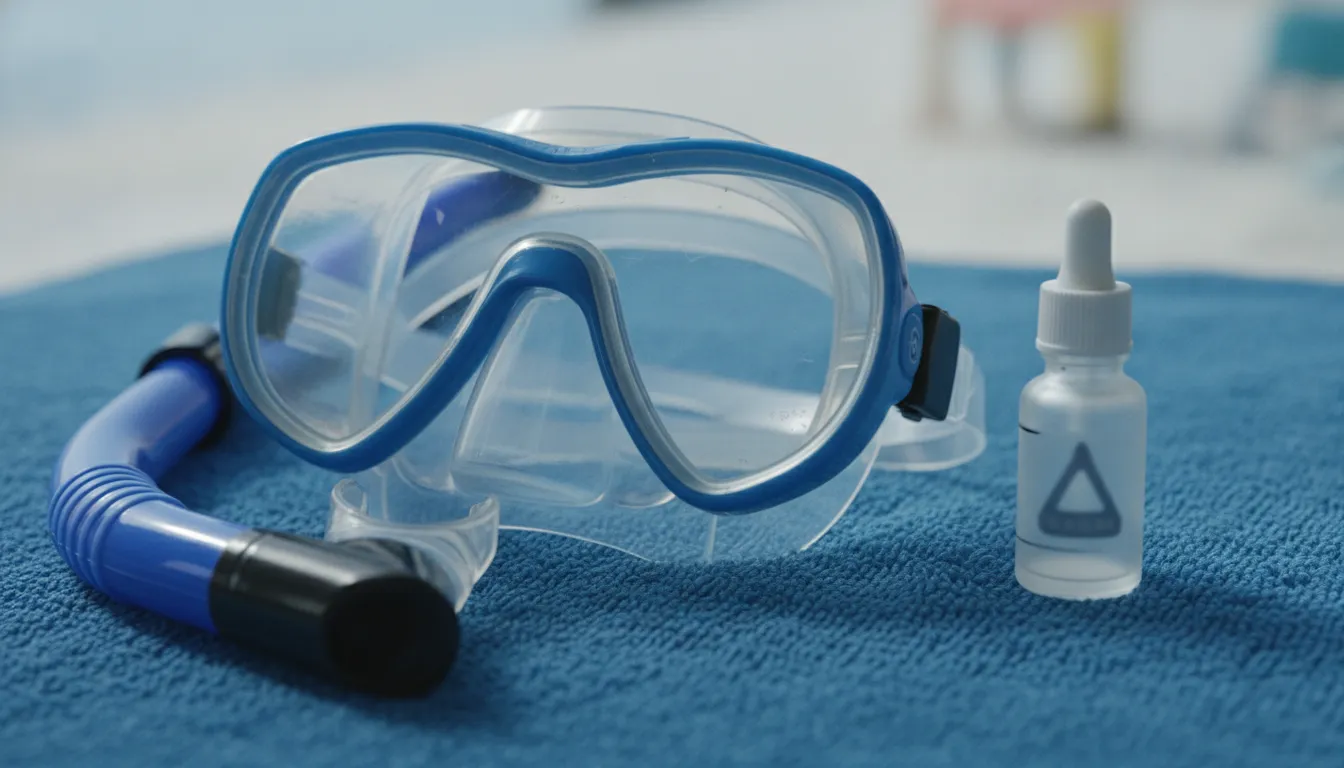
Two lenses or one lens is a comfort choice. A single lens can feel wider, while two lenses can sit closer to the eyes. Neither style sees for you if the skirt does not match your face. Try the seal before the trip if you can, and do not plan to adjust it in the water as the only check.
Keep the lens clear with a thin film of defog on the inside, then a fresh-water rinse. Spit works in a pinch, but rubbing the glass with sandy fingers scratches it. If the mask floods, lift your face, press the top of the frame, and exhale through your nose to push water out the skirt. Practice that clearing move in shallow water before you swim away from shore.
Which snorkel belongs in a surface kit?
For this checklist, use a traditional side snorkel that sits beside the mask strap and stays in your mouth while you look down. A dry-top or splash guard blocks some surface chop, and a purge valve near the mouthpiece gives water a lower exit when you blow. Neither feature lets you breathe once the tube is fully under the surface.
The mouthpiece should rest between your teeth and lips without a hard bite, because jaw fatigue is a fit problem rather than a stamina badge. If each breath feels like a pull through a long hose, the tube is the wrong shape for a relaxed float.
Read the model notes before you assume every dry label works the same way. Our guide to how snorkels work covers the air path and the difference from a front-mounted swim snorkel used for lap drills.
Leave the center-mount training snorkel at the pool, because those tubes are built for stroke drills with the face down in a lane. That is a different job from looking around a reef, and the swimming snorkels guide owns that choice. Mixing the two on a boat is how people end up with a tube that will not clip to a mask.
In brief, pack a side snorkel with a mouthpiece you can hold lightly. Treat splash guards as helpful, not as a promise that water will never enter the tube.
How do snorkeling fins differ from pool fins?
Snorkeling fins are built for a slow kick at the surface, often for a long time, and often with a suitcase in the plan. Short blades pack easier and kick with less ankle strain than long scuba blades. Full-foot fins slip on like a shoe and suit warm water and bare feet. Open-heel fins use an adjustable strap and leave room for a thin water sock or bootie when the bottom is rocky.
Size them like a snug shoe, not a loose sandal. A fin that slides lets the heel lift and can rub a blister before the swim is over, while a fin that pinches the toes goes numb. If the size chart on the product page and your shoe size disagree, trust the chart printed on that page.
Do not turn this page into a model ranking. Blade length, foot pocket, and travel weight are the calls you need before you shop, and the snorkeling fin guide compares specific fins once the rest of the kit is decided.
When is a complete snorkeling set enough?
A complete set is enough when one person needs a mask, a snorkel, and fins in one bag and the published size matches that person. That is the simpler first purchase. It is the wrong purchase when two people share one box and only one pair of fins fits.
- Check who is snorkeling and their shoe size before you add a set to the cart.
- Confirm the set includes a mask, a side snorkel, and fins, not a pool snorkel alone.
- Read the size range on the fin, not just the word "adult" or "kids."
- Note whether a carry bag is included so you do not buy a second bag by habit.
- If the size you need is unavailable, pick another in-stock size or a different set rather than guessing a restock date.
Swim2000 has carried swim gear since 1994, and the snorkeling sets live with the rest of the shop's masks, snorkels, and fins. Use the product page for the current price and the size that is actually available. A matched set usually pairs a mask, a side snorkel, and fins in one bag, so read the description for the lens, the skirt, the snorkel style, and whether a carry bag is included. Those details change by model, which makes the live page the record rather than a price remembered from an earlier visit.
The Speedo Adventure mask, snorkel, and fin set is one adult option in that collection. The Cressi Tino Adventure set and the Cressi Musa Explorer set are two more adult sets to compare by size and included pieces. For a child, look at a kids set such as the Speedo kids mask, snorkel, and fin set, and confirm the listed size is a child size rather than a squeezed adult fit.
The snorkeling gear collection is the place to see masks, snorkels, and sets together before you decide. Free US shipping applies on orders of $50 and above, which is the shop's published shipping line rather than a promise about any one product's price.
A full-face set, such as the Cressi Baron and Tonga, is a different breathing style because the mask covers the whole face. You can breathe through the nose or mouth at the surface, but it is still not a deep-diving mask. If that style is the question, treat it as its own decision rather than a default upgrade.
In brief, one matched set is enough for one person whose size is listed and available. Split the purchase when fin sizes in the group do not match.
What else belongs in a snorkeling gear bag?
Add sun cover if you will float with your back to the sky for more than a short dip. A rash guard or swim shirt blocks sun without the weight of a wetsuit, and the rash guards and swim shirts collection is the shelf for that layer. A wetsuit is a water-temperature decision, not an automatic line on a beginner list. Do not promise yourself warmth from a product you have not checked against the water you will enter.
A mesh bag earns its space once the gear is wet and needs to drain instead of soaking a suitcase. The Speedo Deluxe Ventilator mesh bag is one option in the catalog, and some sets include their own bag. More bags live in the mesh bag collection.
Rinse the mask, snorkel, and fins in fresh water, then let them dry out of direct sun. Keep sand out of valves and straps. Opened snorkels sit on Swim2000's non-returnable hygiene list, so test the seal and the mouthpiece before the first ocean use. Eligible returns otherwise follow the return policy. Request one within 45 days of delivery. The item must stay unworn, unwashed, and never used in water, with tags attached. The package must reach the shop by day 52.
A snorkel vest is for a swimmer who wants extra float, not a substitute for knowing how to swim back to the boat. Reef-safe sunscreen, a hat for the boat ride, and a water bottle matter on a long outing, and none of them replace the mask.
Kids need their own small set, not a cinched adult mask that leaks as soon as they smile. Start them in shallow water where they can stand. The kids swimming gear collection is the broader youth shelf if the trip also needs suits or goggles for the pool. A first pool kit is a different list, covered in swimming gear for beginners.
What should you check before you get in?
Gear does not remove water risk. Divers Alert Network notes that many snorkelers start with little instruction, and that drowning risk can come from cardiac events. Other risks include immersion pulmonary edema, hypoxic blackout from long breath-holds, inhaled water, boats, and current. Snorkeling is not scuba, so a mask and tube do not replace training or a buddy. If you have heart disease, high blood pressure, or a recent change in health, talk with a clinician before the trip.
Stay on the surface until breathing through the tube feels ordinary, and do not hyperventilate before a long breath-hold. The urge to breathe can be delayed while oxygen keeps falling, which is how hypoxic blackout happens with little warning. Skip the water if you cannot swim back to the boat or shore without the fins. Look up often for boats, and do not snorkel alone in a channel or a ripping current.
Practice two small skills in waist-deep water before you swim out. Clear a flooded mask with a nose exhale, and clear a flooded snorkel with a sharp blow, then go look at fish once both moves feel ordinary.
If a set is the wrong size, call Swim2000 at (702) 696-9290 or use the contact page. The Las Vegas shop at 4137 S. Maryland Pkwy is open Monday through Friday from 10:30 a.m. to 5:30 p.m. PST, and Saturday from 11 a.m. to 4 p.m. PST. Free US shipping applies on orders of $50 and above.
Frequently asked questions
What equipment is needed for snorkeling?
You need a mask that seals over the eyes and nose, a side snorkel for surface breathing, and fins that match your shoe size. Sun cover, a mesh bag, and a float vest can wait until that core kit fits.
Is a full snorkel set better than buying pieces separately?
A set is better when one person needs all three pieces in one size range. Separate pieces are better when fin sizes in your group do not match, or when you already own a mask that seals.
Can I snorkel with swim goggles instead of a mask?
No, swim goggles do not cover the nose, so they do not give you the same seal or an easy way to clear water. Use a snorkel mask for surface snorkeling and keep goggles for laps.
Are full-face snorkel masks better for beginners?
A full-face mask is not better by default. It lets you breathe through the nose or mouth at the surface, but it is a different fit and it is not made for deep diving. A traditional mask and side snorkel remain the standard first kit.
Do kids use the same snorkeling gear as adults?
No, kids need a child-sized mask, snorkel, and fins. An adult mask tightened down will not seal a small face, so check the listed child size on the product page before you order.