


Training for your first triathlon does not require an athlete's schedule. It requires a repeatable week that gives each discipline attention while leaving room to recover, adjust, and build confidence. This guide turns the preparation into manageable steps, from learning the course demands to practicing transitions and checking your gear before race morning.
A practical sprint triathlon training plan usually builds across 12 weeks, combining regular swim, bike, and run sessions with recovery and occasional brick workouts. Because sprint events commonly include about a 750-meter swim, 20-kilometer bike, and 5-kilometer run, beginners can focus on steady completion, comfortable pacing, and race-day preparation rather than chasing a guaranteed finish time.
Shop the beginner triathlon training guide
Start by understanding what each segment asks of you, then use that information to shape a schedule you can follow consistently.
What Does a Sprint Triathlon Include?
A sprint triathlon combines three events in sequence: swimming, cycling, and running. The common format is a 750-meter swim, a 20-kilometer bike ride, and a 5-kilometer run, or approximately 12 miles of biking and 3.1 miles of running. Those distances are a useful planning reference, but the course you select may be shorter or longer. Beginner events can vary from roughly 300 to 800 yards in the swim, 10 to 15 miles on the bike, and a 5K or shorter run.
In short, a sprint triathlon is usually a manageable swim-bike-run event, but you should confirm the race distances, cutoff times, transition rules, and course conditions before building your schedule.
How should beginners choose a starting point?
Start with the event details rather than assuming every sprint race is identical. Check whether the swim is in a pool, lake, or ocean, then review the water conditions, required equipment, elevation, surface, and transition layout. A course with an open-water swim or significant hills may require more specific preparation than the distances alone suggest.
For general readiness, one published beginner plan uses three simple markers. Swim 100 yards continuously without excessive stress. Cycle for 20 minutes without stopping. Run continuously for 10 minutes. These are reference points, not universal medical or coaching requirements. If you cannot yet meet them comfortably, choose a later race or spend more time building basic consistency. If swimming is your least familiar discipline, consider working with a qualified coach or using a beginner triathlon training guide to understand technique, pacing, and transitions.
How long should preparation take?
Training plans may span four, eight, or 12 weeks. The right length depends on your current swimming, biking, and running habits, the course demands, and how consistently you can recover between sessions. A longer runway gives you more room to establish technique and increase training gradually. A shorter plan may suit someone who already exercises regularly, but it should not force abrupt increases in distance or intensity.
Set your starting point at a level that lets you repeat sessions with control. Build the habit first, then extend one element at a time. Stop or scale back if pain changes how you move, and seek qualified medical advice for persistent or concerning symptoms.
How Many Days a Week Should Beginners Train?
Most beginners can build a practical week around two swims, two bike sessions, and two runs, with at least one genuine recovery period. That is six training sessions, but it does not have to mean six exhausting days. One easy session can share a day with another short workout, leaving a separate day for rest.
Summary: Start with five or six training days only if your current fitness supports it, keep most sessions easy, and space same-sport workouts by one or two days. Consistency matters more than packing every available day with volume.
A flexible beginner week
| Day | Session | Primary focus |
|---|---|---|
| Monday | Easy swim | Breathing and technique |
| Tuesday | Bike | Comfortable aerobic effort |
| Wednesday | Run or run-walk | Time on feet |
| Thursday | Second swim | Drills and short intervals |
| Friday | Rest or mobility | Recovery |
| Saturday | Longer bike, optional short run | Endurance and transition practice |
| Sunday | Easy run or rest | Flexible recovery |
- Monday: Easy swim focused on relaxed breathing and technique.
- Tuesday: Easy bike ride, building comfortable time in the saddle.
- Wednesday: Short run or run-walk at a conversational effort, followed by optional light strength work.
- Thursday: Second swim, using simple drills or short intervals after an easy warmup.
- Friday: Rest, gentle mobility, or an easy walk. Keep this day free of a formal workout if fatigue is accumulating.
- Saturday: Longer bike session followed by a short, easy run when you are ready to practice a brick.
- Sunday: Easy run, or a second recovery day if the week felt demanding.
This arrangement gives you two swims, two bikes, and two runs while protecting a recovery window. If seven consecutive days feels like too much, combine the Wednesday run with a short swim or move the Sunday run to Friday, then take Sunday fully off. When doubling up, leave several hours between sessions and make at least one of them genuinely easy.
How to adjust the volume
If you are new to all three sports, begin with shorter sessions rather than trying to match a full race distance. A run-walk can replace continuous running, and an easy spin can be brief enough to finish feeling capable of more. Add time gradually when you recover well between workouts. If you already swim, bike, or run regularly, keep frequency in that sport while increasing only one variable, such as duration or a small amount of steady effort.
Use fatigue as useful feedback. Persistent soreness, worsening form, unusual pain, or declining energy is a reason to shorten or skip a session, not a challenge to overcome. A conservative first week helps establish the habit. For a more detailed weekly framework, review this triathlon training framework, then adapt the schedule to your race date, work demands, and current ability.
A 12-Week Sprint Triathlon Training Plan for Beginners
This sprint triathlon training plan uses four simple phases: establish consistency, add controlled workload, rehearse race demands, and arrive rested. The schedule is a framework rather than a promise of a particular finish time. Adjust the duration, distance, or intensity if your current fitness, schedule, or recovery requires it. One published beginner plan recommends at least 12 weeks for athletes who can run or walk a 5K and are fairly new but capable in swimming and biking, but you can extend any phase when needed.
- Weeks 1-4: Build your base. Make regular training the priority. Aim for two easy swims, two relaxed bike sessions, and two short runs or run-walks each week, with at least one complete rest day. Keep most work at a conversational effort. Use the swims to practice relaxed breathing and efficient technique, the rides to become comfortable staying in the saddle, and the runs to build time on your feet without chasing pace. A first week might include a 20- to 30-minute easy bike, a short run-walk, and simple swim intervals such as repeated 25s or 50s. Add a brief strength session if it does not interfere with recovery. The goal is to finish the month feeling ready to train again, not depleted.
- Weeks 5-8: Build endurance and introduce structure. Gradually extend one swim, one bike, and one run each week toward the demands of your event. Keep the second session in each discipline shorter or easier. Add modest changes of pace, such as a few brisk swim lengths, several minutes at a steady bike effort, or short controlled run intervals. Include one short brick every week or two: ride easily, then jog for a few minutes immediately afterward. This helps you practice the unfamiliar feeling of running after cycling without turning every workout into a test. If you need two sessions on one day, separate them by several hours when possible. A six-session week can work, but leave rest between repeated sessions in the same sport.
- Weeks 9-11: Make the work race-specific. Practice the skills you will use on race day while keeping hard efforts limited. Complete at least one longer, steady session in each discipline, then add short intervals near your planned race effort only if you are recovering well. Build a brick that resembles the order and feel of your event, without needing to cover every race distance at maximum effort. Practice sighting and steady swimming if you will race in open water, and rehearse mounting, dismounting, changing shoes, and organizing transition equipment. Use perceived effort rather than an ambitious pace target: breathing that is controlled and sustainable should guide most work. If pain changes your movement or does not settle with rest, stop and seek qualified medical or coaching advice.
- Week 12: Taper and prepare. Reduce total training volume by roughly 30% to 50% while keeping a few short, easy sessions so the movements stay familiar. A brief swim can include relaxed sighting practice, and a short bike-run brick can rehearse transitions without creating fatigue. Avoid trying to make up missed workouts or adding a final hard test. Confirm the course details, start time, equipment, clothing, transportation, and weather plan. Keep the final days predictable, prioritize sleep, and take a full rest day if that is what your body needs. Race week is for arriving prepared and recovered, not proving fitness in training.
Track how you feel after each week, not just the minutes completed. If fatigue accumulates, repeat the current week or take an easier version before progressing. Consistent, manageable sessions provide a more useful foundation than a plan that looks impressive but leaves you unable to train.
How Should You Train the Swim, Bike, and Run?
Each discipline should have a clear purpose, but beginner sessions do not need to be complicated. Start with repeatable movements at an effort you can control, then add time or modest intensity as your recovery allows. A useful summary is simple: swim for technique and relaxed breathing, bike for steady aerobic work, and run for consistent impact tolerance. Most sessions should leave you able to describe what you practiced rather than feeling emptied out.
Build a relaxed, repeatable swim
Begin with an easy warmup, a short technique focus, and manageable repeats. For example, you might swim several easy lengths, complete short brisk repeats with brief rests, then cool down at a moderate pace. Focus on a long, comfortable body position, steady exhalation, and looking down between breaths. If you are unsure how to refine your stroke, use this resource on triathlon swim technique rather than trying to add speed before your form is consistent.
Practice the skills your race may require, including sighting, swimming in a straight line, and settling your breathing after an interruption. Pool sessions can use yards or meters, depending on the facility. Open-water practice should be supervised and approached conservatively, especially if you are not accustomed to the temperature, current, or visibility.
Keep the bike steady and the run controlled
An easy beginner bike session can be as straightforward as a 30-minute ride at conversational effort. Keep your cadence smooth, check that your position feels stable, and avoid turning every ride into a test. Add short moderate efforts only after easy riding feels routine. The triathlon bike training resource can help you think about technique and efficient movement without relying on unsupported equipment claims.
For running, start with a warmup and use continuous easy jogging or run-walk intervals. A sample session might include five minutes of easy preparation, several short jogs separated by relaxed recovery, and a cooldown. Moderate effort should feel purposeful but sustainable, not like a sprint. Pay attention to persistent pain, unusual fatigue, or changes in form, and reduce the load or seek qualified guidance when needed. Review triathlon running technique for practical form guidance.
Choose gear for the session you are actually doing. Goggles should fit comfortably and provide suitable visibility, while clothing should stay secure without distracting pressure or chafing. For open-water races, a wetsuit is a rules-, temperature-, and fit-dependent decision, not an automatic requirement.
Why Do Brick Workouts Matter?
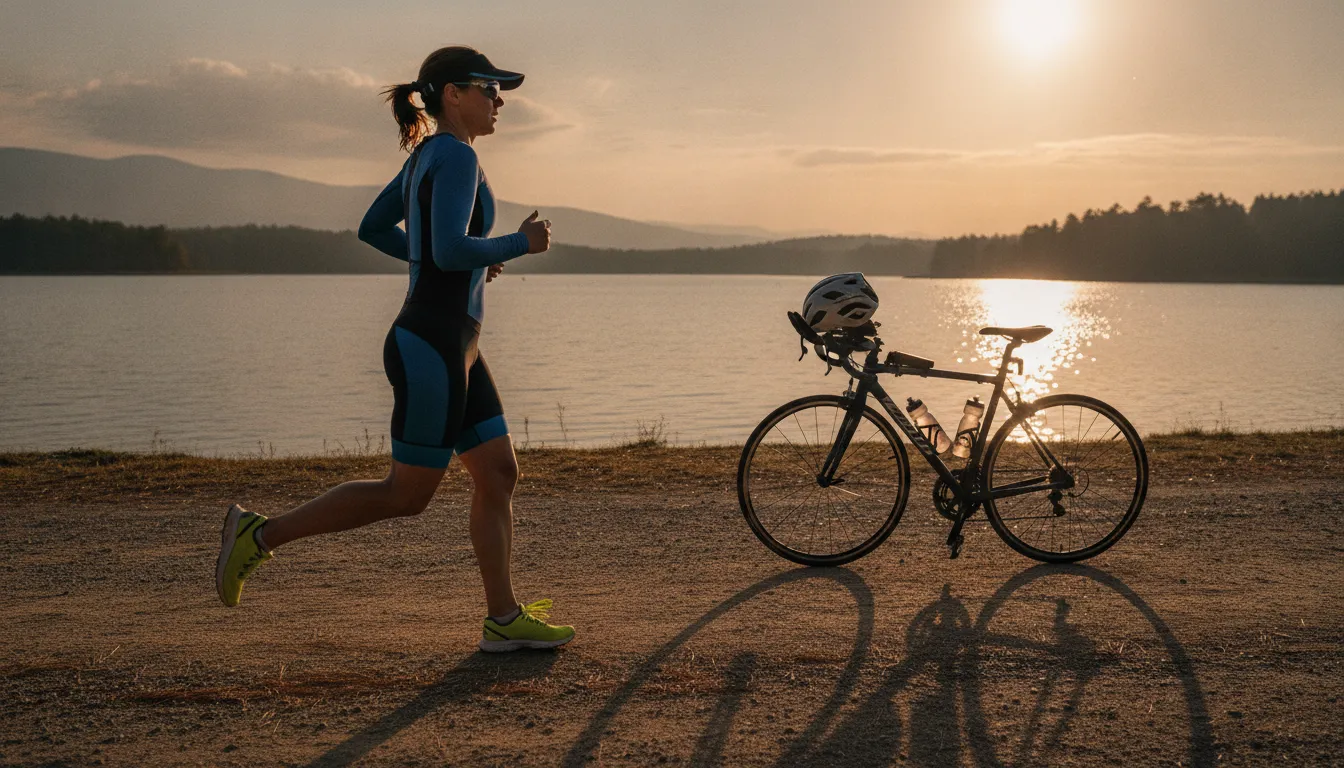
A brick workout combines two disciplines back to back, most often a bike followed immediately by a run. It gives you a chance to practice the bike-to-run transition before race day, when your legs may feel heavy and your running stride may feel unfamiliar. A brick is not a guarantee of faster racing. Its value is helping you learn how your body responds and how to move calmly from one part of the event to the next.
Summary: Add a short bike-to-run brick to your sprint triathlon training plan so you can rehearse the unusual first minutes of the run, test your transition routine, and adjust your effort without making every workout hard.
Why does the run feel different after cycling?
During the bike, your legs repeat a circular pedaling motion and support your body differently than they do while running. When you stand up and begin to run, your stride, balance, and breathing can feel temporarily out of sync. That sensation is normal for many beginners. Start with an easy effort, focus on short relaxed steps, and give yourself time to settle into a natural rhythm.
How often should you practice a brick?
For most beginners, a brick every one or two weeks is enough during the middle and later parts of training. Keep the first sessions brief, such as 20 to 30 minutes of easy cycling followed by 5 to 10 minutes of easy running. As your plan progresses, you can occasionally extend the run or include a controlled race-effort segment, but leave room for recovery. If soreness lingers or your form deteriorates, shorten the session or replace it with separate easy workouts.
How can you rehearse the transition?
Set out your running shoes, socks, helmet, and other race-day essentials before starting the bike. Practice stopping safely, removing your helmet only after the bike is racked, changing shoes, taking a drink, and beginning the run without rushing. You can also use swim bike run training resources to support the full multi-sport routine. Keep the setup simple and repeat the same sequence so race-day decisions feel familiar.
Stop or modify the workout if you feel sharp pain, dizziness, or unusual shortness of breath. Training should build confidence through consistent practice, not by forcing every brick to become a test.
What Should You Do During Race Week?
Race week is for arriving rested, organized, and familiar with your equipment, not for trying to create new fitness. Reduce your total training volume by roughly 30% to 50%, while keeping a few short, easy sessions so swimming, cycling, and running still feel familiar. A published beginner plan, for example, includes a short swim with sighting and skills practice, transition rehearsal, and a brief bike-to-run brick during race week rather than another long endurance workout.
Keep the intensity controlled. If a session leaves you unusually tired, shorten it or replace it with gentle movement. Conservative pacing on race morning is especially useful for beginners: start the swim smoothly, settle into a manageable bike effort, and save your strongest decisions for the run. Your sprint triathlon wetsuit should be considered only after checking the event rules, expected water temperature, and whether the fit allows comfortable movement. Never test unfamiliar equipment for the first time at the start line.
Use a simple race-week checklist
- Training: Keep movement short and easy. A brief swim can include sighting practice, while a short transition rehearsal can confirm how your gear feels when changing disciplines.
- Logistics: Read the athlete guide, confirm check-in and transition-opening times, review the course, and plan transportation and parking. Check the forecast and prepare clothing for the conditions.
- Equipment: Inspect your bike, helmet, goggles, race clothing, shoes, nutrition, and timing gear. Lay out transition items in the order you will use them, and avoid last-minute upgrades.
- Recovery: Protect your normal sleep schedule, drink regularly, and eat familiar meals that sit well for you. Avoid trying a new supplement or unusually large meal.
Before the start, remind yourself of the basic sequence and your conservative opening pace. If pain, illness, or another concerning symptom appears, pause and seek appropriate guidance rather than forcing the scheduled workout. The objective of the final week is readiness: arrive knowing where your gear is, what the course requires, and how you will begin each leg calmly.
Shop triathlon wetsuits and swim gear at Swim2000 before race week
Frequently Asked Questions
How long should you train for a sprint triathlon?
Many beginner plans use eight to 12 weeks, but the right timeline depends on your current swim, bike, and run fitness. Allow more time if you are learning a discipline, returning after a long break, or need a gradual build.
Is 12 weeks enough for a beginner sprint triathlon training plan?
It can be enough if you can already run or walk a 5K and are comfortable with basic swimming and cycling. A 12-week schedule gives you time to establish consistency, build endurance, rehearse transitions, and reduce training before race day. If you cannot yet complete those baseline activities comfortably, extend the preparation period.
How many days a week should a beginner train?
Start with manageable sessions across the three disciplines rather than trying to train hard every day. A common structure uses two swims, two runs, one or two bike sessions, and at least one rest day, adjusted for your schedule and recovery. Keep the easy sessions genuinely easy.
How well do I need to swim before starting?
You should be able to swim continuously without excessive stress and maintain calm, controlled breathing. One published beginner plan uses 100 yards nonstop as a readiness marker, but your race course, swim cutoff, and open-water conditions also matter. Get qualified instruction if you are not comfortable swimming in open water.
Should I take a complete rest day each week?
Yes. Keep at least one day free of workouts so your body can absorb training. Gentle stretching may be appropriate, but replace or shorten a session when pain, unusual fatigue, or poor recovery persists. Seek medical or coaching guidance for symptoms that concern you.
Ready to Prepare for Your Sprint Triathlon?
A practical training plan works best when your gear supports the sessions you have planned. Check fit, comfort, and visibility before race week so you can focus on steady preparation across the swim, bike, and run. Explore Swim2000 triathlon gear and beginner training resources to get started with equipment suited to your next step.


