

Choosing swimwear for transgender swimmers is personal. The right suit is the one that feels comfortable, offers the coverage you want, and works for the way you plan to swim. There is no single style that fits every body or preference. Start with how the suit feels when you move, not with assumptions about who should wear a particular cut.
What matters most when choosing a suit?
Begin with your own priorities. You may want a suit that stays in place during laps, offers more coverage, feels less restrictive, or works for recreation rather than training. Those priorities can change by activity, setting, or day. You do not need to explain or justify them to choose a swimsuit.
In short: Rank comfort, coverage, and freedom of movement before looking at style labels. Then compare the garment’s actual construction, product details, and sizing guidance; no category name can tell you in advance how a suit will feel on your body.
A useful starting point is to rank three factors: comfort, coverage, and movement. Then consider practical details such as strap placement, leg opening, lining, fabric feel, and how easy the suit is to put on and take off. A style that looks right on a product page may feel different once you move in it.
Swimwear decisions are individual: prioritize your own fit and comfort, and test the garment through the movements you expect to make. Use the swimwear collection as a place to compare available styles rather than as a recommendation that one cut works for everyone.
How can you assess fit and comfort?
Use the brand's own size chart and measure as directed. Sizing can vary between brands and styles, so avoid relying on a size you wear in another garment. If you are between sizes or unsure about a measurement, check the product details and contact the retailer before ordering. Do not assume that sizing labels are consistent across the catalog.
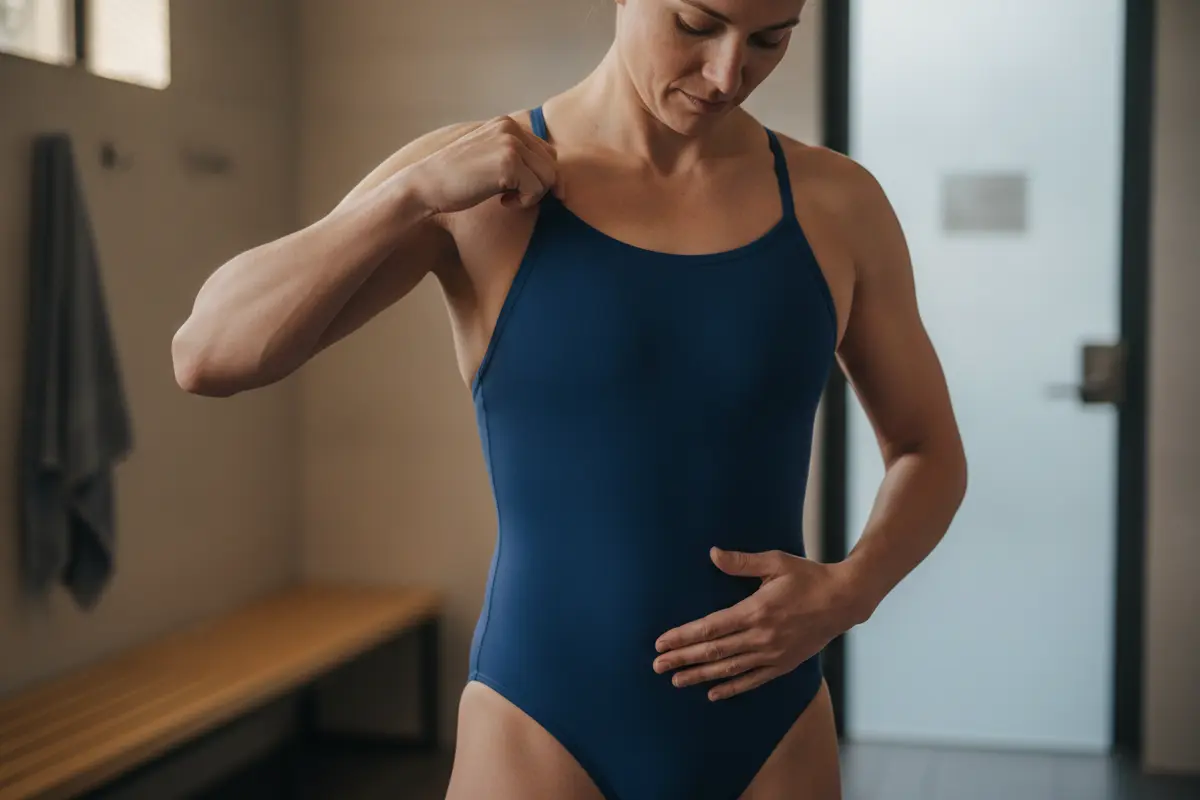
When trying on a suit, check several areas without forcing a fit:
- Shoulders and straps: Straps should feel secure without digging in or slipping with arm movement.
- Torso: The suit should allow you to stand, bend, and reach without painful pulling or excessive looseness.
- Leg openings: Check whether the edges feel comfortable and stay in place as you move.
- Coverage: Look at the front, back, and sides from the angles that matter to you. A mirror check is optional; your comfort is the measure.
- Entry and exit: Consider whether the suit is manageable to put on and remove, including when damp.
Move through a few motions that resemble your swim: raise your arms, rotate your shoulders, squat or bend, and take a few steps. If it pinches, shifts in a way you dislike, or needs constant adjustment, consider a different size or design. A suit should not cause pain or restrict breathing.
Try a deliberate sequence rather than relying on a quick mirror check. First stand naturally and notice whether seams or edges press. Next reach both arms overhead, sweep them forward as in a stroke, then rotate your torso. Finally bend and take several steps. Pause after each motion: does the suit return to place, or do you immediately need to adjust it? This makes comparison more concrete when you try two cuts or sizes.
Wear and return conditions matter when buying online. Read the retailer's current policy before removing tags or using a suit in water. Swim2000's published return terms specify that eligible merchandise must be unused and dry, with packaging and tags intact; check the current policy for deadlines and exclusions before purchase.
Which swimsuit cuts and coverage levels can you compare?
Different designs offer different combinations of coverage, support, and ease of movement. Rather than treating a cut as inherently masculine or feminine, compare the actual construction and decide what feels right to you.
Key point: A cut is a construction choice, not a prescription. Compare practical details such as torso length, strap layout, waistband feel, lining, and how much skin the garment covers where you want it covered.
| Style to consider | Potential practical feature | What to check |
|---|---|---|
| One-piece suit | Continuous torso coverage, with varied backs and leg openings | Torso length, strap comfort, and coverage while reaching |
| Jammer or knee-length suit | More leg coverage than a brief-cut suit | Waistband comfort, leg length, and whether it stays put |
| Swim shirt or rashguard with bottoms | Separate top and bottom can let you choose coverage independently | How the top fits when wet and whether it moves during activity |
| Two-piece separates | Different top and bottom sizes or shapes may be combined | Secure fit for each piece and whether the combination suits your activity |
These are comparison points, not guarantees about how any specific garment will fit. Product construction varies, and an item listing should be checked for its own materials, lining, and sizing details. For example, a training one-piece can be compared by its listed cut and construction, while a jammer style offers a different coverage profile. Neither product should be presumed right for every swimmer.
How do activity and setting change the choice?
Pool laps, lessons, water aerobics, open-water swimming, and time at the beach may call for different gear. Think about pace, water conditions, movement, and how much coverage feels comfortable in that setting. For a team practice, you may also need to follow a uniform requirement; ask the coach what is required before buying.
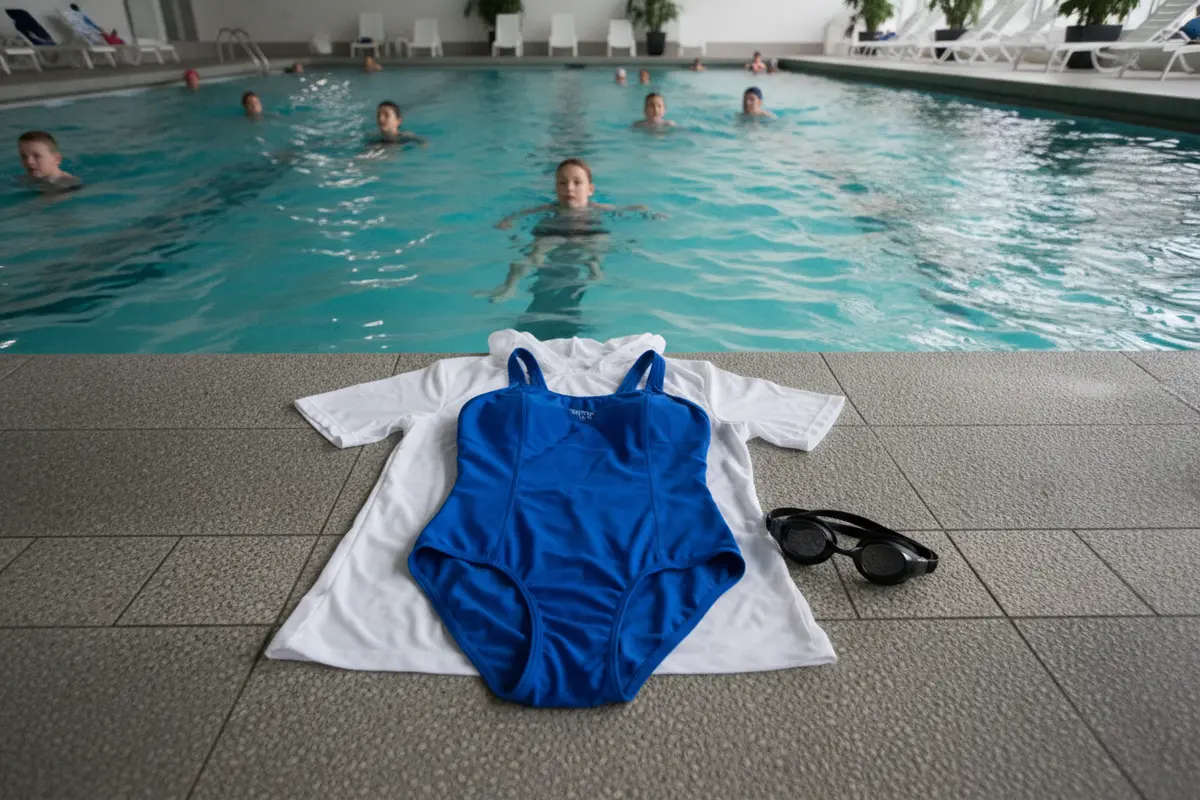
- Lap swimming: Look for a secure fit that allows repeated arm and leg movement. A competitive swim selection can help you review activity-specific options.
- Recreation or lessons: Choose a design that is easy to move in and comfortable for the amount of time you will wear it.
- Water aerobics: Consider how the suit feels through repeated reaching and stepping; view the water aerobics collection for activity-related gear.
- Open water: Water temperature and conditions affect equipment needs. Review the specific product information for any wetsuit, and do not assume one garment suits all conditions.
Accessories can support comfort without deciding what swimsuit you should wear. Goggles, for example, can be selected for seal and fit independently of your suit; browse swim goggles by their product details. A lightweight cover-up or warm layer may also be useful before and after swimming, depending on the setting.
Think through a typical session from arrival to leaving the pool. A suit may feel fine for five minutes in a changing room but less comfortable over a long practice, under a team warm-up, or when you are moving between water and deck. If you swim laps, prioritize staying in place during repeated strokes. For lessons or casual swimming, ease of changing and all-session comfort may matter more than a streamlined profile. For open water, suit choice is only one part of preparation; follow event and water-safety guidance for your conditions.
What can you do if you want more coverage or a different feel?
Consider combining separate garments if that better matches your preferences. A swim shirt or rashguard paired with bottoms may offer a different amount of coverage than a one-piece. Check whether the fabric is intended for swimming, how it behaves when wet, and whether the fit allows comfortable movement. A rashguard collection gives you a category to review, but always verify the item description.
Other swimmers prefer a simple one-piece with a higher neckline, longer leg, or different back design. If a suit is close but not quite right, compare a different cut or size rather than trying to make an uncomfortable garment work. The girls' swimwear listings and men's new arrivals are catalog sections, not rules about who may wear an item. Choose by construction and personal preference.
When assessing coverage, think in specific terms. Do you want more coverage at the shoulders, torso, hips, or thighs? Does a garment need to stay smooth under another layer, or do you prefer a single piece? These questions make browsing more manageable than searching for a universal label. If you plan to layer, check for bunching at the waist and whether each layer can move independently without riding up.
Swimwear for transgender swimmers should be approached as a fit-and-comfort decision, not a prescribed category. Swim2000 has served swimmers since 1994 and offers options for different aquatic activities; product suitability still depends on the specific item, measurements, and your preferences.
How should you prepare before ordering online?
A few minutes of checking can reduce guesswork. Gather your measurements, read the garment description, and note any details you need to confirm. If you are shopping for a child or teen, include their preferences in the decision and let them choose the level of coverage that feels comfortable to them.
- Measure using the brand's instructions and compare with that brand's chart.
- Read the listing for fabric, lining, cut, and any care notes.
- Decide what coverage and movement you want before comparing pictures.
- Review shipping and return terms, including conditions for trying on the item.
- Ask a specific sizing or construction question if the listing leaves something unclear.
When comparing options, treat product photos as a starting point. Images cannot show exactly how a fabric will feel, how a strap will sit on your body, or whether a cut will match your preference. If an item does not feel right at home, follow the current return instructions and avoid using it in water until you have checked eligibility.
One practical way to narrow a large catalog is to create a short checklist before browsing. For instance, write “secure straps, torso coverage, no pinching when reaching” rather than “find the perfect suit.” Then open a few listings and compare only the relevant details. Keep a note of the brand, style name, and chart measurements so you can distinguish a true size issue from a design preference. If only one feature is unsatisfactory, try a cut that changes that feature rather than starting over with an unrelated style.
For online orders, review the current return terms before purchase, not only after a fit concern appears. Keep tags and packaging intact while trying the item on in accordance with policy, and do not swim in it until you know whether water use would affect eligibility. If an item listing leaves fit or construction unclear, ask a precise question, such as whether the suit has a lining or what the listed torso length refers to. Specific questions are easier to answer than a general request to recommend a suit.
What does research say about transgender athletes and performance?
Swimsuit buying advice should stay focused on fit and product features rather than assumptions about athletic ability. A published case study examined one transgender woman after about two years of gender-affirming hormone therapy and elite-level swim training; the authors reported that her swimming performance times were slower by about five percent across the measures discussed. This single case does not establish a general rule for transgender swimmers, and it does not determine what suit someone should choose. Read the case study in physiology in context.
For practical shopping, the relevant questions remain personal: Does the suit feel comfortable? Does it provide the coverage you want? Can you move naturally in it? Choose on those grounds, and consult coaches or governing-body rules separately if you have competition-specific requirements.
How can you make a final comparison?
Before deciding, compare the leading two or three candidates against the same criteria. This avoids letting a product photo or a familiar size label do all the work. A simple scorecard can be as informal as notes on your phone: comfort while standing, comfort while reaching, coverage where you prefer it, and whether the fabric and lining match your expectations. Mark any uncertainty that requires a product-detail check.
- Candidate A: Does it meet your coverage preference and stay in position through movement?
- Candidate B: Does its different cut solve a concern without creating a new one, such as strap pressure?
- Candidate C: Is a separate top-and-bottom combination easier to adjust to your preferences?
Do not treat these notes as a body judgment or a demand to find a flawless garment. The goal is simply to identify which design best matches your stated needs. If the choices all miss one important requirement, revise the search around that detail or ask the retailer about the item rather than settling for discomfort.
Frequently asked questions
Is there one best swimsuit for transgender swimmers?
No. Comfort, coverage, body shape, activity, and personal preference vary. Compare garment features and select the style that feels right to you.
Can I wear a style sold in a different section of the catalog?
Catalog categories help organize products, but they do not decide who can wear a style. Check the item's size chart, construction, and fit, and choose what meets your needs.
How can I get more coverage without choosing a one-piece?
You can compare a swim shirt or rashguard with separate bottoms, or explore other combinations. Check that each piece is intended for swimming and stays comfortable during movement.
What should I do if I am between sizes?
Use the specific brand's measurement chart and product information. If the answer is unclear, ask the retailer about the particular item's fit before ordering rather than assuming another brand's sizing will match.
Can a swimsuit be returned after I try it on?
Policies vary by item and retailer. Swim2000's stated terms require eligible returns to be unused and dry with tags and packaging intact, so review the current policy before trying on or removing tags.
Choosing swimwear is a personal process. Give yourself permission to compare options, trust your comfort, and select gear that supports the kind of swimming you want to do.