


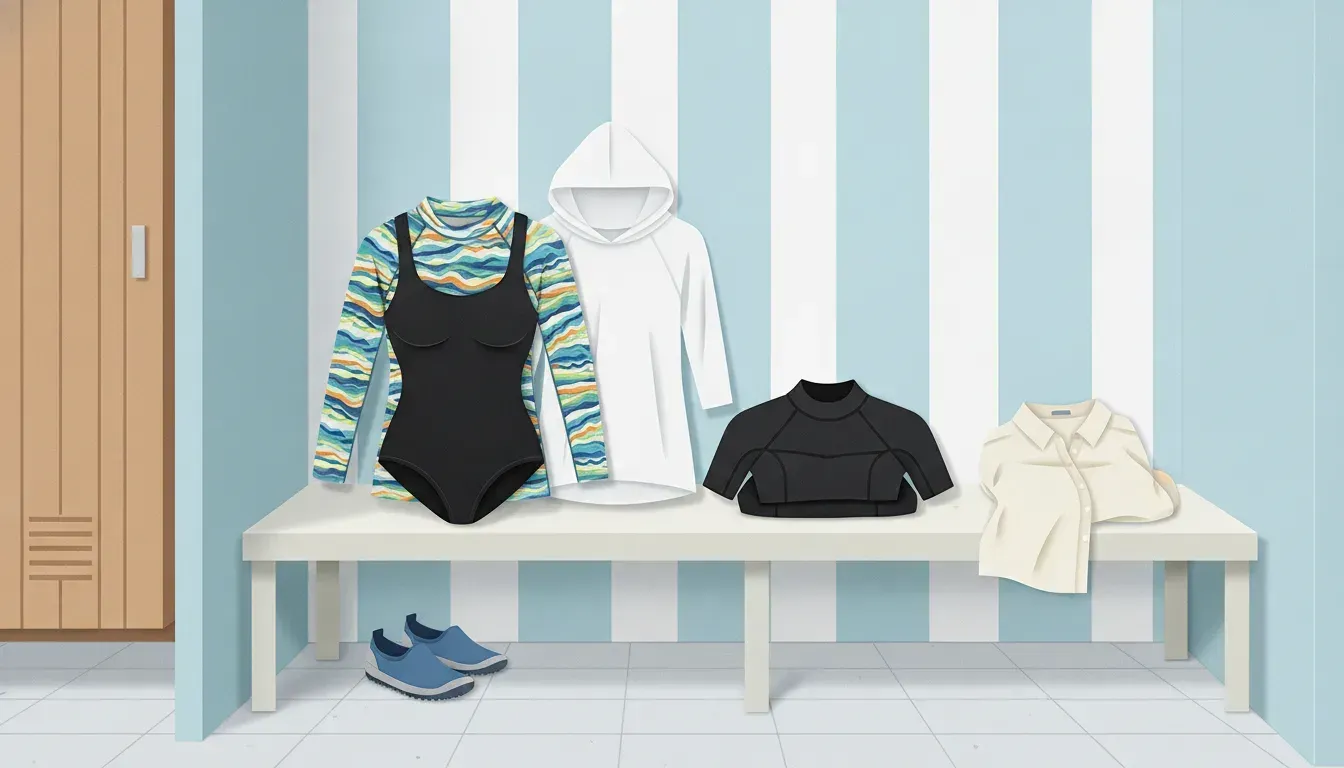
Water sports apparel should help you move freely, manage exposure to sun and water, and stay comfortable as conditions change. The right setup may be a streamlined swimsuit for lap swimming, a rashguard for a long paddle, a wetsuit for colder water, or a coverup for time between sessions.
Shop water sports apparel at Swim2000, or call (702) 696-9290 for help comparing layers.
There is no single outfit that works for every aquatic activity. Pool lanes, open water, a paddleboard, and a beach launch each place different demands on fit, coverage, warmth, and durability. This guide explains how to build a practical apparel system without buying layers you will not use.
What does water sports apparel include?
Water sports apparel is clothing designed to be worn in, on, or near the water while supporting movement, comfort, coverage, or warmth. It includes swimsuits, swim shorts, rashguards, swim shirts, wetsuits, wetsuit tops, coverups, robes, and water shoes.
The best starting point is not a brand name or a color. Start with the activity, the water conditions, how long you expect to be outside, and how much movement the clothing must allow. A competitive swimmer may want a close-fitting suit with minimal drag. A paddle-sports participant may prioritize sun coverage, stretch, and a top that stays in place while reaching and balancing.
Key takeaway: Choose water sports apparel as a system. A base layer handles movement, a protective layer handles sun or abrasion, and an insulating layer handles cooler conditions.
Start with the activity, water, and movement
Apparel performs differently depending on how you use it. Before choosing a layer, answer four questions:
- What are you doing? Lap swimming, lessons, water aerobics, open-water swimming, paddleboarding, kayaking, and beach activity all require different levels of coverage and mobility.
- Where will you wear it? A chlorinated pool, freshwater lake, ocean, and boat deck can change how much sun, wind, spray, or abrasion you face.
- How long will you be exposed? A short practice and an all-day paddle call for different coverage and options for changing after you get wet.
- How much freedom of movement do you need? Shoulder rotation matters for swimming and paddling. A layer that feels comfortable while standing may restrict a stroke once you are in the water.
For pool training, a fitted swimsuit or swim brief usually forms the base. For a long outdoor session, add a long-sleeve rashguard or swim shirt when you want more coverage. For colder water, consider a wetsuit or wetsuit top that matches the activity and your manufacturer's sizing guidance. A coverup or robe belongs in the transition layer, not in the water unless its care instructions specifically allow it.
Swim2000 carries options for several of these use cases, including competitive swimsuits, rashguards, and wetsuits. Browse by activity first, then compare the fit and coverage details for your session.
Which layer fits each water activity?
The table below gives you a starting point. Treat it as a selection framework rather than a rigid uniform. Personal comfort, local conditions, and the product's care and size guidance still matter.
| Activity | Layering guidance |
|---|---|
| Lap swimming |
Base layer: Fitted one-piece, training suit, or swim brief Add-on layer: Deck coverup or robe Prioritize: Secure fit, shoulder mobility, and fabric suited to regular pool use |
| Water aerobics |
Base layer: Supportive swimsuit Add-on layer: Optional swim shirt or water shoes Prioritize: Comfort during repeated movement, coverage, and traction outside the pool |
| Open-water swimming |
Base layer: Swimsuit or open-water suit Add-on layer: Wetsuit, cap, and bright safety accessories as appropriate Prioritize: Visibility, warmth, fit, and conditions that can change away from shore |
| Paddleboarding |
Base layer: Swimsuit or swim shorts Add-on layer: Rashguard, sun shirt, wind layer, or wetsuit top Prioritize: Sun coverage, stretch, secure hems, and warmth for wind or falls |
| Kayaking |
Base layer: Quick-drying swimwear Add-on layer: Rashguard, insulating top, and approved personal flotation device Prioritize: Arm movement, layering under safety gear, and protection from wind and spray |
| Beach or boat days |
Base layer: Swimwear Add-on layer: Coverup, sun shirt, hat, and water shoes Prioritize: Coverage between swims, easy changes, and protection on hot surfaces |
Notice that a personal flotation device is safety equipment, not a substitute for clothing. When you paddle, follow the rules for your location and use a properly fitted, appropriate flotation device. The U.S. Coast Guard's paddlesport safety poster also recommends dressing for the weather and preparing for cold-water immersion.
Key takeaway: The same swimsuit can be a useful base for several activities, but outdoor sessions often need an additional layer for sun, wind, spray, or cooler water.
How should you choose apparel by water temperature?
Use water temperature, not air temperature alone, when deciding how much insulation you need. Weather can feel warm while a lake, river, or ocean remains cold. The National Weather Service's cold-water safety guidance explains that cold-water exposure can trigger cold shock and recommends dressing for water temperature and checking conditions before going out.
For warm water and short sessions, a swimsuit may be all you need. For longer outdoor exposure, a rashguard or long-sleeve swim shirt can add coverage without the bulk of an insulating suit. Look for stretch through the shoulders and a fit that stays smooth when you reach, paddle, or rotate.
When the water feels cool, consider how much time you will spend submerged, how much wind you will face, and whether you may fall in. A wetsuit, wetsuit top, or other neoprene layer may help you stay more comfortable, but thickness and construction should follow the brand's guidance for the intended conditions. A snug fit helps a wetsuit work as designed, while excessive tightness can limit breathing and movement.
For cold-water swimming, do not use a clothing guide as a substitute for safety planning. Check the forecast and water conditions, tell someone where you will be, and use appropriate visibility and flotation equipment for the setting. When you need a deeper look at thickness and fit, browse Swim2000's wetsuit collection and follow the selected brand's guidance.
After the session, a dry coverup, robe, or warm change of clothes can make the transition easier. Keep the post-session layer separate from the in-water layer so each item can be rinsed, dried, and stored correctly.
Compare wetsuits and cold-water layers before your next open-water session.
What coverage and sun details matter?
Coverage is about more than sleeve length. Think about the parts of your body exposed to sun, spray, board contact, wind, or repeated rubbing. A long-sleeve rashguard can cover the shoulders and arms during a paddle. A swim shirt can add coverage for lessons or water fitness. A coverup can protect skin while you walk across a hot deck or wait for your turn.
The American Academy of Dermatology's sun-protection guidance recommends combining shade, sunscreen, and sun-protective clothing. It also notes that dense fabrics and garments with a UPF rating can provide more predictable coverage than loose or open weaves. For water activities, look for a layer that fits close enough to stay in position but still lets your shoulders move through a full stroke.
Sun-protective clothing does not replace sunscreen on exposed skin. Wet fabric can also provide less protection than dry fabric, so follow the garment's care information and reapply sunscreen to uncovered areas. A hat and UV-protective sunglasses may be helpful for time near the water, but they should not block your view or interfere with safety equipment.
For paddle sports, inspect the areas most likely to rub against a board, paddle, or PFD. Smooth seams, a secure hem, and enough length through the torso can improve comfort. Avoid adding loose straps or dangling pieces that can catch on equipment. For swimmers, check that shoulder seams and necklines do not interfere with breathing or a streamlined body position.
Swim2000's paddleboarding apparel guide covers the weather and launch-specific questions that are outside this broader cross-activity comparison.
Key takeaway: Look for coverage that matches your exposure and a fit that stays put during movement. For sun protection, choose garments with clear construction and UPF information, then protect uncovered skin separately.
How do you build a practical layering kit?
A small, flexible kit is easier to use than a closet full of single-purpose pieces. Build from the base layer out:
- Choose the base: Start with a swimsuit, swim shorts, or another fitted piece that supports the activity. Check the rise, straps, leg openings, and torso length while moving, not only while standing.
- Add coverage: Pick a rashguard or swim shirt when you need more coverage from sun, board contact, or cool air. Long sleeves can be useful for outdoor sessions, while a short sleeve may feel more comfortable in warm conditions.
- Add insulation only when needed: Choose a wetsuit or wetsuit top for cooler conditions when the product is suited to the activity. Use the manufacturer's size chart and care guidance, especially when comparing brands.
- Plan the transition: Pack a coverup, robe, towel, dry clothes, or warm layer for time on deck or shore. This is often the piece that makes a long day more comfortable.
- Finish with activity gear: Add water shoes when traction or foot coverage matters, and pair paddle activities with required safety equipment. Swim2000's water shoes guide explains how fit, drainage, and traction affect different water settings.
Keep your kit adaptable. A swimmer who also kayaks may use one fitted swimsuit as a base, then choose different outer layers for each activity. A paddleboard participant may keep a warm top in the vehicle even when the forecast looks mild because wind and immersion can change the experience.
Before buying, check the product page for fabric, closure, coverage, care, and sizing details. If the page does not answer an important fit question, contact the shop rather than guessing. Swim2000's contact page is the right place to ask about products and ordering support.
How should you care for water sports apparel?
Good care starts as soon as you leave the water. Rinse salt, chlorine, sand, and lake residue from each item with clean water. Follow the care label for washing, drying, and storage. Avoid treating a wetsuit like a swimsuit because heat, sharp folds, and rough handling can damage neoprene.
- Rinse promptly: Remove salt and chlorine before they dry on the fabric.
- Dry fully: Air-dry garments according to their care instructions before storing them.
- Rotate frequently used pieces: Having a spare base layer can reduce the temptation to wear damp clothing to the next session.
- Inspect seams and closures: Look for stretched elastic, loose stitching, damaged zippers, or worn areas before an outdoor trip.
- Store layers by use: Keep in-water pieces separate from dry transition layers so the clean items stay ready.
Do not assume a garment's color, thickness, or appearance proves its level of sun protection or insulation. Use the label and the brand's care information. Replace an item when damage affects fit, coverage, or safe use.
Shop rashguards and water-ready layers at Swim2000, or contact the team for help comparing coverage and fit.
Frequently Asked Questions
What is the best clothing for water sports?
The best clothing depends on the activity, water temperature, sun exposure, and movement required. Start with a fitted swimsuit or swim shorts, then add a rashguard, wetsuit layer, coverup, or water shoes when the conditions call for more coverage, warmth, or traction.
Can you wear a rashguard for swimming and paddleboarding?
Yes, a rashguard can work for both activities when its fit and construction suit the movement. Look for comfortable shoulder mobility, a secure hem, and coverage that matches your time in the sun. For cooler water, a rashguard may need to be paired with an insulating layer rather than used as a wetsuit substitute.
Do I need a wetsuit for paddle sports?
You may need a wetsuit or wetsuit top when the water is cool, the wind is strong, or an unexpected fall would leave you exposed. Consider water temperature and immersion risk instead of relying on the air temperature. A wetsuit does not replace a properly fitted personal flotation device or a paddling safety plan.
What should I wear for sun protection on the water?
Choose a long-sleeve rashguard or swim shirt with a stated UPF rating when you want more predictable coverage. Add shade, sunscreen on exposed skin, a suitable hat, and UV-protective eyewear as appropriate. Make sure the clothing stays in place without limiting your stroke or paddle movement.
How many layers should I wear for water activities?
Most people can start with one base layer and add one protective or insulating layer as conditions require. A third piece may be useful as a dry coverup after the session. Test the full setup through your intended range of motion before going out, and remove any loose piece that can interfere with equipment.
Choose layers that match the water
Water sports apparel works best when each piece has a clear job. Use fitted swimwear for movement, rashguards and swim shirts for coverage, wetsuits for appropriate insulation, and coverups for the time before and after your session. When you match the layers to the activity and conditions, you can spend less time adjusting your clothing and more time focused on swimming, paddling, or enjoying the water.
Explore water aerobics apparel and gear, open-water swimming equipment, and swim goggles to complete your setup.


